Revisting Astragalus root.
-
Astragalus has been used for over 2,000 years, primarily in traditional Chinese medicine. It is known for its immune-boosting properties. Around 2010 it was over marketed to lengthening telomeres and hence lengthen lifespan. The telomere craze has passed but astragalus root is still an interesting.
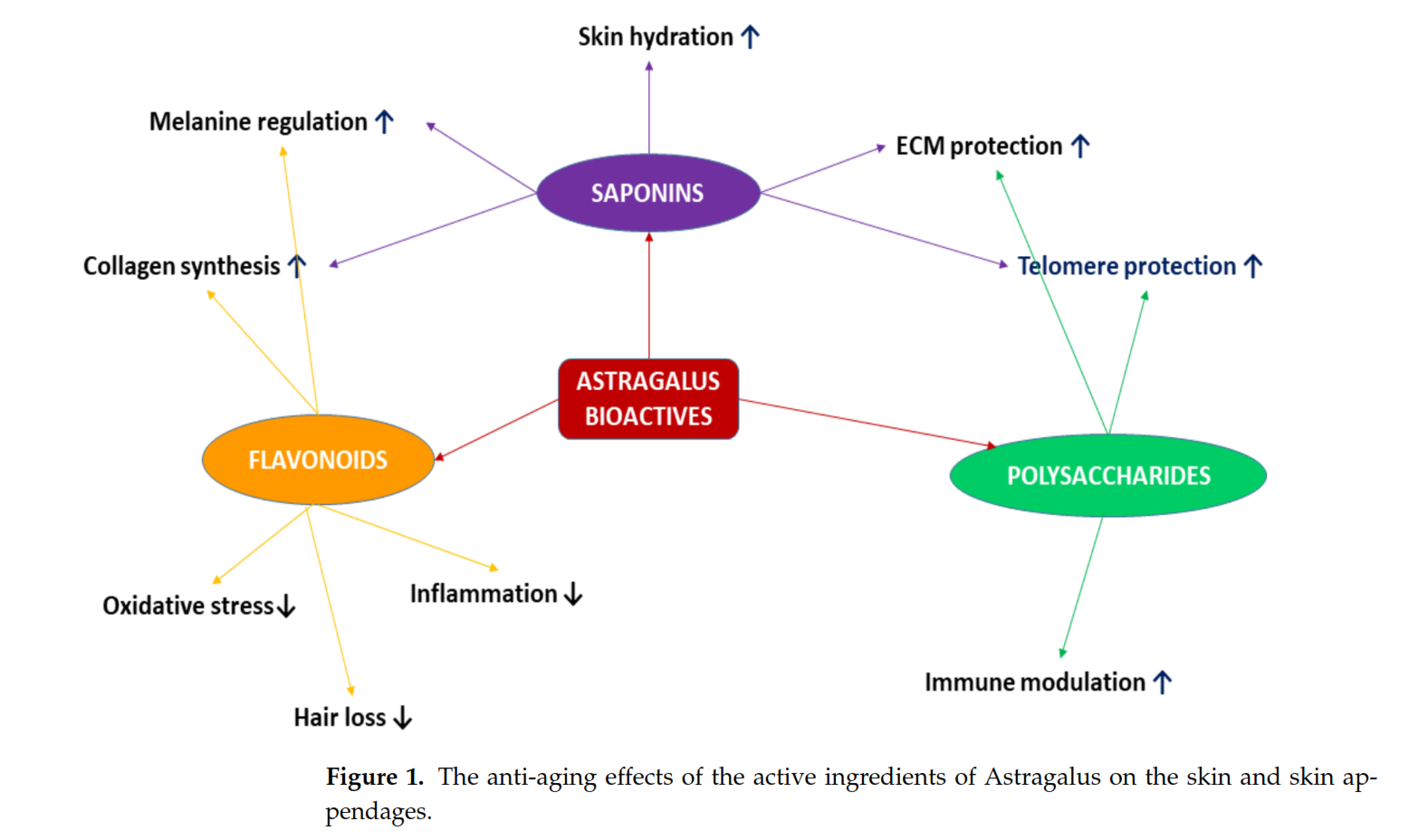
Astragalus Membranaceus—Can It Delay Cellular Aging? (2025)
Abstract
Astragalus membranaceus, a plant that has been utilized in traditional Chinese medicine for centuries, is widely regarded as one of the most valuable herbs in this medicinal tradition. It is commonly referred to as the “yellow leader”, a designation that stems from the yellow hue of its most significant organ, the root, and its adaptogenic properties. The plant Astragalus is renowned for its abundance of active components, including polysaccharides, flavonoids, saponins, and an array of trace elements. It has been demonstrated that the administration of Astragalus can prevent cellular aging, owing to its diverse range of actions that provide protection to the body from both external and internal factors. The antioxidant, immunomodulatory, anti-inflammatory, and regenerative properties of this plant contribute to the maintenance of good skin condition, preventing atrophy of subcutaneous tissue and degeneration of facial bones. Systemic actions encompass the maintenance of function and protection of the cardiovascular, nervous, respiratory, digestive, excretory, immune, and endocrine systems. This article reviews the composition of Astragalus membranaceus and the beneficial effects of its root extract and its active substances on the whole body, with a particular focus on the anti-aging effects on the skin.

-
@DavidPS apparently it is ridiculously good at supporting the kidneys
-
it is a phytoestrogen
-
@sunsunsun = Thanks, I looked into it and you are right.
-
@lobotomize - Thanks, another reason to proceed with caution.



Hello! It looks like you're interested in this conversation, but you don't have an account yet.
Getting fed up of having to scroll through the same posts each visit? When you register for an account, you'll always come back to exactly where you were before, and choose to be notified of new replies (either via email, or push notification). You'll also be able to save bookmarks and upvote posts to show your appreciation to other community members.
With your input, this post could be even better 💗
Register Login