Physiological levels of progesterone induce copulatory behavior in rats
-
I found this interesting study while searching progesterone on RPF. It directly addresses how there is little research on the effects of progesterone in men, and for the research that does exist, it often studies the effects of absurd amounts of progestins, not normal, physiological levels of progesterone.
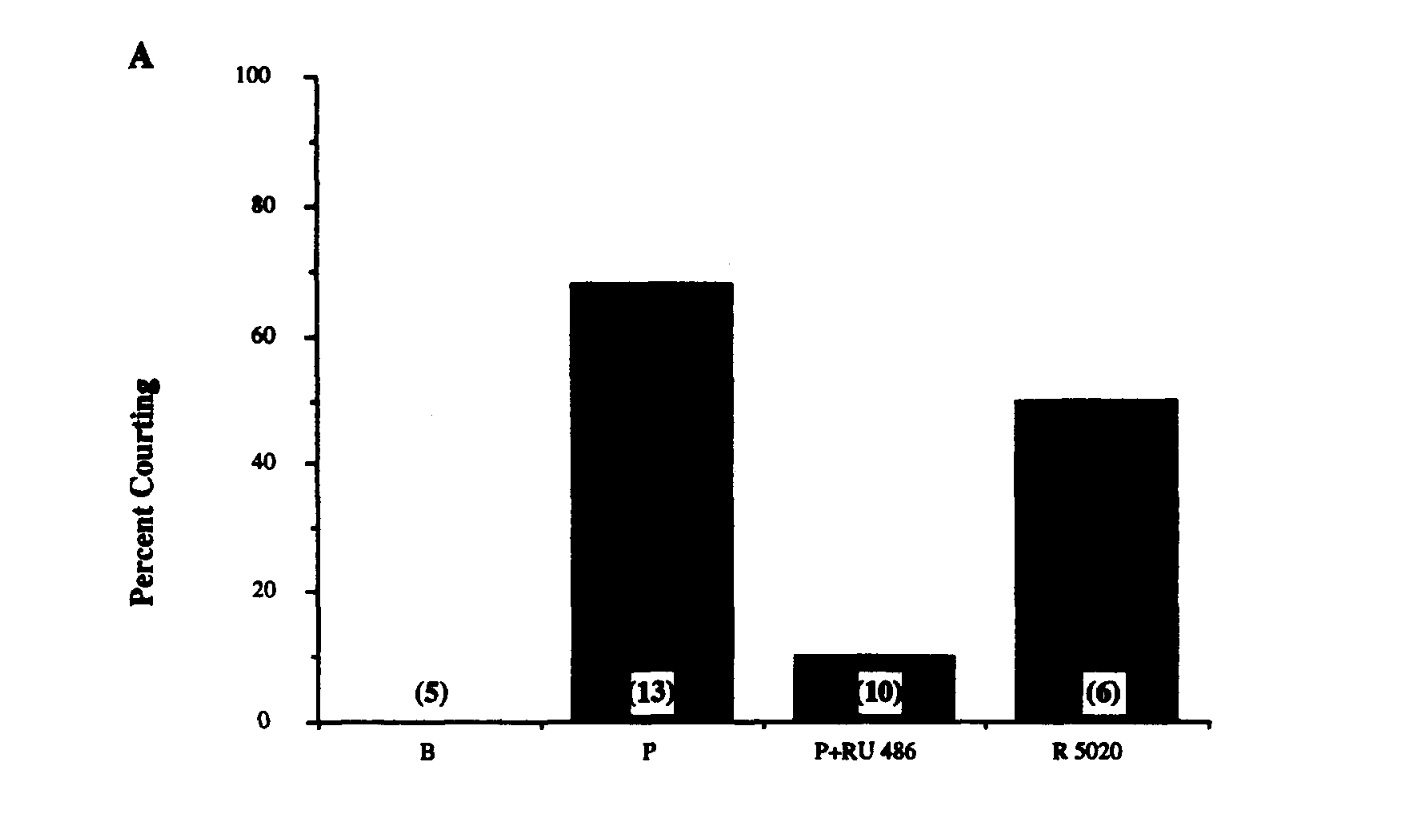
In brief, we used sexually naive male rats that were castrated and 2 weeks later implanted with silastic capsules that were either empty (B, 10 mm and 30 mm in length) or packed with testosterone (T, 30 mm length, i.d. 0.078 mm, o.d. 0.125 mm), progesterone (P, 10 mm length, i.d. 0.04 mm,), or both T and P (P+T, in separate capsules).
FIG. l: (A) Figure illustrates the percent of castrated male C. inornatus exhibiting courting behavior
after receiving an empty silastic capsule (B) or capsules filled with progesterone alone (P), progtest-
erone and RU 486 (P+RU 486) or (progestin agonist) R 5020 alone. (B) Synergistic interactions
of subthreshold dihydrotestosterone treatment (DHT), and subthreshold progesterone treatment
(P) in castrated male C. inornatus.Results: Progesterone on its own induced courting behavior, while progesterone plus RU486, a PR antagonist, did not induce such behavior. This implies that the PR agonism from progesterone has a role in increasing libido. The reason why absurdly high amounts of PR agonists do the opposite is unknown.
Link to study: https://sa1s3.patientpop.com/assets/docs/230185.pdf
My opinion: I think this supports the idea that supplementing low amounts of P4 is beneficial to males because it lacks the antiandrogenic behavior that PR agonists exhibit at higher doses. However, such supplementation is not more popular because such little research has been done so far on it.

Hello! It looks like you're interested in this conversation, but you don't have an account yet.
Getting fed up of having to scroll through the same posts each visit? When you register for an account, you'll always come back to exactly where you were before, and choose to be notified of new replies (either via email, or push notification). You'll also be able to save bookmarks and upvote posts to show your appreciation to other community members.
With your input, this post could be even better 💗
Register Login