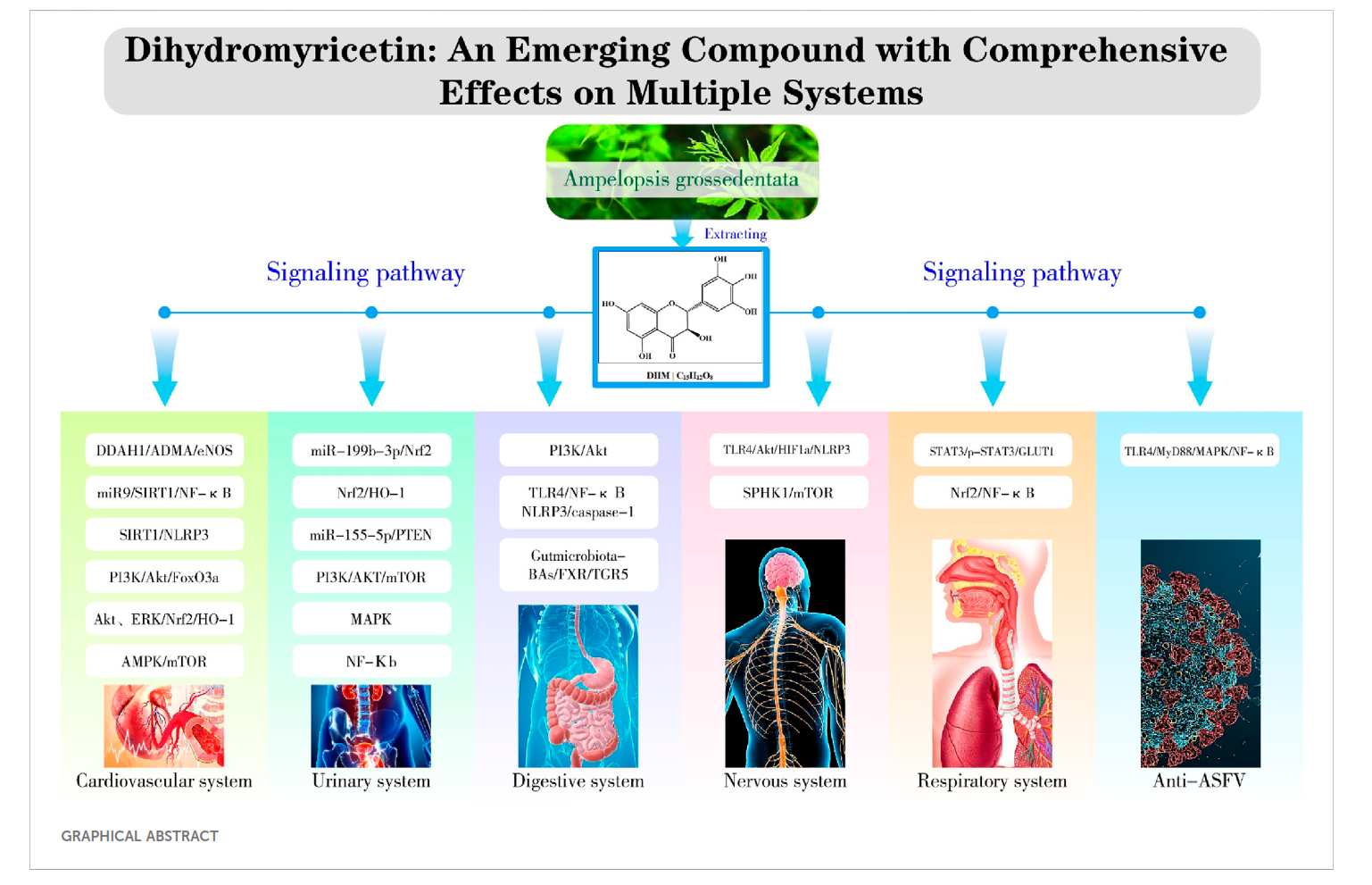
Dihydromyricetin: an emerging compound with comprehensive effects on multiple systems
-
Dihydromyricetin (DHY), the main flavonoid component in Ampelopsis grossedentata. It is a well-known hangover remedy which not only helps soothe pounding headaches but also triggers profound changes that protect the liver.
Dihydromyricetin: an emerging compound with comprehensive effects on multiple systems (2025)
Highlights
• Dihydromyricetin is a promising natural product with a high safety profile and broad biological activity.
• The main pharmacological effects of DHM are anti-inflammatory, antioxidant, antiviral, anti-tumor and metabolic regulation.
• A review of DHM, including its potential mechanisms of action on different systems in the human body and related signaling pathways.
• Discussing the main factors affecting the development and utilization of dihydromyricetin, including its stability and relatively low bioavailability.
Discussing how to improve its bioavailability.
-
Abstract
Dihydromyricetin (DHY), the main flavonoid component in Ampelopsis grossedentata, has important benefits for health. The present study aimed to investigate the exact effects and possible mechanisms of DHY on diabetic cardiomyopathy (DCM). Male C57BL/6 mice and sirtuin 3 (SIRT3) knockout (SIRT3-KO) mice were injected with streptozotocin (STZ) to induce a diabetic model. Two weeks later, DHY (250 mg/kg) or carboxymethylcellulose (CMC) were administrated once daily by gavage for twelve weeks. We found that DHY alleviated fasting blood glucose (FBG) and triglyceride (TG) as well as glycosylated hemoglobin (HbA1c) levels; increased fasting insulin (FINS); improved cardiac dysfunction; ameliorated myocardial hypertrophy, fibrosis and injury; suppressed oxidative stress, inflammasome and necroptosis; but improved SIRT3 expression in STZ-induced mice. Neonatal rat cardiomyocytes were pre-treated with DHY (80 μM) with or without high glucose (HG) stimulation. The results showed that DHY attenuated cell damage but improved SIRT3 expression and inhibited oxidative stress, inflammasome and necroptosis in cardiomyocytes with high glucose stimulation. Moreover, the above protective effects of DHY on DCM were unavailable in SIRT3-KO mice, implying a promising medical potential of DHY for DCM treatment. In sum, DHY improved cardiac dysfunction; ameliorated myocardial hypertrophy, fibrosis and injury; and suppressed oxidative stress, inflammation and necroptosis via SIRT3 activation in STZ-induced diabetic mice, suggesting DHY may serve as a candidate for an agent to attenuate diabetic cardiomyopathy.
-
-
-
Dihydromyricetin in the management of diabetes and its complications: a narrative review
Managing diabetes mellitus (DM) and its long-term complications remains a major global health challenge. Dihydromyricetin (DHM), a natural flavonoid abundant in Ampelopsis grossedentata and Hovenia dulcis, has attracted increasing attention for its multi-target anti-diabetic properties. Growing evidence indicates that DHM improves glucose metabolism, alleviates oxidative stress and inflammation, regulates autophagy and cell death, and exerts beneficial effects in DM and a range of related complications, including diabetic nephropathy, cardiomyopathy, cognitive impairment, and wound healing impairment, and other related complications. Overall, this review provides an overview of preclinical research on DHM in DM and its main complications, emphasizing its therapeutic benefits and underlying molecular mechanisms.

Hello! It looks like you're interested in this conversation, but you don't have an account yet.
Getting fed up of having to scroll through the same posts each visit? When you register for an account, you'll always come back to exactly where you were before, and choose to be notified of new replies (either via email, or push notification). You'll also be able to save bookmarks and upvote posts to show your appreciation to other community members.
With your input, this post could be even better 💗
Register Login