Limit blue light with a software?
-
*) Effectiveness of the f.lux software on PC blue light
Limitations to note
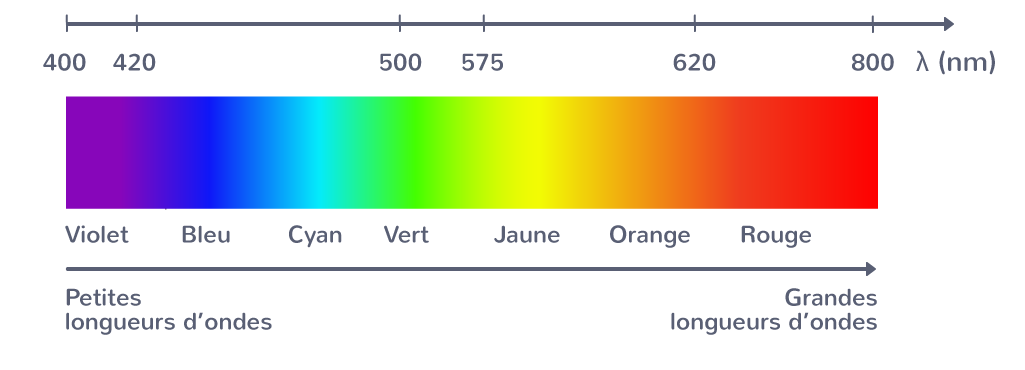
Blue light has a wavelength of approximately 400 nm (between 380 and 500 nanometers), giving it high energy, higher than red light at the other end of the spectrum. It comes from the sun (natural) and from screens/LEDs (artificial). The blue-violet range (380-455 nm) is considered the most harmful, while the blue-turquoise range (455-495 nm) is essential for regulating the circadian rhythm.
Figure IR 5: Light spectrum. It is generally accepted that the visible light range extends from 380 to 780 nm, between ultraviolet and infrared.
- Reposition the church at the center of the village. Blue light is not inherently disruptive if the frequency is appropriate and the context is controlled.
Common misconception
f.lux does not modify the intensity of the light (backlight); however, it reduces the perceived luminance and the harshness of the screen by changing the color temperature (Kelvin) to make the screen warmer (towards orange). Furthermore, we can combine the use of the f.lux software with adjusting the monitor's physical brightness. To be detailed on the links below (on my forum).
Aggression persists by people who work in front of a PC screen for at least three hours without a break every 20 minutes. Even a two-minute break is beneficial (muscle relaxation).
Aggression is also present if you watch TV next to an LED bulb. It's not really any better. The environment doesn't improve if there's a difference in light intensity between the screen and the surrounding black; this is what causes fatigue, even if we don't realize it immediately. The pupil perceives black at the periphery of the screen, and changes in screen brightness trigger a dilation and contraction reaction, sometimes to capture light, sometimes to protect against excess. Not to mention light flicker, even though current modulation has greatly improved things…
Let's set aside the melatonin aspect for now. We won't satisfy everyone. Indeed, if you stimulate the retina with light, you delay the onset of sleep and thus disrupt the natural circadian rhythm. In theory, but very often in practice as well. - Wavelength Intensity
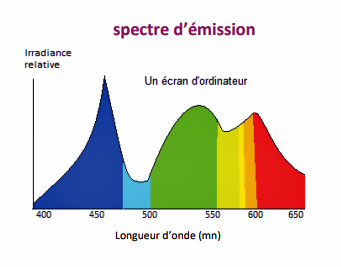
Thalie-Santé – blue light – offers a visual representation of peak energy (relative irradiance) at different wavelengths. This is displayed in front of a computer screen.
Figure Eye 2: Irradiance / intensity of the emission spectrum (on PC screen)
- Summary: Blue Light, Between Use and Control
Contrary to popular belief, blue light is not inherently "poisonous," but its impact depends on two critical factors: context and intensity.
• A question of timing: Blue-turquoise light (around 480 nm) is essential during the day to keep us awake and synchronize our biological clock. The problem arises with prolonged exposure without breaks (the 20-20-20 rule is crucial for relaxing the ciliary muscle) or in dark environments.
20-20-20 rule: Minimum distance of 20 cm from a computer, break of at least 20 seconds every 20 minutes. At home, it's 2 minutes and a few steps for blood circulation, every 20-30 minutes.
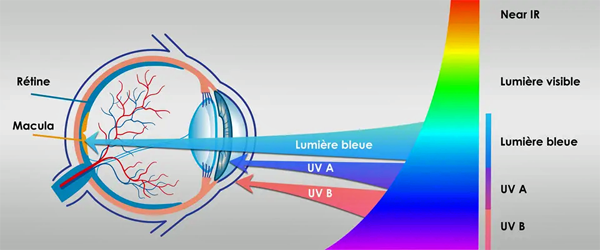
• Retinal harm: While blue light may not be immediately "destructive" to the macula, its high energy (high frequency) penetrates deep into the eye. Exposure to screens for more than 3 hours without interruption creates real eye strain and retinal excitation which, even without considering melatonin, keeps the brain alert, naturally delaying sleep.
Figure IR3. Blue Light and Macular
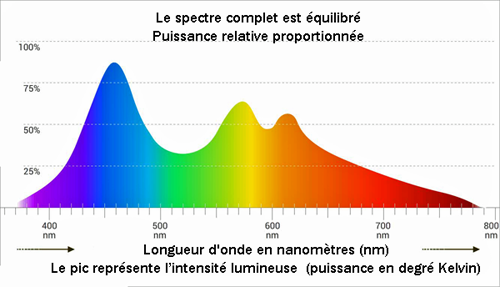
• The illusion of software: Tools like f.lux are useful for modifying colorimetry (reducing the blue peak), but they don't reduce glare or overall light intensity. They are no substitute for good eye hygiene, no matter what eyeglass retailers claim! They are helpful but not sufficient. Consider them as one part of the solution. - Diagram of energy intensity as a function of wavelength
How it should appear (when the tuning is effective). Effective but not sufficient to be protective.
Figure IR 7: Emission spectrum of a computer screen with a progressive filter
Wavelength in nanometers (nm)
The peak represents the light intensity (power in Kelvin) but the full spectrum is rather balanced.
In summary: It's not the blue light itself that's dangerous, but rather the energy it carries (due to its short wavelength) combined with inappropriate exposure (lack of breaks, dark environment, and excessive duration). Prevention therefore relies on three key elements: controlled intensity, regular breaks (20-20-20 rule), and respecting natural sleep cycles. - A 3-point tactic (my option)
a) Software (f.lux)
It modifies the color, reduces the blue light peak in the evening to help with falling asleep. Does not reduce glare or light intensity.
b) Spectacles Serengeti (adaptative)
They filter energy and absorbs aggressive rays and adjusts brightness (irradiance). Does not replace the need for physical rest for the eye.
c) Break (20-20-20 rule)
It relaxes the muscle. We unblock the eye's accommodation when looking at distant objects. Essential, but doesn't protect against bright light when you're in front of a screen.
- Reposition the church at the center of the village. Blue light is not inherently disruptive if the frequency is appropriate and the context is controlled.
-
Sources and references
https://mirzoune-ciboulette.forumactif.org/t2176-anthocyanes-xanthine-et-luteine-pour-les-yeux#30656- Limit blue light with a software & How to manage with f.lux.
- Efficiency? (According to Harvard Health, Association canadienne en optométrie)
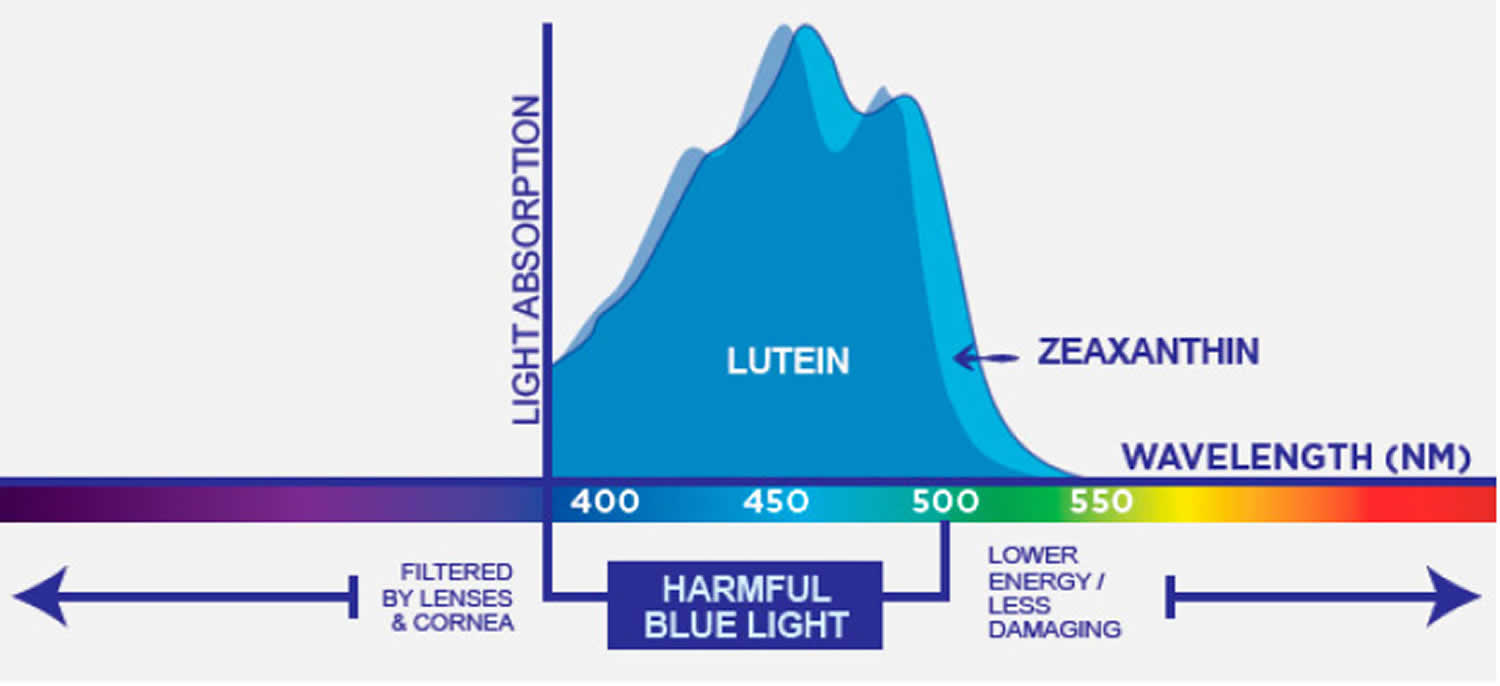
- For what wavelength does lutein provide protection? Same question for blue light.
=> Lutein, zeaxanthin, anthocyanin. - Choosing the right spectrum for an LED (with an amount of cyan, without overexposure of certain wavelengths).
-
@LucH said in Limit blue light with a software?:
For what wavelength does lutein provide protection? Same question for blue light.
=> Lutein, zeaxanthin, anthocyanin.


Hello! It looks like you're interested in this conversation, but you don't have an account yet.
Getting fed up of having to scroll through the same posts each visit? When you register for an account, you'll always come back to exactly where you were before, and choose to be notified of new replies (either via email, or push notification). You'll also be able to save bookmarks and upvote posts to show your appreciation to other community members.
With your input, this post could be even better 💗
Register Login