Gratitude
-
First post here. I have been reading and learning a lot since I found this forum.
This topic helped me a lot. Just want to state that I’m very grateful for Dr. Ray Peat's work and for this community for perpetuating his work. Thanks.https://bioenergetic.forum/topic/149/peaty-migraine-remedies/21
My background:
I have suffered from migraines for the past 11 years, with attacks increasing in frequency and severity over time. Historically, milk was a strong trigger (I wasn't intolerant earlier). I went to several doctors and it was always the same: run blood tests, abdominal ultrasound, skull x-rays, and all results were normal. Doctors gave me random advice: drink more water, avoid triggers, eliminate all dairy, try these antidepressants (which I refused).
But migraines kept increasing in pain and frequency to one or two crises per week.In 2022, I made some progress after following an 'anti-migraine' diet on a book, by completely removing seed oils (unfortunately, I removed most of the sugar too, though I kept a bit of honey, fruits, and nuts). However, I still had about one episode per month on average, which drained my energy, not to mention the awful pain. But I had a very strict diet, avoiding lots of things, which reduced my quality of life.
After reading a study about the positive effects of low-dose aspirin on Migraines, I tried taking 100mg daily since last December. The results have been incredible—only 4 episodes of migraine, the best I’ve felt in 11 years—and milk stopped triggering migraines entirely (and many other triggers are gone, plus the pain was less intense). Looking into why aspirin worked so well for me led me to Dr. Ray Peat's work, and I'm glad I found this forum.
3 weeks ago I started measuring my body temperature, and it's always below 36.4°C (on average 36°C). While I no longer get migraines, I’m trying to reintroduce milk, but it still caused me discomfort. Yesterday, for the first time, I didn’t have any discomfort with milk. I’m also eating lots of honey and Rapadura (brown sugar), a daily carrot, and I also tried 4mg of Cypro once per week (good results, but will try a smaller dosage like 2mg). I am now avoiding not only seed oils but also nuts or anything else with PUFAs. I feel like I'm improving, haven’t had a migraine since I started peating, and I feel warmer and with more energy, but my temperature when waking up is still below 36.4°C—maybe it will take more time. I am supplementing Selenium and thinking of adding myo-inositol to support the thyroid.
Still have doubts, but I must say that for the first time, I see the light at the end of the tunnel—I’m very happy. I’m very grateful for Dr. Ray Peat's work and for this community for perpetuating his work. Thanks.
-
Still have doubts, but I must say that for the first time, I see the light at the end of the tunnel—I’m very happy. I’m very grateful for Dr. Ray Peat's work and for this community for perpetuating his work.
Hi, Good news.
Here's a contribution if you know how to separate the essential from the secondary, without throwing the baby out with the bathwater. We sort through everything and leave aside what seems unsuitable. It's a treasure hunt: we proceed by elimination.Context
ML87 (forumer) has suffered from migraines for the past 11 years, with attacks increasing in frequency and severity over time. He / she has tried many things like avoiding triggers, eliminating all dairy, but has refused advised antidepressants.
Until he / she discovered Ray Peat articles on metabolism and aspirin as pro-metabolic. A low dose 100 mg. Milk doesn’t interfere any longer (no problem with digestion).
She is also eating lots of honey and Rapadura (brown sugar), a daily carrot, and also tried 4mg of Cypro once per week (good results, but will try a smaller dosage like 2mg). She is now avoiding not only seed oils but also nuts or anything else with PUFAs. She feels like improving, hasn’t had a migraine since she started peating, and she feels warmer and with more energy, but her temperature when waking up is still below 36.4°C—maybe it will take more time. She is supplementing Selenium and thinking of adding myo-inositol to support the thyroid.NB: Not sure it’s a woman but it’s a question of probability ...
Question for IA:
Do not comment the action of cyproheptadine or the other ingredients of the diet.
Focus on what could improve body temperature when waking up.
1st tip:
Massaging the back over the adrenal glands will stimulate them and provide an adequate level of serotonin in the first two hours of the morning. Isn't that counterproductive?
When I lack energy, I do this with a homemade mixture based on G5 (organic silicon), aloe vera and lavender floral water.
NB: When cortisol levels have not decreased sufficiently, there is counter-production and a lack of serotonin.Morning Temperature & Metabolic Activation Upon Waking
In the Ray Peat framework, morning temperature is beneficial /should be targeted if energy levels are low.
• Morning cortisol mobilizes hepatic glucose → temperature rise
• It antagonizes excess aldosterone and promotes the conversion of T4 to T3
• Adrenaline stimulates mitochondrial thermogenesis
This would only be counterproductive if cortisol levels were already chronically elevated (an overwhelmed HPA stress pattern). It's a valuable tool for restarting the body… Let's assume there are no nighttime awakenings and no blood sugar management issues. The liver needs extra care. A hot water bottle on the liver area would be beneficial.CO₂ as a thermogenic signal: fine but be careful to avoid hyperventilation (not too long). This should be done right after breakfast. Maintaining CO₂ levels promotes vasodilation and glucose utilization.
Aspirin should be taken after a meal or snack to maximize its pro-metabolic effect without causing gastric stress (acidity).
Myo-inosital
What myo-inositol could specifically contribute here: the potential benefit is the sensitization of TSH receptors, which could improve peripheral conversion — but the effect on morning temperature would be indirect and gradual, not immediate.Selenium supplementation (100 mcg) supports the function of deiodinase enzymes. Zinc, iron, magnesium, and iodine levels should also be monitored. Iodine is often deficient, particularly in women, whose breasts are frequently lacking in this iodine. Start slowly with iodine (to avoid a protective counter-effect): Nature's Life Icelandic Kelp 41 mg, with 225 mg of iodine per tablet. Allow 15 days for adjustment before adapting the dose.
Additional remarks:
• The ambient room temperature plays a greater role than commonly believed—a room that is too cold maintains peripheral vasoconstriction until wakefulness.
• The timing of awakening within the sleep cycle—waking from light versus deep sleep results in very different measured temperatures, without necessarily reflecting an actual metabolic problem.
To clarify: does the temperature rise rapidly within the first hour after waking, or does it remain low throughout the morning, for 2 to 3 hours?LucH says:
I hope this will spark discussion. When in doubt, it is better to remove one element than to add another. And it is best to avoid taking several supplements simultaneously without staggering the doses, except in specific cases where a particular combination is recommended.Additional advice
Foot reflexology also stimulates the adrenal reflex zone (in the center of the sole of the foot) to soothe the body. A doctor who practices acupuncture is a rare find that I would consider (circulation of internal energy).Talk with AI.
Claude went off the rails/was scattered. Gemini stayed on track (better detailed). We are wary of AI as the sole source (…)
*) Regarding morning cortisol (Unperceived latent metabolic stress)
Morning serotonin is not directly dependent on cortisol, but chronically elevated cortisol diverts tryptophan to the kynurenine pathway rather than to serotonin synthesis. Therefore, your observation is biochemically consistent.
Your blend — an interesting approach
• G5 (organic silicon) → deep tissue penetration, carrier
• Aloe vera → local anti-inflammatory action, skin permeability
• Lavender floral water → parasympathetic action, which is counterintuitive here
This is precisely where the refinement lies: lavender modulates rather than stimulates — it prevents adrenal over-activation while allowing the mechanical massage to work.*) Migraine, 100 mg aspirin, and thyroid metabolism
Ray Peat's line of reasoning — what makes sense
Ray Peat recommends a low dose of aspirin (not a pain reliever, not a classic anti-inflammatory) for specific metabolic reasons:
• COX inhibition → reduction of pro-inflammatory prostaglandins (PGE2), which are vasodilators and major migraine triggers
• Lactate reduction → promotes mitochondrial respiration (pure Peat logic)
NB: (LucH): Need for additional B1 here (protocol).
• Peripheral anti-serotonergic effect — paradoxical but consistent in migraine sufferers where platelet serotonin plays a triggering role
The T4 → T3 link: why it's relevant here
The T4→T3 conversion occurs primarily through deiodinases (D1, D2). What blocks it:
• Chronically elevated cortisol (your previous discussion)
• Oxidative stress
• Excess estrogen
• Elevated prostaglandins — a loop that directly links migraines and functional hypothyroidism
Functional low T3 results in:
• Low morning temperature (your previous topic)
• Slow mitochondrial metabolism
• Poorly regulated vasoconstriction/dilation → predisposition to migraines*) Cypro 2 mg
The Cyproheptadine 2 mg Test — An Interesting Approach
Cyproheptadine (Cypro) acts on several targets simultaneously:
Action | Relevance to Migraine:
Anti-H1 (Antihistamine): Histamine = common migraine trigger
Anti-5HT2 (Anti-serotonin): Blocks the initial vasoconstriction phase
Orexigenic: Suggests an effect on the metabolic axis
Possible pro-T3 effect Via reduction of chronic serotonergic stress
2 mg is a low dose — it's a field test, not a heavy treatment.*) What deserves further investigation
The key question for your forum member:
Did the migraines occur primarily in the morning, late afternoon, or without a specific time pattern?
This would point to cortisol, T3, or histamine as the dominant factor. Do you have any other information about their profile—basal body temperature, sleep quality, dietary triggers?LucH says:
Let's pause here. This is an intermediate step. We need to clarify the context. -
Nice work 87.
@MateLover87 said:
3 weeks ago I started measuring my body temperature, and it's always below 36.4°C (on average 36°C). While I no longer get migraines, I’m trying to reintroduce milk, but it still caused me discomfort. Yesterday, for the first time, I didn’t have any discomfort with milk. I’m also eating lots of honey and Rapadura (brown sugar), a daily carrot, and I also tried 4mg of Cypro once per week (good results, but will try a smaller dosage like 2mg). I am now avoiding not only seed oils but also nuts or anything else with PUFAs. I feel like I'm improving, haven’t had a migraine since I started peating, and I feel warmer and with more energy, but my temperature when waking up is still below 36.4°C—maybe it will take more time. I am supplementing Selenium and thinking of adding myo-inositol to support the thyroid.Also slowly consider the time of day relative to your rhythm. And anything you may or may not be doing with salt.
https://bioenergetic.forum/topic/6546/aspirin-in-the-morning-vs-aspirin-at-night
-
@ThinPicking Thanks. I always take aspirine in the morning, I will try taking aspirine in different times to see how my body reacts.
I eat sea salt with boiled eggs, and now every morning after waking OJ with a pinch os salt.
-
@LucH Hi, thanks for taking the time to analyse and all inputs.
Well I didn´t mention but I´m male .
I always sleep over 8 hours, never had issues with sleep.Thyroid labs (May 2026):
-
TSH: 3.72 µIU/mL
-
Free T4: 0.93 ng/dL (
-
Free T3: 2.51 pg/mL (ref 1.58–3.91)
-
Reverse T3: 62.30 ng/dL (ref 31–95)
-
Anti-TPO: 10.0 IU/mL (ref <35) — negative
-
Anti-TG: 16.3 IU/mL (ref <115) — negative
-
-
Thyroid labs (May 2026):
I see several problems. I need time to adapt info by explaining how to deal with (clues).
Edit: We suppose here you haven't taken any thyroid hormones. Deduction from your labs. Otherwise my answer could be quite different... -
Context : Thyroid labs (May 2026): Last recent blood labs came back with problems:
TSH: 3.72 µIU/mL
Free T4: 0.93 ng/dL (
Free T3: 2.51 pg/mL (ref 1.58–3.91)
Reverse T3: 62.30 ng/dL (ref 31–95)
Anti-TPO: 10.0 IU/mL (ref <35) — negative
Anti-TG: 16.3 IU/mL (ref <115) — negative
Analysis
*) TSH: The brain is calling out, the thyroid is struggling
Probably a bad communication at the HPT axis level or an improper med take: The TSH is too high, trying so to reinforce thyroid production.
NB1: TSH is a feedback mechanism relying solely on TSH communication. Communication can be highly misleading for several reasons: fatigued (due to stress, inflammation or pituitary issues), temporary stress, a high take of biotin (giving interference in results). So I would say that a wrong TSH level has to be confirmed by minimum 3 other symptoms, in addition to persistent fatigue.
Conversion Problems
Your thyroid might produce enough T4 (storage hormone), but your body may struggle to convert it into the active hormone T3. TSH will often look normal in these cases, while you still experience hypothyroid symptoms. Not the case here (your labs).
NB2: A TSH level of 3.72 indicates that your pituitary gland must send an abnormally strong signal to force your thyroid to work—an early sign of glandular fatigue /exhaustion. (3-7)
We should usually target a level between 0.5 and 2.5 µIU/mL for TSH.
NB3: We need here to develop the pathway hypophysis – thyroid – adrenal axis. In another chapter to show the connection with a low metabolism when overburdened.
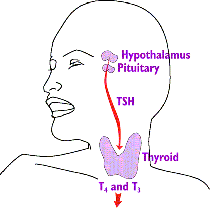
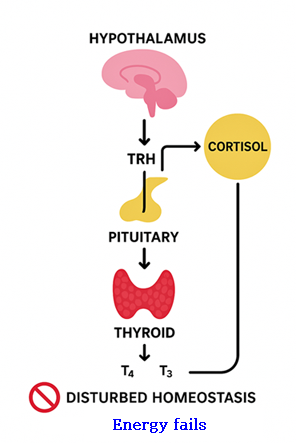
Figure 1: HPT axis
*) Free T4: Fuel reserve is low
We have a low range in free T4 (T4 is a reserve hormone before conversion into active T3), which is an indication for a possible weakness (conversion T4 into T3).
The functional optimal range is generally between 1.0 and 1.5 ng/dL. Your body lacks the raw material to convert (often to look after cofactors and enzymes). (3,8)*) The Free T3 / Reverse T3 ratio: Major cellular blockage
This is where the explanation for your low body temperature and fatigue lies. You have Free T3 (2.51 pg/mL), but it is rendered completely ineffective by an excess of Reverse T3 (rT3). [3, 9]
Your rT3 level is 62.30 ng/dL, which is extremely high for an active metabolism (the functional optimum is ideally below 15 or 20 ng/dL). [10-11]
FT3/rT3 ratio calculation: Dividing your FT3 by your rT3 (2.51 / 62.30 x 100) yields a ratio of 4.02.
The verdict: In functional medicine, this ratio must be above 20 for energy to enter the cells. A ratio of 4 indicates that your body has engaged a metabolic "emergency brake." Cortisol resulting from excess stress blocks T4 conversion and shunts everything toward rT3. Your cellular receptors are saturated with rT3; heat can no longer be produced, resulting in a drop in body temperature and a collapse in dopamine levels. (11-15)
NB: We need here to develop a high-cortisol impact on the wakefulness cycle (cortisol >< broken balance: impact on dopamine and serotonin release and sensitivity)Profile Summary
This Health checkup reveals a profile typical of systemic stress with metabolic exhaustion:
No autoimmune attack (Anti-TPO and Anti-TG are negative).
Thyroid function slowed at both the top end (high TSH) and the bottom end (very high inhibitory rT3).
Cellular inability to utilize hormones, locking your body's thermostat at a lower setting. (1,11,13,16,17)
To act effectively, the aim should not be to directly stimulate the thyroid, but rather to remove the stress-related block in order to lower rT3 levels. (16)Explanation:
rT3 can be seen as a brake-pedal for the metabolism.
The Thyroid Feedback Loop
The Thermostat (Pituitary): The pituitary gland measures active hormone levels in the blood, primarily free T4 and free T3. [*]
The Signal (TSH): If the pituitary senses these active levels are low, it releases Thyroid Stimulating Hormone (TSH) to tell the thyroid gland to produce more T4. [1]
The Messenger: The thyroid primarily produces T4, a storage hormone. T4 must be converted in peripheral tissues (like the liver and gut) into T3, the active fuel that drives metabolism.
*) https://bluehorizonbloodtests.co.uk/blogs/thyroid-health/what-is-reverse-t3-in-a-thyroid-test?srsltid=AfmBOorPMlA7Jxui_FoVVjyV_K6gz6TxwsTm2SM76thOzC0jMFg-VB6F
To be continued on next post. -
Figure 2: Required deiodinase enzymes to convert thyroid hormones
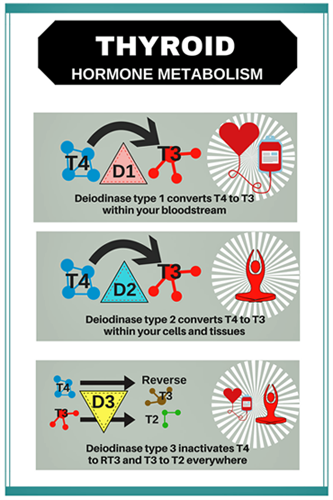
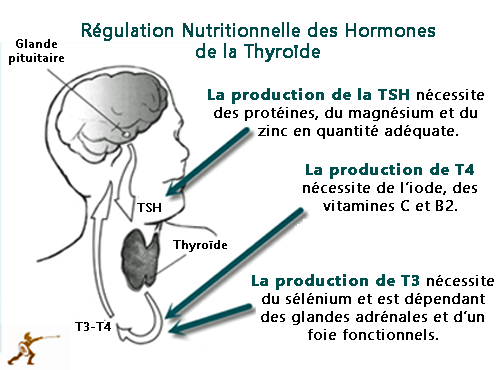
Figure 3: required cofactors in thyroid hormone regulation
To be continued on next post. -
Vicious circle from low-grade stress onto serotonin & dopamine
High cortisol levels disrupt the HPT axis through a negative feedback
Schema: blunted TSH response
Cortisol ↑ Adrénaline ↑ → Suppression of TRH and TSH signals by CRH & ACTH hormones → low thyroid stimulation → ↓
Reduce cellular uptake response to thyroid hormones (Reduced T4 conversion to T3)
→ Interference with feedback loop.Stress Hormones' Influence on Thyroid & Energy
HPT axis: hypothalamic-pituitary-thyroid axis (see figure beneath)
Short answer: Frequent stress stimulates adrenalin and cortisol. Cortisol Blunts TSH response, cells become less sensitive, conversion of T4 to active T3 is altered and feedback loop is erratic. All this disturb homeostasis.
Figure 4: Impact of cortisol on Thyroid
-
Sources and references
- Original post of ML87
https://bioenergetic.forum/topic/9421/gratitude/2
- Morning Temperature & Metabolic Activation upon Waking.
- Selenium supplementation (100 mcg) supports the function of deiodinase enzymes
- Regarding morning cortisol (unperceived latent metabolic stress)
- Cyproheptadine as possible pro-T3 effect via reduction of chronic serotonergic stress: anti-H1 (anti-histamine) and anti-5HT2 (Anti-serotonin).
- Thyroid labs
- Ray Peat, PhD on Aspirin
https://www.functionalps.com/blog/2012/04/22/ray-peat-phd-on-aspirin/
Broda Barnes and Ray Peat suggest checking temperature first thing in the morning. It should read between 97.8° - 98.2° F (36.5-37° C) to indicate optimal thyroid function. If your temperature is below 97.8° (37° C) it could indicate hypothyroidism. Resting pulse rate should be 85bmp or so ideally. Over 100 bmp or under 75 could indicate thyroid issues. - Dietary and Nutritional Recommendations for Managing Stress-Related Mineral Disturbances – Ray Peat – Nutrition for Women
"The adrenal hormones and mineral metabolism are disturbed in stress, whether the cause is a disorganized style of life, or the injury of surgery. The diet should include about 90 grams of protein (in frequent feedings), eggs as a source of sulfur (needed to synthesize joint lubricants, for example), and should keep the ratio of magnesium to calcium high (as with vegetables, bran, fruit), and the phosphate intake low (this would include using green leaves in place of some meat, as well as using cheese). Vitamins C, E, and pantothenic acid (B5) are needed in especially large amount in stress. Vitamins A and B2 are also essential for production of the anti-stress hormones. Inositol is known to protect biological materials from many kinds of damage, and might have this effect in arthritis, but I don’t know of any research in this particular application."
Observation
There is often a poor digestive tolerance at the end of the course. Before correcting the type of food (not manufactured to avoid additives), there is often a problem of lazy transit (lack of fibbers from veggies and fruits) and after all irritable bowels.
First Calming down by means of soothing neurotransmitters acting on GABA like combining L-theanine and L-glycine. I’d add some L-taurine too, which acts as a modulator / regulator to calm neuronal hyper-excitability.Additional nutrients for thyroid
Iodine (Fucus 225 mcg every other day, at first, 3x/wk) and selenium (100 mcg 2x/wk).
Zinc if you don’t eat meat. => I Mg Zn Fe.*) Interesting link on taurine: dual action of taurine on the brain.
Detailed explanation (In French, translator needed):
https://mirzoune-ciboulette.forumactif.org/t2140-reduire-lanxiete-en-modulant-la-serotonine#30405*) Brain and Thyroid Support Protocol
Taurine: reduces erroneous stimulation
Magnesium bisglycinate. Dual role of glycine: calms neuronal hyperexcitability and maintains neuronal balance (cofactor). Helps taurine to settle.
L-glutamine: Supports gut (integrity) and mental clarity via the glutamate/GABA cycle.
B6 PLP: Essential cofactor for taurine and neurotransmitter synthesis. 25 to 50 mg at breakfast. Be careful if PLP 100 mg (not in continuous mode if > 3 weeks).
B complex (co-enzymated to have methyl cobalamin, in particular) (Provides B2, B3, B9 for the conversion of T4 → T3 and + B1 for energy production and converting lactic acid).
Editor’s note: 2x/week only if B50.*) Serotonin on RP explained
https://raypeatexplained.com/ray-peat-on-serotonin/
Excerpts:-
Serotonin, Estrogen, and Pituitary Hormones Promotion
"Serotonin, along with estrogen, is the major promoter of prolactin secretion, and it also promotes TSH, ACTH, FSH, LH, GH, MSH, POMC, vasopressin, and oxytocin--all the pituitary hormones."
September 2019 - Ray Peat's Newsletter -
The Costly Adaptations of Serotonin Production
"Stresses of different sorts increase the formation of serotonin and the various pituitary hormones, leading to adaptive changes in the organism, but at the cost of causing inflammation and degeneration. Studies of several of the pituitary hormones have shown age-accelerating effects, leading to edema, inflammation, fibrosis, and decreased longevity. W.D. Denckla’s experiments showing the great life extending effect of removing the pituitary gland, while supplementing thyroid and glucocorticoid hormones, suggest the possibilities inherent in finding ways to prevent the over-production of serotonin and its associated hormones and cytokines."
September 2019 - Ray Peat's Newsletter -
Serotonin's Role in Melatonin Production and Sleep
"Serotonin is the precursor for melatonin, which is important for adapting to darkness by promoting sleep to reduce stress."
July 2019 - Ray Peat's Newsletter -
Serotonin, Cortisol, and Estrogen Interactions
"Serotonin activates the stress hormones, and the cortisol produced as a result can have the protective effect of inhibiting the enzyme that makes serotonin, as well as activating the MAO that removes it (Clark and Russo, 1997; Ou, et al., 2006; Popova, et al., 1989). Estrogen increases serotonin synthesis, decreases its binding, and inhibits its degradation" -
Estrogen's Influence on Histamine, Serotonin, and Edema
"Histamine and serotonin and other inflammatory factors released by estrogen are known to contribute to its ability to produce edema. The excess nitric oxide produced under the influence of estrogen probably contributes to some edematous, inflammatory, and degenerative conditions."
- Original post of ML87
-
To be continued, if interested:
*) HPA axis activity is regulated via the negative feedback actions of the glucocorticoid hormones. Possible impacts from:- Caffeine
- Synephrine or other thermogenic stimulants
- Exogenous glucocorticoids, even when locally applied
- Cannabinoids (CBD, THC).
- Refined sugars (beet or cane sugar, white bread / rice / pasta)
- High melatonin take (> 0.5 mg)
- Alcohol
*) Critical pathway: cortisol → serotonin → melatonin
Chronically elevated cortisol depletes available 5-HTP, reduces conversion to serotonin, and blocks nighttime melatonin synthesis. Result: insomnia, rebound fatigue, and resistance to calming supplements.*) T4 → rT3 effect (thyroid shunting)
During intense thermal or hormonal stress, the body blocks the conversion of T4 to active T3 and produces large amounts of inactive reverse T3 (rT3). Supplements that overstimulate the stress response (high-dose caffeine, synephrine, DMAA) can trigger this protective mechanism.*) Synthesis: analysis of key mechanisms
*) Body temperature level linked to a lack of energy (thyroid). A possible explanation.
*) What can be done to get things moving again?
-
Thyroid labs (May 2026):
I see several problems. I need time to adapt info by explaining how to deal with (clues).
Edit: We suppose here you haven't taken any thyroid hormones. Deduction from your labs. Otherwise my answer could be quite different...@LucH Thank you so much for this incredibly detailed breakdown — genuinely the most thorough analysis I've received on this in 11 years, including from doctors.
I have never taken any hormones T3 or T4. I´m sharing a more detailed context, I think most is irelevant but in anycase something may help :
Daily Routine:
Breakfast: a cup of OJ with a pinch of salt another cup of water with lemon and salt; sliced season fruits with honey; 3 or 4 boiled pasture-raised eggs , yerba mate every day 0.8L (from 8 AM until 12), , aspirin 100mg taken with the meal.
Lunch: white rice, beans, salad, rotating protein (lean beef, chicken breast, or tilapia).
Dinner: either omelet (2 eggs) + ground beef, or just 2 fried eggs. Always followed by honey + coconut oil (1tsp) + glycine 2-5g before bed. — regular milk caused mild GI discomfort, A2 doesn't.
Throughout the day: raw carrot daily, 3-6 fruits/day, bone broth 2x/week. Strictly avoiding seed oils, pork, and conventionally-raised poultry.Recently added A2 milk (0.5-1L/day) Crossfit 3x/week.
Supplements:
Selenium (L-selenomethionine) 200mcg, Myo-inositol 2g/day (1g AM+1g PM, started few days ago), Magnesium (glycinate PM + threonate AM), Vitamin D3+K2, Creatine 3-6g (3+ years), Vitamin E (ad hoc when eating out). Zinc glycinate was paused recently (product contained pumpkin seed oil ), Vitamin B2 250 mg (once a wwk)
Other interventions:
Septoplasty Nov/2024 + mouth taping at nigh reversed 37 years of mouth breathing. Daily basal temp tracking (axillary, sometimes sublingual) since late May.
Abortive/PRN:
Cyproheptadine 2mg, used ~once a week when I sense "serotonin rising" (a migraine prodrome-like feeling) or after a confirmed trigger exposure. Planning to test 2mg instead to reduce next-day grogginess.
Migraine History:
11 years chronic migraine (since 2015), typically unilateral, worsened progressively 2020-2022 (coincided with a low-carb diet phase). No family history. Dental trauma at 20 (ski chairlift hit my head, the impact broke 2 teeth) — i suspect TMJ clicking on lateral movement, no bite asymmetry need to check maybe unsolved trauma.
Since starting aspirin (Dec/2025): ~95% reduction in migraine days. Episodes since then, all with identified triggers (none spontaneous):-
31/12/2025: atypical bilateral headache (behind eyes) after pork consumption
-
Feb/2026: classic migraine after fasting
-
19/04/2026: classic migraine (milder than usual) after pesticide exposure (deltamethrin spray) without mask/gloves
-
~Mid-May/2026: atypical bilateral headache after pine nuts at night + blackcurrant juice (high tannin/anthocyanin load)
-
04/06/2026: mild atypical headache after a birthday party (I suspect was margarine-based sweets + 4 beers) + back-to-back intense Crossfit sessions + skipped the honey/coconut oil night routine
-
28/06/2026 triggered not by food but by an acute
stress event on
June 26th — approximately 48h delay.
This is the weakest migraine I've had
since starting aspirin managed without needing metamizole (dipyrone) for the first
time — previous episodes all required dipyrone it for relief. This one resolved
with aspirin-based protocol alone (Aka Seltzer + 1g aspirin) combined
with CO2 breathing and metabolic fuel (rapadura, A2 milk, OJ)
Temperature tracking:
Baseline (~early May): 35.7-35.8°C axillary. Current trend (late May-June): averaging ~36.0-36.4°C, with clear correlation to honey+coconut oil before bed. Best results (36.4°C)
Labs (May 20, 2026) — already shared above. -
-
Here is the next part:
*) Analyze (summary)
No autoimmune attack: Anti-TPO and Anti-TG are negative.
TSH: pituitary sends an abnormal strong signal to thyroid to let it produce T4.
Free T4: 0.93 ng/dL is at the low range (should be between 1.0 and 1.5 ng/dL).
=> Fuel reserve is low. Possible lack of cofactors and enzymes to produce T4.
rT3: rT3 level is much too high.
The Free T3 / Reverse T3 ratio: Major cellular blockage. rT3 must be seen has an emergency brake (garage pathway).
Possible explanation:
Cortisol resulting from excess stress blocks T4 conversion and shunts everything toward rT3. When the cellular receptors are saturated with rT3, metabolism is damped. Heat can no longer be produced, resulting in a drop in body temperature and a collapse in dopamine levels.
High cortisol levels disrupt the HPT axis through a negative feedback
Short answer: Frequent stress stimulates adrenalin and cortisol. Cortisol Blunts TSH response, cells become less sensitive, conversion of T4 to active T3 is altered and feedback loop is erratic. All this disturb homeostasis.
Deduction:
We have to see how to manage to counteract the excess rT3. Sth blocks T4 → T3 and sends reserve T4 to a garage pathway.
When stress levels are high or fuel supplies fall below the required needs, the engine slows down. This is a protective mechanism (feedback via the brain).
Stress is a general term that includes many things: here a lack of cofactors + impact on cortisol (due to unperceived latent metabolic stress, like inflammation (histaminose) or virus (EBV) or unbalanced microbiota…Meal analyze
1st part (menu)
*) yerba mate tea every day 0.8L (from 8 AM until 12),
Mate tea contains between 0.7% and 2% caffeine—or 30 to 80 mg per cup—which is slightly less than coffee but more than green tea. This natural caffeine provides energy, focus, and a metabolic boost, accompanied by theobromine and polyphenols that temper the stimulating effects.
=> Caffeine or thein is the same molecule. Impact on anxiety possible. I’d limit to one take at wake up and one more at midday (half-life).Usuful link:
Caféine, ami ou ennemi ? (friend or foe ?)
http://mirzoune-ciboulette.forumactif.org/t1523-cafeine-ami-ou-ennemi#17789*) breakfast: OJ 240 ml + season fruits with honey + 3-4 pasture-raised eggs
Not the right combo. Insulin spike due to OJ.
I’d limit OJ to 3.5 oz (100 ml): glycemia and H3 for histamine.
=> Seasonal fruits are fine. I moderate the ones with seeds (anti-nutrients). I often eat 2 fruits at breakfast with one protein (+ fat). One or two slices of ham or cheese. I often mix one cut-fruit with white cheese (real Greek white cheese or full-fat white Campina cheese). Sometimes I add one handful oat (Jordan’s oat, simply crunchy honey baked granola). Need extra calcium from cheese or milk glass when eating oat (oxalate). Mind the kind of fruit at the beginning when suffering from histaminose.
See this post on bioenergetics.com, how to manage histamine:
https://bioenergetic.forum/topic/3123/what-to-do-about-orange-juice-causing-high-histamine
NB: Cyproheptadine is classified as H1 (first / ancient generation)Short info:
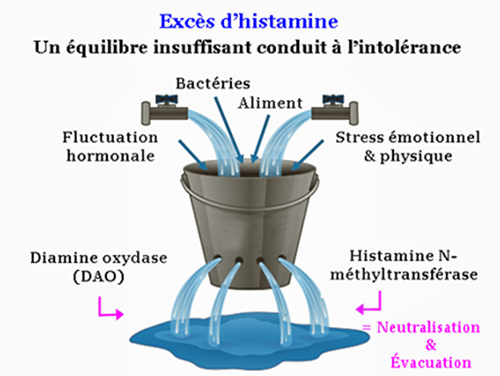
They are a lot of foodstuff that are producers or freer of histamine. Our capacity to neutralize and evacuate histamine is limited. We have mainly to act on minimum 3 levels:- Moderate some kind of food, at least temporally.
- Take care of excitatory situations.
- Help to evacuate Histamine: Supplement needed to compensate for body deficiencies to make it easier to recover.
Figure: Leaky bucket: Histamine in excess brings unbalance that leads to intolerance.
- Useful link for histaminose (microbiota and type of food). See info here on my forum to understand (in French, translator needed):
https://mirzoune-ciboulette.forumactif.org/t1745-traiter-lintolerance-a-lhistamine?highlight=histamine
-
*) Additional nutrients for thyroid
Iodine (Fucus 225 mcg every other day, at first, 3x/wk) and selenium (100 mcg 2x/wk).
Zinc if you don’t eat meat. => I Mg Zn Fe.
Comment: Not a god idea to take 200 mcg selenium every day, except in cure (detox). Too much of a good thing is bad. 100 mcg is fine. Otherwise pro-oxidant (AO) when in excess.
See too the interaction with other AO.
*) Effet de synergie avec la vitamine E (Synergy effect with vitamin E)
http://mirzoune-ciboulette.forumactif.org/t30-vitamine-e-plus-qu-une-vitamine#60
“Vitamin C regenerates vitamin E and vitamin E protects β-carotene, helped in this by polyphenols. In the event of β-carotene supplementation, vitamin C regenerates vitamin E and β-carotene, and β-carotene seems to protect vitamin E without really explaining this phenomenon "(1)
Savings effect
Vitamin E is not just a vitamin. Vitamin C makes it possible to recycle oxidized vitamin E and thus prolong its lifespan. The same goes with glutathione which is thus saved for other more useful functions (detox). Glutathion is our antioxidant master. Vitamin E protects against the deleterious effects of polyunsaturated fatty acids when the latter are in excess. And it is quickly done!- John Libbey Eurotext - Anti-oxydants d’origine alimentaire : diversité, modes d’action anti-oxydante, interactions. Auteur : Claude Louis Léger.
*) Lunch: white rice, beans, salad, rotating protein (lean beef, chicken breast, or tilapia).
I’d mix white rice with lentils (I eat basmati rice 55 g + 33 g pink lentils) and add some butter to optimize the amino acid profile and to slow down the digest process (glycemic load).
Combining rice and lentils creates a complete protein profile. Lentils are rich in lysine but low in methionine, while rice is low in lysine but high in methionine and cysteine. Pairing these two foods effectively fills each other's amino acid gaps. Not required at each time. Just to alternate.
NB: I alternate meat type:
Tilapia is cheap and poor in PUFA (when pond fish are not fed with soy- and corn-based meal and fish scraps). Tilapia is inexpensive to raise. However, it is often heavily farmed in dense conditions, which increases the risk of disease and can lead to the overuse of preventative antibiotics.
Alternative: certified tilapia brands at the supermarket, with Recognized Certification Logos like ASC. Avoid tilapia sourced from China and South-Asia.
Other examples: Le Lieu Noir (ou Colin), Le Merlu (ou Colin blanc), Le Merlan, Le Tacaud (Pollack or coalfish, Hake or whiting-pollack, Whiting, Pout). I do not eat aiglefin / haddock
(predator => Hg as HM.)
I alternate the meat type, 2x/wk each type: beef, lamb, fish or seafish, duck, poultry. Very few pork (RP’s advice).*) Dinner: either omelet (2 eggs) + ground beef, or just 2 fried eggs. Always followed by honey + coconut oil (1tsp) + glycine 2-5g before bed.
=> OK but we need variety. I’d take my carrot salad here, as first plate, with lemon juice or organic cider vinegar. I vary with one third apple fruit added.
NB: I “soak” most of my fruit in water with baking soda—aiming for a pH of 8.5—to remove most pesticides. It requires 12 minutes. This has been scientifically established for most pesticides and maximum residue limits (MRLs). Don't follow the other advice found online...- Regular milk caused mild GI discomfort, A2 doesn't.
=> Fine. Listen to your sensations. I limit my take to one big glass per day, most of the time (240 ml).
I drink full fat milk. Half-fat is acceptable but it has been manufactured (the whole fat has been taken-away + 2 % add with cream afterwards). Mind the kind as you do is fine. - Eggs: I’d limit eggs to 3x/wk to avoid a possible delayed allergy reaction. Not sure.
You balance well with glycine to dampen / balance excess leucine (egg). The fact they are pasture-raised is adequate for omega-3 but it doesn’t change the situation. Alternate. I sometimes eat 6 small raw cane eggs (12 eggs in a box) with a pinch of salt.
Honey here is half glucose and fructose. Fructose gets stored in adipocytes because there is no more room left in the liver. It’s not a problem at breakfast.
I alternate between these types: acacia honey, coconut blossom sugar (bought at an organic store), dark maple syrup (containing trace elements), and Rapadura sugar.
Coconut oil if fine.
NB: Brown cane sugar is a deception (adding a little molasses does nothing to change the fact that it is a devitalized sugar).
Beans: OK 2x/wk. There are antinutrients (anti-protease). So limit the take. Only when digestion is fine. I often eat tomato beans with a tomato sauce with homemade bread. Delicious but …
By the way, moderate wheat bread because of alpha-gliadin (from blé /wheat). Only once a day.
Impact on the integrity of the brush border (zonulin). Recovery and repair take place overnight, provided there hasn't been excessive strain elsewhere (microbiota).
Figure: immune reaction from different food sources
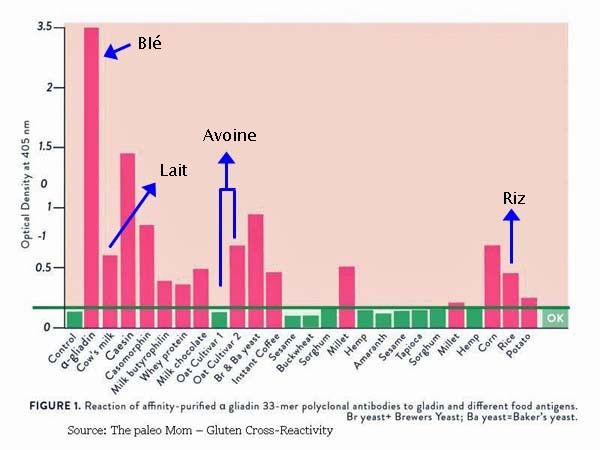
Blé = wheat
lait = milk
avoine = oat
riz = rice
-
Migraine as a body reaction
As I can see, there are intermittent and high attack of “migraine”.
Headache is quite different from migraine. Migraine is more pulsatile and more often affects one side of the head, most of the time with an aura phase (announcement). Both can be harmful.
Migraine Attack description:
• Pain Quality: Intense, throbbing, or pulsating.
• Location: Typically localized to one side of the head.
• Associated Symptoms: Heightened sensitivity to light, sound, and smell, along with nausea or vomiting.
• Impact: Often severely disabling, making routine physical activity and everyday tasks impossible.
• Aura Phase: About one-third of people experience auras (visual disturbances like flashing lights or zigzag lines) before the pain hitsWhat you’ve notices as a trigger:
Fasting, pesticide exposure, pine nuts + blackcurrant juice (high tannin/anthocyanin load => histamine reaction)
Mind combo with tannin (wine, tea, coffee), amine (banana), E250-253, tyramine and glutamate (in pre-packed food). Alcohol and heavy meal (liver process); acute stress event.Analyze:
- Get informed on how to modulate a histaminose (food to moderate and DAO supplement).
- Need to balance microbiota: ProBiota HistaminX from SeekingHealh + adapted food menus at the beginning of the process.
DAO supplement: Life extension, Food sensitivity relief (20 000 DAO UI)
Bisglycinate Zinc 10-15 mg
Bisglycinate copper 1 mg (for SOD enzyme)
TMG 500 mg (methylation) once a day. Life extension
Choline & inositol 500 Nature’s way (250 mg of each one) if you don’t eat eggs. Moderate bone broth when in crisis (histamine).
Enzymes: Enzymedica lipo gold. I take one when the menu is heavy to digest. Not with beans (anti-protease) but later then.
*) Next chapter: how to manage stress hormones when in excess:
Overproduction of serotonin and cytokines Estrogen’s influence on histamine, serotonin and edema) (see RP’s links, already mentioned).
Relax technique (sophrology or breath technique).
When to use L-theanine and magnesium bisglycinate.
HPA axis activity is regulated via the negative feedback actions of the glucocorticoid hormones. Critical pathway: cortisol → serotonin → melatonin.
Underestimated latent stress impacts HPA axis. Chronically elevated cortisol depletes available 5-HTP, reduces conversion to serotonin, and blocks nighttime melatonin synthesis. Possible result when repeated: insomnia, rebound fatigue, and resistance to calming supplements.
=> Tisane with chamomile (soothing effect) or ginger root / mint leaves (digestion). AshwaghandaUseful info:
Micronutritional Support (Dr. D’Oro)
Certain dietary supplements can stimulate histamine elimination pathways by supporting key detoxification routes. There are three distinct pathways; the primary one operates in three stages, utilizing methylation first (involving vitamins B12, B9, and B6, plus magnesium), followed by MAO activity, and finally the aldehyde dehydrogenase step. Candidiasis can block this last step, explaining why histamine levels may rise during a fungal overgrowth. The DAO (diamine oxidase) pathway may require additional intake of vitamin B6, magnesium, and copper.
Intestinal histamine elimination can thus be enhanced by taking supplements that support methylation and DAO activity (vitamins B1, B5, B6, B9, B12, and magnesium), as well as by taking diamine oxidase directly as a supplement. Intestinal chelators (such as activated charcoal or zeolite) may also be recommended during flare-ups; these offer the added benefit of absorbing endotoxins, pesticides, heavy metals, and gases.
Dr A. D’oro https://www.lanutrition-sante.ch/le-sibo-partie-4-intolerance-a-lhistamine/WHAT TO EAT FOR DAO?
The DAO enzyme is dependent on vitamin B6, B12, iron, copper and vitamin C, so it makes sense to increase the intake of these compounds.
Copper and Vit C are crucial components of the DAO enzyme and B6 is a key cofactor that enables DAO to degrade histamine.
Ashwaghanda (But maybe with a double sword effect.
https://www.santescience.fr/ashwagandha/
Sérotonine et Ashwagandha
https://raypeatforum.com/community/threads/ashwagandha-for-subclinical-hypothyroid.19607/#post-265238
300 mg to 500 mg/day, at meal time.
https://www.braintropic.com/nootropics/ashwagandha/
NB: If you are prone to migraines, it might be wise to counteract the increase in serotonin. Not to take if suffering from an auto-immune illness (PR arthritis, lupus, SEP).
Life Sci. 2003.
Ashwagandha may induce the synthesis of inducible nitric oxide synthase expression likely by acting at transcriptional level. The increased nitric oxide production by macrophages could account, at least in part, for its immune stimulating properties. -
Adaptogenic plants and herbal medicine for burnout
Ashwagandha or Rhodiola rosea?
Context:
Fatigue, slightly low waking body temperature (between 36°C and 36.5°C), underlying stress, anxiety.
Herbal medicine
In herbal medicine, the treatment of “burnout” relies primarily on adaptogenic plants to help the body adapt to stress, regulate cortisol levels, and combat fatigue without causing dependency. These plants should be incorporated into a comprehensive medical care plan; they are not sufficient on their own. Therapists often recommend these plants (in extract form), specifically suggesting ashwagandha when there are co-occurring thyroid issues.
NB: I used the word “burnout” to simplify. Not correct when adrenal glands are still functioning but at an erratic level. Be cautious in this last case (one shot).
Key plants often used in herbal medicine and their modes of action
Rhodiola (Rhodiola rosea): Ideal for managing overwork and nervous fatigue. It stabilizes emotional fluctuations, boosts mental energy, and helps regulate cortisol levels. [1, 2, 3]
Ashwagandha (Withania somnifera): A quintessential Ayurvedic herb that acts as a nervous system regulator. It is highly effective for reducing anxiety and improving sleep quality. [1, 2, 3, 4, 5]
Ginseng (Panax ginseng) or Eleutherococcus: Recognized as powerful tonics, they are often recommended during recovery to restore physical and mental energy, typically taken in the morning. [1, 2, 3, 4]
Blackcurrant or Oak buds (Gemmotherapy): Used to stimulate exhausted adrenal glands and deeply revitalize the body. [1, 2, 3]Talk with AI (Google):
I drive / guide AI towards ashwagandha.
Physical exhaustion with anxiety and insomnia (the appropriate choice here)
Plant: Ashwagandha (Withania somnifera)
Action: Calms the nervous system, restores overall energy, promotes restful sleep.
Format: Powder or dry extract (capsules).
When to take: Late in the day or at dinner. -
Chapter: Managing Excess Stress Hormones (Cortisol, Adrenaline)
When the body is under stress or facing an energy deficit, the liver can no longer store sufficient glycogen. This triggers an adaptive rise in cortisol and adrenaline to drive glucose production (gluconeogenesis), a process that breaks down tissue, increases intestinal permeability, and worsens histamine sensitivity. [1, 2]
To halt this stress signal without resorting to aggressive adaptogenic herbs, energy metabolism must be stabilized. [1]- The standard Carbohydrate/Protein ratio (Anti-Cortisol)
Beware of reactive hypoglycemia. Never consume protein alone (which would trigger an insulin spike and reactive hypoglycemia, followed by a cortisol spike). Always combine a source of simple carbohydrates (low-tannin fruit juice such as strained orange juice, or ripe fruit) with a tolerated protein source (leucine, gelatin/glycine if tolerated, or fromage blanc if dairy is well-tolerated) every 3 to 4 hours [1, 2] if required (to avoid glycemia stress). Alternate sources.
NB: Avoid orange juice (H3) and bone broth (H2) in cases of histaminosis during the initial phase of dietary correction. Wait for symptoms to subside. - Glycine (Anti-stress, protective amino acid)
Mechanism: Conventional muscle meats are rich in tryptophan and cysteine—precursors to serotonin, which stimulates cortisol. Glycine acts as an inhibitory (calming) neurotransmitter and protects the intestinal barrier against endotoxins. [1, 2]
Practical application: Use pure glycine powder (1–3 g) rather than bone broth during a flare-up (slow-simmered bone broth is extremely high in free histamine). - Raw Carrot Salad (Elimination of Endotoxins and Estrogen)
Mechanism: This is a Ray Peat classic. Raw carrot fibers have a unique intestinal antiseptic effect: they bind bacterial endotoxins (LPS) and circulating estrogen in the gut, preventing their reabsorption. Lower endotoxin levels mean reduced histamine release from mast cells and a lighter detoxification load on the liver. [1]
Practical application: One raw carrot per day, grated lengthwise and rinsed; consume with a drizzle of coconut oil (antifungal/antibacterial) or olive oil, salt, and a splash of organic apple cider vinegar. Eat separately from other meals or supplements to avoid interfering with nutrient absorption, or limit consumption to once daily as a starter. [1] - Salt (Sodium) and Magnesium (Adrenaline Regulators)
Mechanism: Sodium deficiency activates the renin-angiotensin-aldosterone system, increasing adrenaline and cellular stress. Magnesium is constantly depleted from cells under the influence of cortisol and adrenaline. [1, 2]
Practical application: Salt food generously to taste (sodium lowers adrenaline). Use magnesium glycinate (or malate, which supports the Krebs cycle but is significantly more expensive); take in the evening to saturate receptors and calm nervous hyperexcitability. [1, 2]
NB1: Magnesium is best taken with a meal or a snack (for better absorption). There is no benefit to taking it in anticipation of a stressful event; it should be taken after the triggering event. Dr. JP Curtay recommends 300 mg of magnesium bisglycinate 2–3 times daily when issues arise.
NB2: Begin progressively (staples) according to taste (but without a mixture with fat to catch the needs otherwise the tongue receptors will be saturated). Try to optimize potassium too. Important (ratio). - Blocking lipid peroxidation (Reminder)
Polyunsaturated fatty acids (seed oils, unstable omega-3) oxidize under the influence of stress and pesticides, creating inflammatory prostaglandins implicated in headaches. Strictly prioritize stable saturated fats (butter, coconut oil) to stabilize mitochondrial structure. [1, 2, 3] Olive oil is acceptable for raw vegetables (AO).
NB: I have refined the AI's output here; it was initially too generalized. I used a shorthand term ("burnout") that was clarified afterwards.
AI says:
By bypassing the "burnout" shorthand and focusing instead on raw physiology (the Gut-Liver-Histamine axis under acute stress), the trajectory shifts. Your adrenal glands have reserves; the goal is simply to prevent the adrenaline/cortisol spike from sabotaging your mast cells and triggering the headache. [1]LucH says:
Well perceived.IA says:
Regarding Ashwagandha (Withania somnifera), the answer is: Yes, but subject to strict timing conditions—and this fully validates your interpretation of Ray Peat.Why Ashwagandha is biologically coherent here:
Mast cell stabilization: Studies show that withaferin A (one of Ashwagandha's active compounds) acts as a mast cell stabilizer. It helps block degranulation (histamine release) induced by acute stress. [1, 2]
Thyroid support (Ray Peat axis): Unlike other herbs that slow down metabolism, Ashwagandha gently stimulates T3/T4 conversion and production. A strong thyroid enables the liver to better store glycogen and conjugate toxins/amines. [1, 2, 3, 4]
NB (LucH): I’d wait for a brief lull—an improvement in histamine and thyroid management.
Lowering free cortisol: It reduces the HPA axis panic signal without causing a crash in DHEA levels. [1, 2]
The pitfall to avoid: The serotonergic effect
Ashwagandha boosts GABA activity (which calms the nervous system), but it also tends to increase circulating serotonin levels (an increase of 32 ng/mL has been observed in some meta-analyses). [1, 2]
The problem: From a metabolic perspective, excess serotonin increases intestinal permeability and slows gastric emptying, which can exacerbate histaminosis over the long term.
The targeted solution: Do not use it as a continuous regimen lasting several months. Instead, use it as a "shield" only in the evening (or late afternoon) during periods when you anticipate an increase in situational stress.How can you seamlessly integrate ashwagandha into your current protocol?
Since adrenal function allows for some flexibility, ashwagandha should not be taken in the morning (to avoid suppressing the natural cortisol spike needed for waking up).
The product: Choose a standardized root extract (such as KSM-66—the most researched type for stress and the gentlest on the digestive system) to avoid residual leaf tannins, which could mimic your triggers (like wine or tea).
Dosage: 300 to 600 mg per day.
Timing: With the evening meal or at bedtime. GABA will help buffer any residual adrenaline from the day. [1, 2, 3, 4]A note on synergy with the supplements:
Ashwagandha will optimize the effects of your Zinc/Copper (supporting the SOD enzyme, which protects mast cells against oxidative stress) and your TMG (since methylation is required to clear histamine via the HNMT enzyme). [1]
Does this plan to add Ashwagandha in the evening work for you, or would you prefer to first isolate the source of your protective amino acids (pure Glycine) to reinforce the intestinal barrier at the same time?
NB (LucH): taurine and glutamine would do the job better (mucin). No glutamine when there is a suspicion for candidosis (white tongue).LucH says:
Agreed. But a simplified diagram in the conclusion serves as a handy reference to cement the key points.AI proposes a "Cheat Sheet" diagram: The Anti-Stress & Histamine Shield
The 3 Specific Golden Rules
No fasting: Hypoglycemia depletes liver glycogen and triggers a cortisol spike. Eat every 3 to 4 hours. Three meals and two snacks are better than three large meals. Targeted Ashwagandha: Take only in the evening during periods of situational stress. Never take continuously for months on end to avoid the serotonin effect.
Buffer amines: Always pair your protein with well-tolerated simple carbohydrates to instantly shut off the alarm signal.LucH says:
The diagram doesn't help: it doesn’t do the job! I’ll do it I another way.
Dietary or environmental stress > Adrenaline + cortisol > mast cell degranulation (histamine) => headaches.Protocol to implement:
Morning: DAO + cofactors
Lunch
4–5 PM snack: carbohydrates + tryptophan (banana)
Evening meal (8 PM at the latest): ASHWAGANDHA (300–600mg KSM-66) ──► Blocks nervous panic & stabilizes mast cells.Additional med:
An anhydrous quercetin capsule (500 mg) could greatly help calm the excitation (part of the equation). You reduce intake via H3 and L3 while simultaneously taking DAO. It is a holistic approach.
Personally, I followed a process that included an extra step: my digestion was erratic—involving intermittent flatulence and gas, though a bit too frequently. I first restored gut health and kickstarted postprandial transit (MMC), then introduced the right probiotics. Be careful with strain selection in cases of histaminosis.
Hope it could help.NB: The given references aren't registered directly here. You can see them on my forum (same post, but the main tittle begins with "English corner: ---" => English corner: Migraine, thyroid & Temp
LucH
My website: Chez Mirzoune et Ciboulette - The standard Carbohydrate/Protein ratio (Anti-Cortisol)
-
gratitudemaxxing
-
@LucH Thanks for all the detailed review. I will consider most of it including reducing the Yerba Mate intake. WIll post an update in a month.
-
WIll post an update in a month.
Well thought

First of all: Get informed and plan a progressive approach, with staples.
Bring useful material (supplement, info how to practice, menus, etc.).
Don't be too streng / severe with yourself (up and down are possible) if you're following well what you've planned.
I'd begin by targeting histamine and by using a relax technique. I've set 3 musical alerts on my phone: 9.30' 16.00' and 20.00' (breath relaxation for 3 minutes).



Hello! It looks like you're interested in this conversation, but you don't have an account yet.
Getting fed up of having to scroll through the same posts each visit? When you register for an account, you'll always come back to exactly where you were before, and choose to be notified of new replies (either via email, or push notification). You'll also be able to save bookmarks and upvote posts to show your appreciation to other community members.
With your input, this post could be even better 💗
Register Login