PC choline to stabilize membranes
-
How to support PE production naturally (without supplements).
PE (phosphatidylethanolamine) is made mainly inside mitochondria by the enzyme PSD (phosphatidylserine decarboxylase):
Phosphatidylserine (PS) → PE
So the only way to increase PE naturally is to support:- PS availability
- Mitochondrial PSD activity
- ER–mitochondria lipid exchange
- Membrane conditions that favor PE retention
Support PE Retention in Mitochondria
Even if you make PE, it can be lost if membranes are unstable.
Support naturally by:
• Adequate cholesterol (membrane stabilizer)
• Adequate saturated fats (reduce leakage)
• Avoiding PUFA overload (prevents peroxidation and PE loss)
Why this matters: PE is the lipid that gives curvature to cristae. If PE is low, cardiolipin cannot organize respiratory complexes.
 Practical Summary
To support PE production naturally:- Eat enough serine + glycine
Eggs, dairy, meat, gelatin. - Maintain a healthy PC pool
Eggs, lecithin foods, or PC supplements if desired. - Support mitochondrial function
Stable blood sugar, move, low oxidative stress. - Support membrane stability
Saturated + monounsaturated fats, low omega 6. - Protect ER–mitochondria contact sites
Avoid alcohol excess, avoid PUFA overload.
 Why this matters for cardiolipin
• PE shapes the inner membrane → cardiolipin can anchor ETC complexes.
• PC stabilizes the outer membrane → lipid traffic works.
• Cardiolipin organizes the respiratory chain → ATP production is efficient.
Supporting PE naturally = supporting cardiolipin function without adding PUFA.
To be continued on next post. -
I'm going to end up with useful nutrients to protect lipid directly
1. Antioxidants That Protect Lipids Directly
Vitamin E (tocopherols + tocotrienols)
• Acts as the primary lipid-phase antioxidant, protecting membrane phospholipids from peroxidation.
• Gamma-tocotrienols add stronger chain-breaking antioxidant activity in membranes. Dose: 400 IU mixed tocopherols (with gamma tocotrienols) 2–3×/week, or 20–25 mg/day. Note: More is not better; excess can disrupt redox balance.
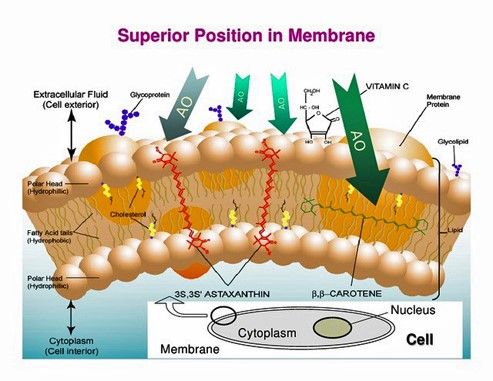
Beta-carotene (from food)
• Quenches singlet oxygen and supports antioxidant recycling.
• Best obtained from diet (carrots, sweet potatoes, leafy greens).
Astaxanthin
• A potent carotenoid that embeds across the lipid bilayer and protects both sides of the membrane from ROS.
• Particularly effective in mitochondrial membranes.2. Water-Soluble Antioxidants and Cofactors
Vitamin C
• Regenerates oxidized vitamin E.
• Supports collagen, immune function, and general redox balance.
Magnesium
• Key mechanism: Magnesium inhibits PLA₂, the enzyme that releases arachidonic acid (AA) from membrane phospholipids.
• Mg²⁺ stabilizes phospholipid bilayers, reduces Ca²⁺-dependent PLA₂ activation, and lowers eicosanoid production. Dose: 350–420 mg/day elemental magnesium. Form: Magnesium bisglycinate (≈2.5 g/day split into 2–3 doses to reach ~450 mg). Note: Higher needs after stress; do not “preload” before stress.
Zinc
• Protects thiol groups and stabilizes membrane proteins.
• Inhibits NADPH oxidase–induced lipid peroxidation, reducing the arachidonic acid cascade. Dose: 10–15 mg/day. Mechanism:
o ↓ membrane peroxidation
o ↓ PLA₂ activation
o ↓ free AA release
o ↓ PGE₂ formation (independent of COX inhibition)
Key references:
• Prasad, Am J Clin Nutr, 2009
• Ho et al., Free Radic Biol Med, 2008
Selenium
• Required for GPx4, the enzyme that repairs lipid hydroperoxides directly in membranes.
• GPx4 is the only enzyme that can detoxify oxidized phospholipids inside the bilayer. Dose: 100 mcg 2–3×/week; more if inflammation is present. Note: Excess selenium causes fatigue and organ stress — more is not better.3. Structural Lipid Support
Phosphatidylcholine (PC)
• The primary phospholipid of cell membranes.
• Essential for maintaining bilayer structure, fluidity, and repair.
• Supports ER–mitochondria lipid exchange, which is required for cardiolipin remodeling.
Stearic Acid
• A saturated fatty acid that “solidifies” and stabilizes membranes without promoting peroxidation.
• Helps maintain the optimal balance between membrane fluidity and rigidity. Sources: Cocoa butter, dark chocolate, beef tallow.Why This Matters for Mitochondria
• PC stabilizes the outer mitochondrial membrane and supports lipid trafficking.
• PE (phosphatidylethanolamine) shapes the inner membrane and allows cardiolipin to organize respiratory complexes.
• Cardiolipin anchors the electron transport chain and is extremely sensitive to oxidation.
• GPx4, vitamin E, astaxanthin, zinc, and magnesium protect cardiolipin and PC from peroxidation and enzymatic degradation.
• Stearic acid and low-PUFA intake prevent fragile, oxidation-prone lipids from entering mitochondrial membranes.
Together, these nutrients maintain membrane integrity, mitochondrial efficiency, and resistance to oxidative stress.

Hello! It looks like you're interested in this conversation, but you don't have an account yet.
Getting fed up of having to scroll through the same posts each visit? When you register for an account, you'll always come back to exactly where you were before, and choose to be notified of new replies (either via email, or push notification). You'll also be able to save bookmarks and upvote posts to show your appreciation to other community members.
With your input, this post could be even better 💗
Register Login