Methylene blue helped me, but how?
-
I've tried couple of supplements for my fatigue and poor sleep such as B1 and q10(both forms) and didn't notice anything. Only 1 mg Methylene blue (didn't feel anything on 0.5) helped me. I feel more energetic and my sleep improved. Did this work because it bypassed Complex 1 in my mitochondria? So, can my problem be solved by fixing Complex 1 by increasing B2 and B3 vitamins?
-
@ridethelightning did this happen consistently?
-
I've tried couple of supplements for my fatigue and poor sleep
Short answer:
B1 alone won’t do the job but is part of the solution.
Targeting mitochondrial dysfunction directly with B-vitamins may help, but it operates through a different mechanism:
By taking B1 supplement alone, you exhaust B2 (more B2 must be associated in glycogenesis (B1 B2 B3 B5 ).
Co-factor Demands: The active forms of B1 and B2 work together in the mitochondria for cellular respiration. Pushing one process too hard without adequate co-factors (like B2) limits overall efficiency. Synergy problem.
Figure; interaction between B vitamins and cofactors.
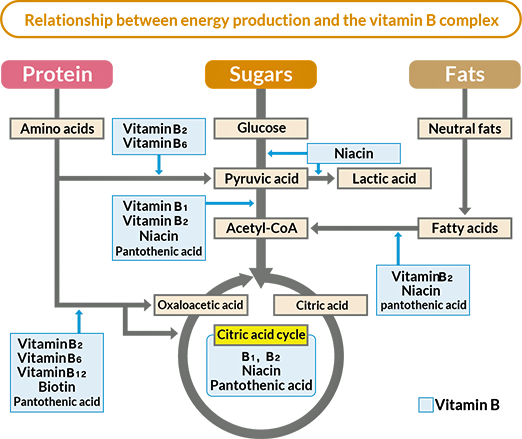
A B2 deficiency is the root of your Complex I sluggishness, upping your riboflavin intake can indeed improve function. [1, 2]- https://goldmanlaboratories.com/blogs/blog/supplements-for-tiredness-best-vitamins-and-nutrients-to-fight-fatigue?srsltid=AfmBOopbfKM6B5_R2w_yMH3xz-4AeyU-cj5WyC4gXlvfPgTH7PLFx1sN
- https://www.sciencedirect.com/science/article/pii/S2213231714000500
Vitamin B3 (Niacin): B3 is the precursor to NAD⁺, which is required for fuel extraction and acts as the primary electron donor to Complex I. Boosting NAD⁺ supports the entire cellular metabolism process. [1, 2]
A Note on Methylene Blue's Hormetic Effect
Methylene blue (MB) is highly dose-dependent. In very low doses (like the 1 mg you used), it acts as an antioxidant and mitochondrial enhancer. However, higher doses can act as a pro-oxidant.
Warning: MB acts as a weak Monoamine Oxidase Inhibitor (MAOI), meaning it can dangerously interact with many medications and supplements (e.g., SSRIs, SNRIs).
MB has also independent effects and cerebral blood flow, so improvement could partly reflect a mood/alertness effect rather than pure Complex I bypass.Suggestions to improve sleep quality and recover energy (synergy link)
Treating one without the other often gives partial results.
The Winning Trio (in powder form to avoid capsules):- Glycine (3 g): The foundation. It lowers body temperature (essential for falling asleep) and improves deep sleep quality without causing next-day drowsiness. 10 % will be assimilated, according to Haidut.
- L-Theanine (200 mg): Relaxes the brain without inducing sleepiness. It acts as an immediate stress-reliever, quieting the "mental chatter" in your head.
- Taurine (500mg to 1g): Contrary to popular belief (due to Red Bull), it calms the nervous system by mimicking GABA (the brain's "brake"). Begin with 500 mg.
The essential little "+":
Vitamin B6: It acts as a "key" to get all of that into your brain and convert your reserves into serotonin. 20–25 mg B6 PLP (half-life of approx. 20 hours).Remind: take into account a low-grade inflammation impact on stress. If it last, adrenalin and cortisol have knocked out the body's ability to produce serotonin. Disruption of the serotonin-melatonin cycle. Taking a pill to sleep isn’t going to solve the problem on long term. Fine if only in a protocol. Don’t wait too long before adapting a relax technique…
Cycle
Lifestyle/CBT → Natural 5-HTP production → Serotonin & Melatonin spike → Preserved deep sleep → Cellular repair & Energy → Easier sleep.
CBT: Cognitive & behavior Therapy (or any relaxing technique).Tip: I massage my back over the adrenal glands shortly after getting up (the area of the back level with the elbows). + Bright day light for 2-3’.
-
@Peatful MB effects? Yes i give it a break then tried 10 days later and felt the effects again. I feel like the root of my energy and sleep issues is the Randle cycle because I have a heavy PUFA burden. I'll try supplementing with vitamin E and see what happens. Could methylene blue have bypassed my tendency to burn fat instead of glucose, caused by a high PUFA burden, by acting as an alternative electron carrier?
-
@LucH I feel like the root of my energy and sleep issues is the Randle cycle because I have a heavy PUFA burden. I'll try supplementing with vitamin E and see what happens. Could methylene blue have bypassed my tendency to burn fat instead of glucose, caused by a high PUFA burden, by acting as an alternative electron carrier?
-
@Peatful MB effects? Yes i give it a break then tried 10 days later and felt the effects again. I feel like the root of my energy and sleep issues is the Randle cycle because I have a heavy PUFA burden. I'll try supplementing with vitamin E and see what happens. Could methylene blue have bypassed my tendency to burn fat instead of glucose, caused by a high PUFA burden, by acting as an alternative electron carrier?
Yes. This could be true.
It simply sounds like MB did what Ray said it would. Lowering your estrogen and serotonin (stress hormones) while increasing your cellular respiration / energy production.
-
@Peatful I'll post here if it works. Thanks for the replies.
-
I'll try supplementing with vitamin E and see what happens.
Here is some useful info:
AA cascade
If you want to take vitamin E against PUFA, Vit E is fine to stabilize membranes. We require at least 2 types, not necessary 50/50, e.g. 80 % alpha-tocopherol and 20% gamma. There are 4 types tocopherols and 4 types tocotrienols (alpha, beta, delta and gamma for each type).
Need gamma tocotrienols against inflammation. We shouldn't take alpha every day since the body has a higher affinity for alpha (transporter).
Chris Masterjohn says he takes 20-25 mg Vit E/day as supplement.
I take a higher level 400 UI but only twice a week (Now Foods, Advanced Gamma E complex, by iHerb). More is not better.
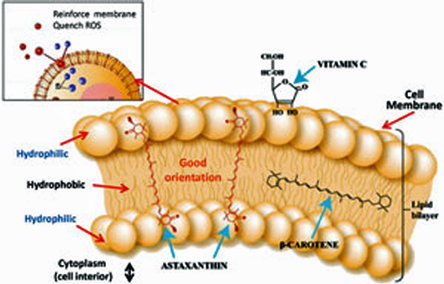
For stabilizing membranes, Vit E (20-25 mg suppl.), b-carotene (5-10 mg from food) and astaxanthine (only in cure) are fine to fight the AO aspect from both side (inside and outside the membrane).
Figure: How to protect membranes wit AO.
Remember:
Synergy effect with vitamin E
“Vitamin C regenerates vitamin E and vitamin E protects β-carotene, helped in this by polyphenols. In the event of β-carotene supplementation, vitamin C regenerates vitamin E and β-carotene, and β-carotene seems to protect vitamin E without really explaining this phenomenon "(1)
Savings effect
Vitamin E is not just a vitamin. Vitamin C makes it possible to recycle oxidized vitamin E and thus prolong its lifespan. The same goes with glutathione which is thus saved for other more useful functions (detox). Glutathion is our antioxidant master. Vitamin E protects against the deleterious effects of polyunsaturated fatty acids when the latter are in excess. And it is quickly done!- John Libbey Eurotext - Anti-oxydants d’origine alimentaire : diversité, modes d’action anti-oxydante, interactions. Auteur : Claude Louis Léger.
*) Now sth else: AA cascade
If you think you suffer from too much PUFA, which is a widespread situation when we eat more than 5-6 grams PUFA’s a day. Most US individuals ingest 20 g PUFA every day when they eat manufactured food. So, yes there is a lot of arachidonic acid (AA) in their membranes.
And each time, someone is stressed – in the wide meaning – AA is unloaded.
The usual carburation passes from glycolysis to lipolysis when we run into a stressful event: adrenalin + cortisol make the usual carburation change. Moreover the body needs 90’ to recover the common one. Then bisglycinate magnesium 300 mg would be very useful (to take after, no anticipation). 2 or 3 times a day, Dr. JP Curtay says. Moreover we require 350-420 mg Mg element a day, for more than 300 enzymes.*) Natural inhibitors against AA cascade
Here are some usual targets when suffering from inflammation.
Cox 1 & 2
5-Lox
IL-6
TNF-alpha
NF-kB
Excess NO
LPS
NB: Mind side-effects against platelet life and CYP450 enzymes (detox pathway). Only in cure when using phytotherapy.
See table here on my forum for details against inflammatory agents: Phytotherapy & natural agents for pain relief (In French).
https://mirzoune-ciboulette.forumactif.org/t266-substances-naturelles-anti-douleur-tableau#15733*) Useful links (in French, translator needed):
https://mirzoune-ciboulette.forumactif.org/t642-vitamine-e-et-peroxydation-des-membranes#5645
https://mirzoune-ciboulette.forumactif.org/t1876-prostate-traitement-naturel-de-l-hyperplasie-benigne#26009
https://mirzoune-ciboulette.forumactif.org/t1042-activite-antioxydante-de-la-vitamine-e#10502 (required therapeutic needs round 50 mg or 100 UI per gram PUFA).Excerpt:
Excessive intake of one type will limit the bioavailability and functionality of the others. While there is no established optimal composition, one can aim for a good balance within a blend as follows: alpha-tocopherol levels should not exceed a maximum of 15–20% of the total, with 50% or more consisting of gamma-tocopherols, 10% of tocotrienols, etc.
In other words: reduce alpha-tocopherol and significantly increase gamma- and delta-tocotrienols.

Hello! It looks like you're interested in this conversation, but you don't have an account yet.
Getting fed up of having to scroll through the same posts each visit? When you register for an account, you'll always come back to exactly where you were before, and choose to be notified of new replies (either via email, or push notification). You'll also be able to save bookmarks and upvote posts to show your appreciation to other community members.
With your input, this post could be even better 💗
Register Login