Dandruff or scalp irritation? Try BLOO.

Subcategories

  • Scientific papers, books, blog posts. Discussion of whatever you find interesting and notable.

    664 Topics
    5k Posts
    C
    Has anyone here tried this SS-31 yet? It's available as a peptide for injection from the usual suppliers. Essentially, it repairs/rescues impaired, dysfunctional mitochondria. People online write to run SS-31 before trying to induce any mitochondrial fission/proliferation by e.g. MOTS-C, or even to tun SS-31 first before blasting NAD+ or other stimulators of the ETC which would require properly functioning mitochondria in the first place.
  • Websites, newsletters, articles, podcasts, interviews, explainers, books, and other resources that relate to the work of Dr. Raymond Peat.

    62 Topics
    703 Posts
    CiceroC
    I noticed the reprint of Nutrition for Women says "100 short articles by Ray Peat, PHD," where the old one said "92...". What did they add to it? Also, note that From PMS to Menopause is for sale on Peat's website but not Amazon, and Peat's website doesn't have Generative Energy. Weird. I wonder if Katherine gets more of the money if you order from Peat's site. I'd imagine so.
  • Do you have a question? You can post it here, but you will only receive unqualified personal opinions and NOT medical advice in any shape or form. If something seems like medical advice but it's posted in this category, it's actually a personal opinion.

    1k Topics
    11k Posts
    sunsunsunS
    @lobotomize [image: 1778537823555-476.gif] m8 noooo dont u dare
  • From medical devices to supplements. Red lights, CO2 tanks, large trash bags, kuinone, and more.

    395 Topics
    4k Posts
    LucHL
    @LetTheRedeemed said: i wonder how hard it would be to make our own Forget this. See the link (study). For all other readers, with help of AI (only in the second part). No need to say we have to be suspicious with AI. I agree. Control is required from another source Additional intolerance causes to vitamin C When taking HD Vit C powder (e.g. 20 g or more), some people may react to these facts, supposing it’s the right kind (N° CAS and HM appropriate): L-ascorbic acid has been made from wheat (cross-reaction with gluten). Rare. L-ascorbic acid has been made from corn. Aspergillus niger mold. Intolerance to fungus trace is possible. Possible but very tiny. How much mercury is left too (Hg). Even 1 ppm is too high (0.00001 %). Excerpt: Even if the final molecule is “vitamin C,” people who react to corn may still have issues depending on sourcing, processing, and trace residues. L-ascorbic acid from a chemical source (from GMO corn or not) or from orange fruit / acerola is the same molecule (if we avoid add-on). AI says (Gemini) NB: I’ve re-framed Gemini. Tendency to cut hair into 4 pieces. • The molecule is identical. Industrially produced L-ascorbic acid is structurally the same as vitamin C from food. The body cannot tell the difference. • Aspergillus niger is a process tool, not an ingredient. It is used in a fermentation step and removed during purification — calling the final product "made from black mold" / fungus is a misrepresentation. Corn-sensitive individuals occasionally report reactions, though whether this is from trace residues or another cause is rarely confirmed analytically. • Real reactions, when they occur, are contaminant-driven. At high doses, trace residues (fungal, corn-derived, or heavy metals) could plausibly trigger sensitivity in susceptible individuals — but this is an impurity issue, not a flaw in ascorbic acid itself. • The practical answer is sourcing, not avoidance. A rigorous certificate of analysis (heavy metals, residual solvents, microbial content) and non-corn-derived alternatives (tapioca, beet-based) address legitimate concerns without the misleading framing. LucH says: Better so expressed. Comment on Quali-C (famous Scottish lable). No need to develop. Just target the security process. AI says: Quali-C (DSM, Dalry, Scotland) is the benchmark reference in the industry precisely because of its security process: Non-corn sourced — uses a different raw material pathway, avoiding the main contamination concern. Pharmaceutical-grade manufacturing — GMP-certified, with batch traceability from raw input to final powder. Strict CoA per batch — heavy metals, residual solvents, microbial load, and purity all documented and verifiable. EU regulatory oversight — subject to European pharmaceutical standards, generally more stringent than those applied to Chinese bulk suppliers dominating the market. It is the default recommendation precisely because the security chain is auditable end to end. Additional info (LucH): How is the vitamin C quali-C from DSM made? (Labo DSM-Firmenich) Quali-C is a labeled vitamin C (L-ascorbic acid) made in Scotland. Vit C is manufactured via a multi-step fermentation process beginning with glucose derived from non-GMO European wheat and corn. There is a strict traceability. Production Process Details: • Raw Material: The process begins with glucose, sourced from non-GMO corn/wheat, which is then fermented to create sorbose. • Fermentation: The production uses a fermentation process to convert materials into 2-keto-L-gulonic acid (2-KGA), a precursor to vitamin C. • Refining & Crystallization: This 2-KGA is refined and crystallized through multiple controlled steps to produce high-purity L-ascorbic acid. • Location: All production occurs at the company's plant in Dalry, Scotland, which has produced vitamin C for over 40 years, ensuring high pharmaceutical-grade standards. [1, 2, 3, 4, 5] Key Characteristics of Quali-C: • Sustainability: Quali-C has the lowest carbon footprint for ascorbic acid production, with 65% lower GHG emissions compared to typical Chinese-produced vitamin C. • Quality Control: The plant in Dalry operates under strict European quality standards, fully automated to ensure traceability. • Traceability: The raw material can be traced back to its origin, providing assurance regarding the non-GMO, safe, and ethical production. [1, 2, 3, 4] Note1: Quali-C is produced via a fermentation process, but it is a highly controlled, efficient, and sustainable method rather than the traditional, less refined methods often associated with mass-produced vitamin C. doi: 10.1128/aem.01212-22 Appl Environ Microbiol. 2022. Qian Zhang , Shuxia Lyu. In industrial production, the precursor of l-ascorbic acid (L-AA, also referred to as vitamin C), 2-keto-l-gulonic acid (2-KLG), is mainly produced using a classic two-step fermentation process performed by Gluconobacter oxydans, Bacillus megaterium, and Ketogulonicigenium vulgare. What about contaminant-driven material? In USA, vitamin C is often made from corn syrup. While nearly 90% of vitamin C (ascorbic acid) is produced from genetically modified (GMO) corn starch via fermentation, concerns about contaminant-driven material usually focus on processing agents used to refine the corn and chemical intermediates in the synthesis. Key issues raised regarding potential contaminants include: • Manufacturing Chemicals: Industrial production of ascorbic acid often involves acetone (used as a solvent), sulfuric acid, and hydrogen gas. While these are used in the process, they are generally purified out of the final product. • Heavy Metals: Studies on nutritional supplements have found that Vitamin C can be contaminated with trace heavy metals, such as mercury (Hg) and chromium (Cr), added unintentionally during the production process or storage. NB (LucH): 1 ppm (0.0001%) of Hg in ascorbic acid powder is not always detectable (control labo) but is however problematical. This accumulated residue impact the enzyme pathway (thyroid). • GMO Residuals: Because it is derived from genetically modified corn, some concern exists regarding residual GMO bacterial material from the fermentation process, such as Ketogulonicigenium vulgare. • Glyphosate: Concerns exist about potential trace residues of glyphosate (a herbicide used on GMO crops) in the final ascorbic acid product. • Benzene Formation: If ascorbic acid is paired with benzoate salts in beverages exposed to heat and light, it can lead to the formation of benzene, a known carcinogen Contaminant Levels and Safety A 2023 study found that elemental impurities like cadmium (Cd), lead (Pb), and arsenic (As) were below detection limits in many, but not all, tested supplements. However, for those concerned with additives or sourcing, options like tapioca-derived vitamin C are available. Answer from IA (Google): The concern regarding (1ppm) (0.0001 %) of mercury (Hg) in ascorbic acid is scientifically supported, particularly regarding its accumulation and impact on thyroid health. While 1ppm is a very low concentration, often near the limit of detection (LOD) for standard laboratory, it can present significant health risks due to chronic exposure and accumulation, even if standard testing methods occasionally fail to identify it. [1, 2] Impact on Thyroid Enzyme Pathways Mercury has a high affinity for thyroid tissue and interferes with the endocrine system through several mechanisms: • Deiodinase Antagonism: Mercury inhibits deiodinase enzymes, which are responsible for converting T4 (thyroxine) to the active T3 (triiodothyronine) hormone. • Selenium Depletion: Mercury binds to selenium, an essential element for thyroid function and antioxidant defense. This interaction reduces selenium availability, disrupting thyroid hormone synthesis and increasing oxidative damage. • Binding to Thyroid Cells: Mercury can accumulate in thyroid follicles, leading to autoimmune reactions, increased TSH levels, and reduced T3 / T4 levels, potentially causing hypothyroidism. Detectability in Control Labs • Detection Challenges: Routine laboratory methods may struggle to consistently detect Hg at low levels (<0.1 ppm) or (<100 ppb) in some food-grade applications), as the detection limits can vary based on the method and sample matrix. • Trace Analysis: More precise techniques like ICP-MS (Inductively Coupled Plasma Mass Spectrometry) are generally required to reliably detect and quantify low-ppm or ppb levels of heavy metals. [1, 2] Bioaccumulation Risk in Summary The presence of 1 ppm Hg is problematic due to its cumulative and detrimental impact on thyroid function, specifically by interfering with iodine incorporation and selenium-dependent enzymes.
  • Recipes, food, meal prep, brands. Discuss them all here.

    238 Topics
    2k Posts
    JenniferJ
    I almost forgot… I made this meatloaf recipe the other day using a cup of potato flakes (Bob’s Red Mill brand) instead of the half a cup of breadcrumbs and half a cup of potato flakes the recipe calls for, and for the beef I used wagyu, and my dad said it’s a keeper: https://savoryreviews.com/potato-meatloaf//
  • Discussing pistol squats, concentric exercise, resting, and other forms of strength training.

    94 Topics
    1k Posts
    alfredoolivasA
    A thought popped into my head; saying dead hanging makes you grow taller is like saying letting your penis hang freely makes it longer. You need more stress than just gravity (which is being countered by your trunk muscles).
  • Jordan Peteron's Akathisia - a bioenergetics perspective

    akathisia serotonin
    9
    2 Votes
    9 Posts
    182 Views
    sunsunsunS
    @jamezb46 [image: 1778618166199-dfa87049-58eb-43ed-a3f0-2b6699792a62-image.jpeg]
  • Autism and ideas of what it is

    7
    0 Votes
    7 Posts
    182 Views
    W
    @ThinPicking in previous posts i was writing that people with autism were massively overrepresented in violent crimes. It's an interesting "illness"
  • Mega Super High Dose Progesterone For A Male

    1
    0 Votes
    1 Posts
    20 Views
    No one has replied
  • Does any of this shit matter?

    11
    -1 Votes
    11 Posts
    214 Views
    D
    OP has a great point. I myself have recently moved into a cave and spend all day foraging for sustenance in order to make it to tomorrow. Why thrive when you can simply endure?
  • 0 Votes
    1 Posts
    38 Views
    No one has replied
  • Nuclear Peating

    25
    1
    2 Votes
    25 Posts
    1k Views
    engineerE
    Looks like I'm going viral on Twitter! https://x.com/slurptyronene/status/2053326045168783577
  • will I Shrek myself eating 100g raw pumpkin seed daily?

    7
    0 Votes
    7 Posts
    143 Views
    engineerE
    @sunsunsun well, avocados are a different thing. With pufas you have the mechanistic biochemistry for why they're bad and that doesn't seem to be wrong.
  • Homemade SolBan - Summer 2026

    7
    0 Votes
    7 Posts
    194 Views
    engineerE
    @Cicero salicylic acid is also an ultra cheap commodity (you can get pounds for mere dollars from Bezos Mart) so good call there
  • Diclofenac gel to regrow hair on bald head and beard

    216
    0 Votes
    216 Posts
    29k Views
    F
    Hi Guys, ordered caffeine just now and will make conditioner with caffeine/taurine/aspirin/b3. I use essential oil of rosemary daily before bed and microniddling weekly with 1mm deep. Saw some regrowth, black baby hairs, so it works, but unresolved hypothyroidism and itchiness as a result made me lose them, yep. planning to dilute them in water higher concentrations and use whenever taking a shower to massage in my head. Any idea what else could be in water base conditioner like this?
  • Homemade SolBan

    46
    1 Votes
    46 Posts
    5k Views
    engineerE
    @Cicero I'm almost ready to make my own SolBan too and have everything except distilled water. Are you using a magnetic stir plate? It seems like it's the way to get the salicylic acid to dissolve completely but I haven't tried it yet.
  • Cancer (AML)

    8
    0 Votes
    8 Posts
    338 Views
    1
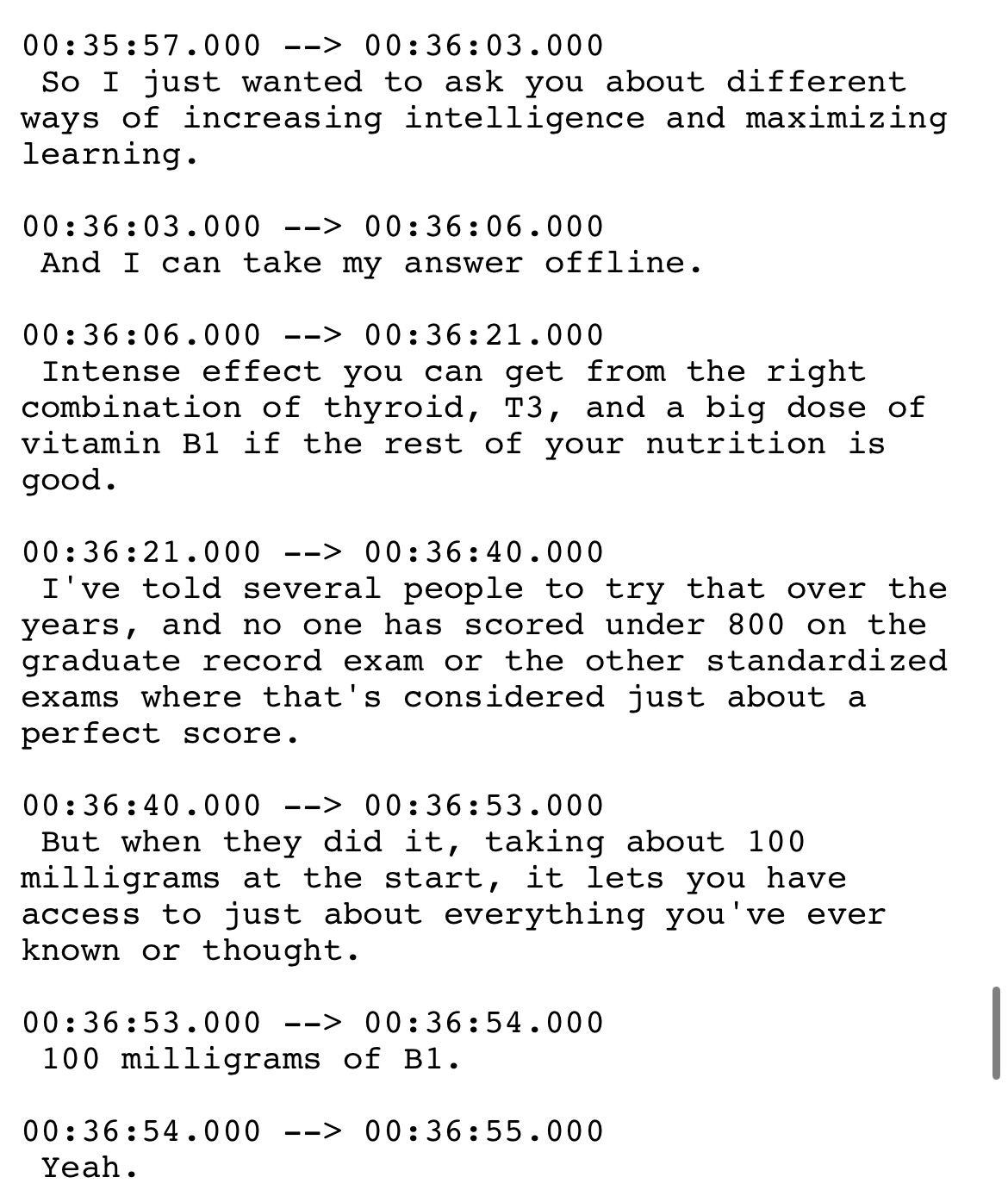
    @thibaud I found a post in the old forum where someone submitted their email exchange with Ray Peat. Hope it helps: Post in thread 'Ray Peat Email Advice Depository' https://lowtoxinforum.com/threads/ray-peat-email-advice-depository.1035/post-119453 I don't eat liver as it makes me very nauseas but I could try brewers yeast if it is useful for something? I haven't tried B1 or pantothetic acid. Would this be in addition to brewers yeast? I don't currently use aspirin but am trying to source a pure form in the UK. Would you be able to provide approximate doses for all of the above please and let me know what they assist with? Ray Peat said: Vitamin B1 helps to oxidize glucose, so if you try 50 or 100 mg with a meal you should watch for possible hypoglycemia from the insulin. Pantothenic acid is safe in doses of 100 or 200 mg, and helps to limit hypoglycemia. Brewers' yeast has other nutrients that help with repairing the pancreas, but can cause gas, so it's best to start by pouring hot water over an ounce or two of it, and using just the liquid.
  • Mitochonic acid

    1
    1 Votes
    1 Posts
    53 Views
    No one has replied
  • Silicon the dietary nutrient

    58
    0 Votes
    58 Posts
    7k Views
    H
    @Luke sweden
  • How to prevent and reverse skull expansion? (Hair loss)

    30
    3
    0 Votes
    30 Posts
    3k Views
    L
    @risingfire brought the final boss variable compounder
  • Is Cialis/Tadalafil Harmful?

    12
    0 Votes
    12 Posts
    1k Views
    F
    https://www.utmb.edu/utmb/news-article/utmb-news/2024/11/19/study-finds-erectile-dysfunction-medications-associated-with-significant-reductions-in-deaths--cardiovascular-disease--dementia I started taking 2.5mg recently. No noticeable side effects.
  • Stopping Antibiotic Course

    3
    0 Votes
    3 Posts
    272 Views
    M
    @Meeka I stopped taking it early and felt better within a couple of days. I was prescribed it again after that and only made it through one dose. I won’t be taking that antibiotic again.
  • This topic is deleted!

    1
    0 Votes
    1 Posts
    39 Views
    No one has replied
  • Jordan Peterson dying from akathisia.

    5
    0 Votes
    5 Posts
    343 Views
    alfredoolivasA
    [image: 1776786468717-a4097f4b-73f2-4c4b-a340-db6378d8681d-image.png] JP is doing everything to not go back to this.
  • opinion on whey protein?

    5
    1
    0 Votes
    5 Posts
    343 Views
    sunsunsunS
    @Milk-Destroyer not really, just as a convenience to add to oatmeal if i dont have eggs for some reason. there’s no point when i can just drink 1L of milk for a protein drink giving 36g protein.
  • Hypothyoidism and overschdeuling yourself?

    4
    0 Votes
    4 Posts
    221 Views
    JenniferJ
    What risingfire said. With thyroid energy, I feel like I have all the time in the world, like I did when I was a child—it’s as if time moves slower when my thyroid is functioning optimally—and I feel an excitement to do things, but it’s accompanied by this sense of calm or peace, while adrenaline energy feels like there isn’t enough time in the day to get everything I want done, like time is flying by, and there’s usually this background feeling of anxiety, a fear of my own mortality, really. With both energy sources, I have moments of euphoria, which made distinguishing between the two and adjusting my diet and thyroid dose accordingly quite challenging in the beginning so going by my temps (including temps of extremities—cold feet, hands, nose and/or ears are a telltale sign that adrenaline is compensating for thyroid and cutting off circulation to them to keep the core and vital organs warm), pulse rate and slightly more involved but very helpful is evaporation rate, i.e., average total fluids consumed and eliminated via sweat vs urine in a 24 hr period.