PDE4 inhibition is anabolic for muscles by inhibiting mTORC1/FoxO transcription factor/E3 ubiquitin ligase axis.
-
PDE4 is mainly expressed in skeletal muscles. Chronic activation of mTORC1 by exercise and aging upregulates catabolic factors, limiting muscular development. PDE4 inhibitors counteract this and can be used as anabolic agents.
Relevant research:
The phosphodiesterase-4 inhibitor roflumilast reverts proteolysis in skeletal muscle cells of patients with COPD cachexia
https://pubmed.ncbi.nlm.nih.gov/29648516/
Impaired cAMP–PKA–CREB1 signalling drives mitochondrial dysfunction in skeletal muscle during cancer cachexia
https://www.nature.com/articles/s42255-025-01397-5#Sec10
Phosphodiesterase 4 inhibition restrains muscle proteolysis in diabetic rats by activating PKA and EPAC/Akt effectors and inhibiting FoxO factors.
https://www.repositorio.ufop.br/items/1bd5a6b9-2627-467f-8ca8-ffac2170b4fa -
Every paper there is a wasting state (COPD and cancer cachexia, diabetic rats). Does roflumilast do anything for normal muscle, or does it mostly stop the breakdown once stress has already tipped things catabolic?
Caffeine and theophylline are the everyday PDE inhibitors, weak and nonselective, and at coffee doses most of the effect usually gets put down to adenosine blocking. Peat still liked caffeine partly for the cAMP side. He wrote that it tends to locally activate thyroid secretion "by a variety of mechanisms, increasing cyclic AMP and decreasing serotonin in thyroid cells, for example, and also by lowering the systemic stress mediators." The cancer cachexia paper fits with that, since it blames the muscle mitochondria problems on cAMP signaling breaking down.
-
Every paper there is a wasting state
Wrong, they tested it on healthy cells in "The phosphodiesterase-4 inhibitor roflumilast reverts proteolysis in skeletal muscle cells of patients with COPD cachexia" paper.
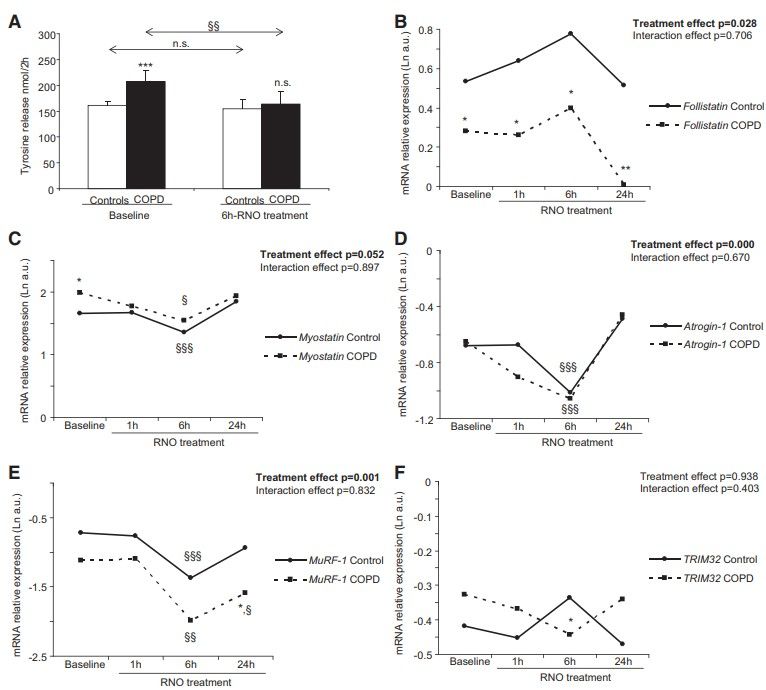
does it mostly stop the breakdown once stress has already tipped things catabolic?
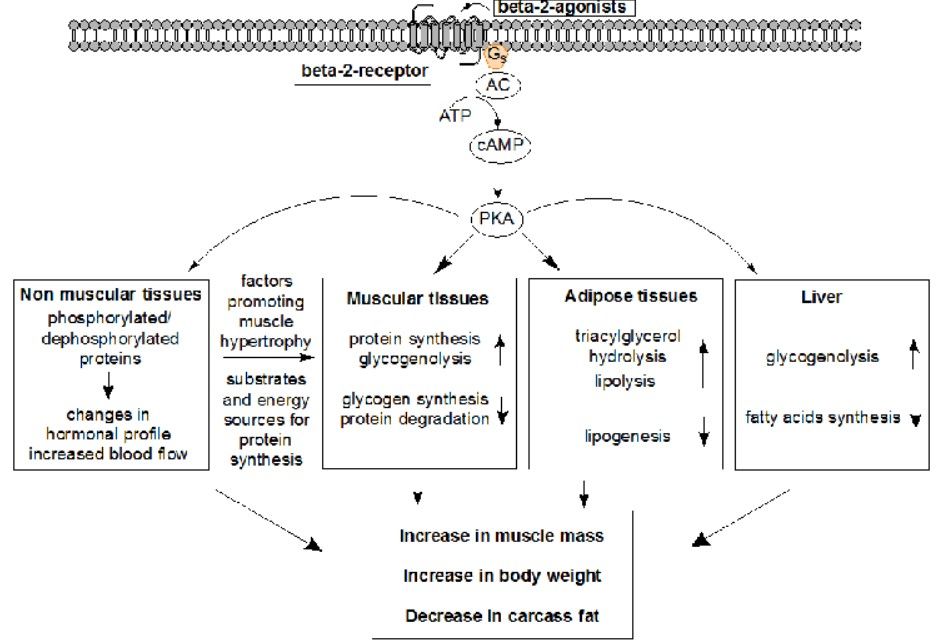
This breakdown always happens and is not necessarily related to stress, for this reason every anticatabolic substance is anabolic. cAMP elevation is a postulated mechanism of anabolism induced by known anabolic agent clenbuterol. PDE4 inhibitors are more selective than clenbuterol due to PDE4 mainly being expressed in skeletal muscles and will have synergistic anabolic effects with clenbuterol, as clenbuterol fails to induce significant anabolic effects in muscles with elevated PDE4 expression.
-
He wrote that it tends to locally activate thyroid secretion "by a variety of mechanisms, increasing cyclic AMP and decreasing serotonin in thyroid cells, for example, and also by lowering the systemic stress mediators."
Interesting, thyroid mostly expresses PDE8, same form mostly present in leydig cells, inhibition of which significantly raises testicular steroidogenesis.


Hello! It looks like you're interested in this conversation, but you don't have an account yet.
Getting fed up of having to scroll through the same posts each visit? When you register for an account, you'll always come back to exactly where you were before, and choose to be notified of new replies (either via email, or push notification). You'll also be able to save bookmarks and upvote posts to show your appreciation to other community members.
With your input, this post could be even better 💗
Register Login