My experience with going scorched earth with lighting
-
I recently replaced all of the light bulbs in my bedroom's ceiling fan and my bathroom with red LED equivalents. Both rooms get some natural sunlight during the day and have exclusively that red light at night.
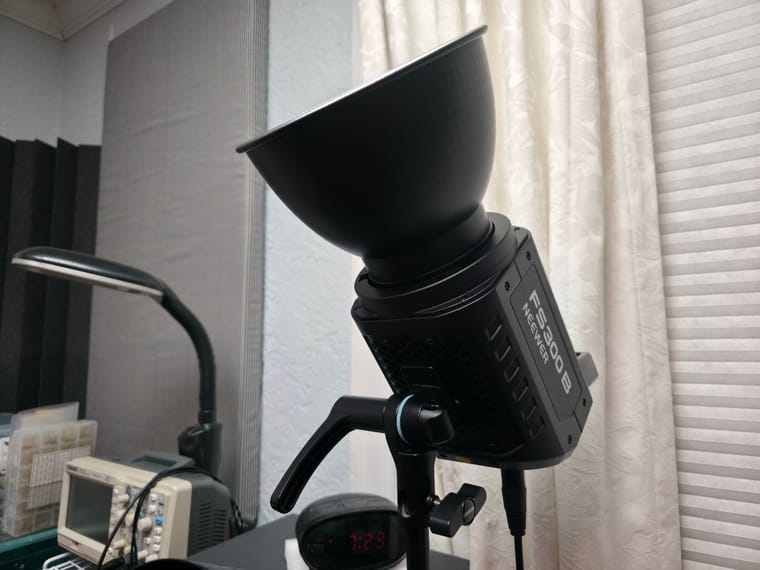
Since then, I've been getting tired easier at night. Showering and doing other business under red light isn't as bad as you might think. It somehow feels really cozy! Colors are essentially nonexistent but you forget about them anyway. During the day, however, my bedroom is pretty dark even with a window now that the previous white LED ceiling fan setup is gone, so I have ordered a high CRI 300w LED video light to shine on the ceiling to help simulate sunlight. Now, I could have pulled out a 1000w metal halide floodlight (I have a HUGE lighting collection), but that would just be too much. This video light should be a cleaner and simpler setup than that.
There is actually another catch too. These "red" LED light bulbs are not actually red but actually blue with a red phosphor. Why? Here's why I think so. White LEDs also use blue LED chips but with a yellowish phosphor that combines with the blue to make white. These red LEDs use a red phosphor instead and filter out the blue light. Because they both start with a blue LED, they can reuse existing white LED circuitry, resulting in cheaper manufacturing. Interestingly, all three models of bulbs I got vary slightly here. The first one uses a phosphor that peaks around 630nm and extends to about 660-670nm. This one is the closest to a real red LED that would be purely 630 or 660nm. My red light therapy panel uses those. The second model uses a phosphor with a shorter wavelength peak. At night, it actually looks yellow once your eyes adjust to it. Finally, the third lacks a red filter entirely, meaning that it looks slightly purple if you look at it the right way. I was NOT able to find any commercially available light bulbs or fixtures that are truly red only and not RGB or fake red or some other thing.
Moral of the story? Red light is pretty good at night but not so great during the day, and all current "red" bulbs are not actually red.
-
You can also add a layer of red electric tape over your LEDs. Not quite as energy efficient as the red phosphor, but same effect of filtering out the blue light.
-
I like red lighting in general, no links but have read favorable things about orange light as well. Maybe a light panel favoring red but combined with some orange, 2 reds and one orange bulb perhaps, maybe even one near infra-red bulb mixed in with them.
Am also a fan of the 2100k and 2200k ultra soft amber incandescents. Edit, here's an example: https://www.homedepot.com/p/Feit-Electric-60-Watt-ST19-Dimmable-Cage-Filament-Amber-Glass-E26-Vintage-Edison-Incandescent-Light-Bulb-Warm-White-60ST19/309939171
I often use lamps but my ceiling fixtures can hold two to three bulbs, maybe i should mix things up as an experiment. At the moment they have 2700k soft white bulbs, maybe i should try out two 2200k 40w amber whites along with one regular 2700k soft white so it isn't so yellow and dim.
The topic is fun to experiment with.
-
Artificial sun installation complete
My room now looks like a sitcom set
-
@engineer Does that have a fresnel lense?
-
@pittybitty said in My experience with going scorched earth with lighting:
@engineer Does that have a fresnel lense?
It's a plain aluminum reflector but you should be able to mount anything as long as it has a common Bowens connector
-
@engineer Ah interesting, I don't know much about these high end lighting things.
What do you think would be the cheapest and easiest way to emulate sunlight? I think a fresnel lense would be pretty important to emulate the light source being really far away. And probably wall or ceiling mounting to emulate a window.
-
@pittybitty This video light appears to in fact be the cheapest way ($260 from Bezos Mart) to emulate sunlight. The way it's pointed at my ceiling makes it seem like sunlight is shining in through the curtains, but you could point the reflector to simulate direct sunlight instead, and these video lights allow you to fine tune the color temperature to match whatever sunlight tone you want. The alternatives like SAD lights and generic LED floodlights are either more expensive, dimmer, or uncustomizable. Plus if you want to record a video than you can put on a softbox and get perfect lighting for that!
-
I built a 3x250w chicken lamp array to sit next to. Extremely efficient at heating the room.
It also scorches my eyeballs if I sit under it for several hours, but It's effective against SAD from dark winters.
I have also experimented with having it on during the night, it completely eliminates any tiredness and bypasses (or destroys) my circadian rythm making me believe it has a similar signaling effect to sunlight. -
@engineer How's your experience with this setup going so far? I just moved into a house that receives very little natural light coming in through the windows, as it's squeezed tightly in between two other shotgun-style houses, and I'm looking into my various options for tackling the problem. I've got plenty of chicken clamp-lamps, and a red light panel that I use for spot treatment directly on my body, but I need a broader solution that'll cover an entire room and make working from home without adequate natural sunlight tolerable.




Hello! It looks like you're interested in this conversation, but you don't have an account yet.
Getting fed up of having to scroll through the same posts each visit? When you register for an account, you'll always come back to exactly where you were before, and choose to be notified of new replies (either via email, or push notification). You'll also be able to save bookmarks and upvote posts to show your appreciation to other community members.
With your input, this post could be even better 💗
Register Login