Cysteine/methionine restriction may treat obesity, without any increase in physical activity
-
From this article from haidut -- Cysteine/methionine restriction may treat obesity, without any increase in physical activity:
This finding is revolutionary for three reasons, all of which align perfectly with what Ray has been saying for years:
Methionine and cysteine restriction raises resting metabolic rate. This is the opposite of caloric restriction, which lowers metabolic rate. Raising RMR means the body naturally burns more energy at rest — the only sustainable way to lose weight without stress or deprivation.
The mechanism is metabolic, not behavioral. The mice did not eat less. They did not exercise more. They simply generated more heat — a sign of increased oxidative metabolism and mitochondrial efficiency. This is exactly what bioenergetics predicts: when you remove metabolic inhibitors (excess methionine and cysteine), the body functions better.
This is not about “plant-based” vs “animal-based” per se. The researchers note that vegetarians and vegans naturally consume less methionine and cysteine. However, the key is restriction of these specific amino acids, not avoidance of animal products entirely. Excess methionine and cysteine generate hydrogen sulfide and oxidative stress, which impair mitochondrial function. Restricting them improves redox balance and allows efficient energy production.
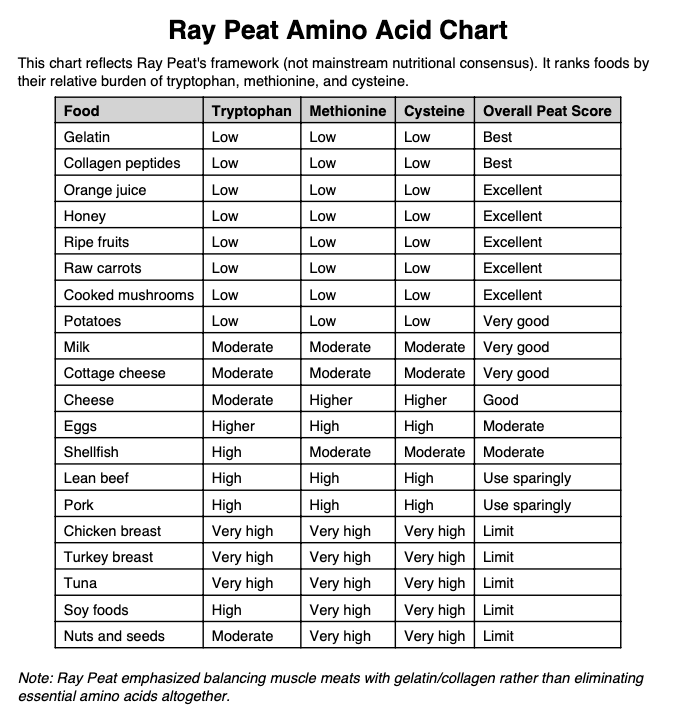
Here are some foods sorted by their tryptophan, methionine, and cysteine burden.
-
Interesting find. I read through the study Danny linked and it does look promising, though it's worth remembering it was done in mice, not humans, so the jump to "here's how to lose weight" is a bit of a stretch until there's human trial data backing it up.
The RMR angle makes sense with what's been observed in other calorie restriction studies though, where the body tends to adapt by slowing down. If methionine/cysteine restriction sidesteps that adaptive response, that would actually be a meaningful difference mechanistically.
One thing I'd be curious about is how this plays out long term. Both methionine and cysteine are still essential, cysteine especially plays into glutathione production, so there's probably a sweet spot rather than "lower is always better." The chart is a handy reference for where different foods land, but I'd treat it as a general guide rather than something to follow strictly, especially for anyone already eating a fairly balanced diet.
Has anyone here actually tried adjusting their protein sources around this and noticed a real difference in energy or body temp?

Hello! It looks like you're interested in this conversation, but you don't have an account yet.
Getting fed up of having to scroll through the same posts each visit? When you register for an account, you'll always come back to exactly where you were before, and choose to be notified of new replies (either via email, or push notification). You'll also be able to save bookmarks and upvote posts to show your appreciation to other community members.
With your input, this post could be even better 💗
Register Login