I have trouble sleeping
-
@lykos Apart from potatoes (which have very little due to being skinned and boiled), you lack vitamin C
-
@alfredoolivas i might supplement acerola powder, citrus fruits are histamine liberators, i used to squiz a lot of fresh orange juice until i had to stop, synthetic vitamin d and c lowers ceruloplasmin
-
@lykos, meat/seafood, eggs and dairy are excellent sources of vitamin C (dehydroascorbate). Here are some quotes from Ray on the subject:
“Patrick Timpone: So, do you and do you recommend other people take daily doses of extra vitamin C?
Ray Peat: No, because milk and meat are very good sources. I experimented stopping all the known sources such as fruits, vitamin C and ate mostly milk and meat and eggs. And several weeks later, I kept testing my urine vitamin C output and it was still up in around 3000 milligrams per day even though I was just eating milk and meat.”
https://bioenergetic.life/clips/2dd91?t=2875&c=63
“But milk, for example, and meat is a major source of vitamin C that the explorers found that they didn't have to take lemons or canned fruit with them when they were spending months in the Arctic. If they ate meat, because meat, they proved that meat was a very good source of vitamin C. It turns out that all animal tissues contain lots of vitamin C, but they were simply not measuring the right material. Vitamin C, the reductant, is not the biologically effective intracellular vitamin C. The dehydroascorbate functions as an oxidant, not an antioxidant, in our cells.”
https://bioenergetic.life/clips/ddca1?t=5404&c=105
“So the whole misinterpretation of where we're getting our vitamin C was confused because it's really turning into dehydroascorbate in the body anyway, and that's what we're getting in things like meat, eggs, and milk.”
https://bioenergetic.life/clips/fcf1d?t=1430&c=28
“But if you eat fruits and vegetables and meats, eggs, fish, milk, all of those provide adequate vitamin C, but they don't show up in the chemical tests that people use because they were looking for a reductant form of vitamin C, which is what we have inside the cells. So if you eat meat, the meat has oxidant vitamin C in it which can interchange when we eat it and show up as the reductant form and back into the dehydrated form.”
https://bioenergetic.life/clips/3cd0d?t=546&c=11
“Inside the cell, about a ratio of eight to one of the vitamin C isn't in the form of ascorbic acid at all. The cell turns it into dehydroascorbate. About 80 or 85% of the vitamin C in our bodies doesn't show up in a test. It gives people the impression that meat and seafood and some plants don't contain any vitamin C when it's actually there in the form of dehydroascorbate. Dehydroascorbate works like oxygen to protect against the excess electrons.“
https://bioenergetic.life/clips/b936b?t=3191&c=62
“Once it gets into the cells, about 80% of vitamin C is in the form of dehydroascorbate. And that means that eating meat, the animal's vitamin C that it makes is in all of its tissues, including the muscles, and at least 70 to 85% of it will be in the invisible oxidized form, DHA. And so when you're eating meat, you're taking in lots of vitamin C. And still, the official Department of Agriculture charts don't show any vitamin C content for meat.”
https://bioenergetic.life/clips/bfd2a?t=5464&c=109
“In meat, it's almost all, ten times more vitamin C is present in the form of dehydroascorbate, a fully oxidized form of the molecule rather than ascorbic acid. So the tests simply are blind to the amount of vitamin C in our diet because they think it should be in the reducing antioxidant form, but it functions in the cell as an oxidant protecting against oxidative damage by maintaining normal oxidation, which is the flow of electrons all the way down to oxygen.”
https://bioenergetic.life/clips/f8666?t=1047&c=19
“So I stopped taking it (vitamin C supplement). And after I hadn't taken it for a while, I wondered how much vitamin C I must be putting out in my urine every day. And just on an ordinary diet at that time, including bread and potatoes and things that you don't think of as having any vitamin C, I was still putting out 3,000 milligrams a day consistently. And that got me interested in where the vitamin C was coming from. It turns out that meat, for example, is extremely rich in dehydroascorbic acid, dehydroascorbate. And that is not measured.”
-
@Jennifer did he specify which meat and what cuts, i read before about milk being good source of it
-
@lykos said in I have trouble sleeping:
i might supplement acerola powder
I won't do that. In short: not stable and altered. Explanation later.
-
@lykos, in the quote about the Arctic explorers, Ray said “all animal tissues contain lots of vitamin C” so I take that to mean all species and cuts of meat. In Weston A Price’s book Nutrition & Physical Degeneration, he writes about his visit with the North American Indians and how an old Indian explained that when they kill a moose, each family member gets a piece of its adrenal glands and that they also eat the walls of the second stomach, which Price goes on to say prevents scurvy and that modern science had discovered that the adrenal glands are the richest sources of vitamin C, but going by what Ray said they likely weren’t measuring dehydroascorbate.
For reference:
https://archive.org/details/NutritionAndPhysicalDegeneration/page/n63/mode/2up
-
@Jennifer said in I have trouble sleeping:
they likely weren’t measuring dehydroascorbate.
DHA is interesting in meat but it depends on the way you cook it. I'm writing a doc on DHA in potatoes, milk and meat. More in the liver, indeed, as Jennifer said. Well seen. Must be recent to avoid histamine.
Excerpt:
DHA Integrity in "Bloody" vs. Half-Cooked Steak
In raw beef, Vitamin C is present in small amounts (approx. 1.5–2.5 mg per 100g), but as the sources suggest, 80–90% of it is in the form of DHA.
• 1/4 Cooked (Rare/Bloody): The internal core remains essentially "raw" from a biochemical perspective. You retain nearly 95% of the original DHA in the center.
• Half-Cooked (Medium-Rare): The heat begins to penetrate. You likely retain 70–80% of the DHA.
• The Advantage: Unlike the potato, there is zero leaching. Since you aren't boiling the meat in water, the DHA stays trapped within the muscle fibers and the intracellular fluid (the "blood" or myoglobin).Remind for lycos: a 24-hour window when a steak has been cut. The butcher cuts it in front of you. If you can talk with a butcher in a warehouse ...
-
Cypro is a great drug. You'll feel like a zombie for 2-3 days but drinking coffee helps the process go along. My sleep is excellent. I recently did a round and slept 10 and 9 hours the first two nights on it
-
@risingfire might start soon 2mg a day,i read that some antihistamines nuke certain bvitamins especially b6 in your body, if that is the case with cypro it will worsen my mthfr and histamine issues
-
@lykos said in I have trouble sleeping:
might start soon 2mg a day
I won't do that.
I short: Poor sleep quality (deep). Only when energy enough. Only for 8-12 weeks maxi when taken.
Cyproheptadine is not neutral “sleep support.”
Cyproheptadine doesn’t restore energy or circadian rhythm — it suppresses arousal (histamine + cholinergic tone). When taken while already weak or exhausted, it can flatten daytime alertness, dull the day–night contrast, and produce sedation without recovery.
This may feel calming short-term, but over time it can mask exhaustion, not fix it.
Used briefly, in a high-energy state, it can be helpful.
Used as first aid when depleted, it risks blunted wakefulness and poorer sleep quality, even if you “sleep more.”
If you’re already weak, sedating the system is not the same as supporting it.
I've already posted a full explanation elsewhere. No time to find it out. -
@LucH i want to test homocysteine before starting betain, hopefully the bcomplex dropped it a bit
-
@lykos I think the need for more B vitamins is the increase in metabolism. You will increase your appetite on it. That being said I'm not sure it depletes B6 per se but you would need to experiment and look into it. Good luck
-
@lycos
Lycos said:
I know well which foods are high histamine or histamine liberators. Current diet is the same everyday on average. I know dates have histamine; I eat a few of them because they are a guilty pleasure.Day 1
Breakfast: 1 glass of full fat pasteurized milk, 4 eggs slightly fried (L1) with butter, bacon (H3 when smoked)
Lunch: grilled chicken (H3) with fresh cheeses not aged, potatoes boiled without skin to avoid oxalates, raw honey
Dinner: milk, dates, raw honey, cheese again.
=> H3 2x, L2 1x
Comment: This type of food feeds / stimulates one kind of bacteria. Mind slow transit (overgrowth).
Lack of fibber (30 g / 1 oz. target).
No H3 nor L3 during histamine Crisis.Day 2
Breakfast: 4 fried eggs, fried bacon, milk
Lunch (grilled ?) chicken, potatoes, bounty, potatoes cooked in the oven, cheese, raw honey.
Dinner: milk, dates, cottage cheese
=> H3 2x, L2 2x, L1 1xDay 3
Breakfast 4 eggs, bacon, milk
Lunch : lentils (L2) left to bloom in water for one hour and then boiled fried onions and potatoes boiled, raw honey
dinner: milk, dates, (grilled ?) chicken, cheese ,honey
=> H3 2x, L2 1x, L1 2x
One hour soaked is not enough. The night. Or at breakfast for the evening dinner.*) Supplements taken daily atm: thorn b basic 1 pill a day, magnesium glycinate 300mg
I will soon add betaïne once a day and maybe copper glycinate 2mg for dao support.
=> Betaine for stimulating bile secretion. I take one pill at the evening menu when the midday digestion takes too long.
OK for copper glycinate. Target 1/10 Cu/Zn. Do not take Cu at the same time as a lot of Ca.
It’s going to help making DAO enzymes. But you won’t succeed in lowering excess histamine so. Just to help to manage better when stabilized.
I took Naturdao 1 000 000 units. Once a day, 10’ before breakfast (10-30’ before). Stop progressively: Your body has to re-learn the capacity to produce DAO enzymes.Conclusion:
a) Histamine
No H3 nor L3 in the course when in crisis.
H2 L2 when under control.
NB: DAO is not the only enzyme to manage.
A methyl donor could help: 500 mg TMG
https://mirzoune-ciboulette.forumactif.org/t1745-traiter-lintolerance-a-lhistamine
Note:
When suffering from histaminose, I chose a right menu (without H3 & L3) and took DAO 1 000 000 Unit once a day at breakfast.
Does 500 mg TMG (tri-methyl-glycine) help getting rid of histamine (for histamine N-methyl transferase) (neutralization and evacuation)? (See graph on the link)
=> Answer from ChatGPT:
TMG supports the methylation pathway, it could play an indirect role in supporting the body's ability to detoxify and neutralize histamine over time, but it’s not a direct replacement for DAO in managing histamine intolerance.
Detail:
HNMT: This enzyme is crucial for the methylation of histamine, and by donating methyl groups, TMG might support its function. However, the effect might not be as direct or strong as DAO supplementation, which directly targets histamine breakdown in the gut.
b) You need a whole plan and act at the same time in all the directions. -
@LucH said in I have trouble sleeping:
Day 2
Breakfast: 4 fried eggs, fried bacon, milk
Lunch (grilled ?) chicken, potatoes, bounty, potatoes cooked in the oven, cheese, raw honey.
Dinner: milk, dates, cottage cheese
...Do you mean bacon like this ?
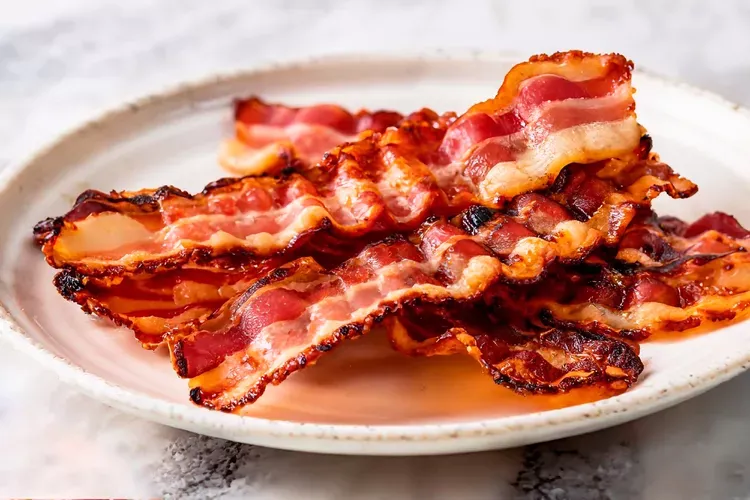
Anyway, why bacon and not beef for example ?
-
@Gardner said in I have trouble sleeping:
why bacon and not beef for example ?
yes, and nearly any smoked meat is H3.
When beef is pre-package, like in a warehouse, I don't buy it if the date is 2 or 3 days still fresh. Rather a cut from a big peace. The next day as last buy. To be consumed very fresh or frozen or kept between 0-2 ° C.
Why mackerel in olive oil is skyrocketing and less sardine in water, I don't know. I register and try to moderate or avoid it, according to the situation. More info on a link (for PDF) already mentioned in one of my post. I don't know where.
Explanation:
Meat naturally high in the precursor amino acid histidine, making them prone to high histamine if not handled perfectly, with mackerel often cited for higher histamine risks; however, sardines in water can also have high levels, so it's about brand quality, rapid processing, and proper chilling, not just the oil/water difference, though oil might mask spoilage better than water. -
@LucH i am thinking of using choline instead of betain
-
@lykos said in I have trouble sleeping:
i am thinking of using choline instead of betain
Both are useful. Betaine as a stimulator for bile secretion (digestion too long when meat is eaten).
Choline as help for GABA. to calm down nervous excess and feel relax. Not enough if very anxious or nervous. I often combine with the brake (sophrology, walk with deep breath for 3', theanine, collagen) (glycine if histaminose) and the abstinence (less coffee).
If you don't follow a plan, it won't match. Not one try, and we'll see ...
If you do so, you're going to finish exhausted (burn out). -
@LucH eating 6 eggs a day almost 800mg of choline, bcomplex for the b12, b6, b2, b9 and some glycine because u lose it when you overeat protein should be fine i guess, i prefer choline than betain for the acetylcholine and its one less supplement to take. Do you drink coffee ? For me it increases homocysteine a lot same goes for smoking, might start drinking green tea to cope with my broken genes
-
Why even live if you cant smoke

-
@lykos cancer. slow death. months in hospital isn't fun. costs a lot of money. another thing to depend on. non-smokers judging you. endocrine effects (PFAs, carbon monoxide), oxidative stress. yellow fingers. smokers cough XD
Pros: feels good. is the perfect drug for any situation. great for social life at least regarding fellow smokers. aura. it becomes a part of your routine in a good way. wake up. smoke a cig. with friends. smoke a cig. job interview. smoke a cig. it goes on and on and on till it catches up with you.




Hello! It looks like you're interested in this conversation, but you don't have an account yet.
Getting fed up of having to scroll through the same posts each visit? When you register for an account, you'll always come back to exactly where you were before, and choose to be notified of new replies (either via email, or push notification). You'll also be able to save bookmarks and upvote posts to show your appreciation to other community members.
With your input, this post could be even better 💗
Register Login