Ambient green light reduces knee pain
-
Ambient green light reduces knee pain in osteoarthritis patients 2026
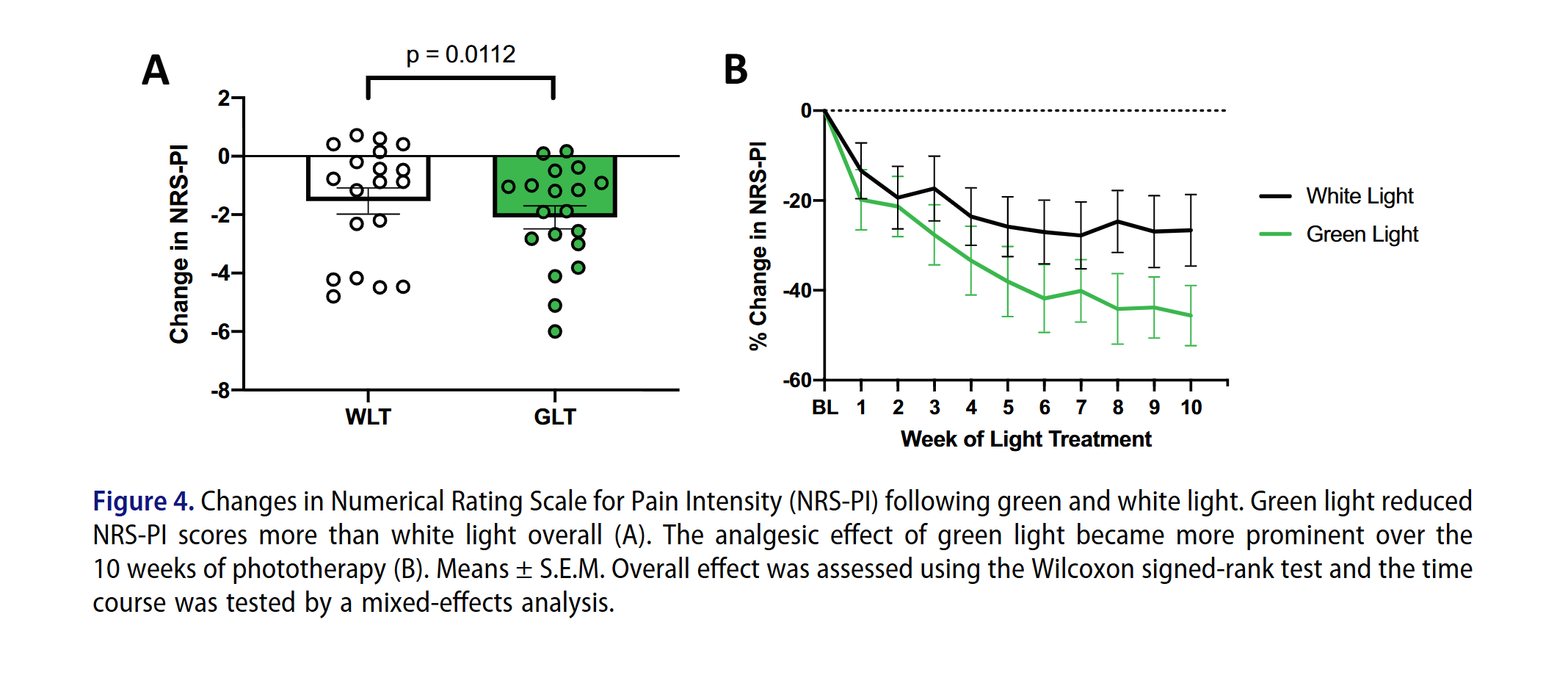
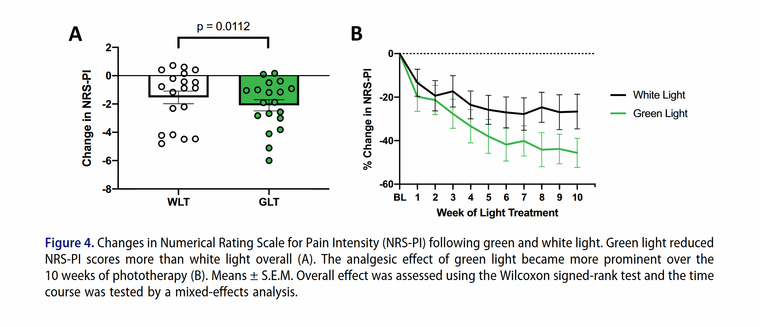
Results: With green light therapy (GLT), average WOMAC scores decreased from 44.1 ± 17.5 at baseline to 32.5 ± 16.2 whereas white light therapy (WLT) had no significant effect on arthritis disability scores (39.6 ± 15.3). While both WLT and GLT reduced pain intensity, the analgesic effect of green light was significantly greater. Pain interference scores were lower following GLT whereas WLT had no effect on this parameter. The Patient's Global Impression of Change was significantly improved over baseline with both WLT and GLT.
Conclusion: Daily exposure to ambient green light had a beneficial effect on OA knee pain. The neural pathways between the visual system and central pain modulation regions requires further investigation.
A mind is like a parachute. It doesn’t work if it is not open. 👀
☂️ -
@DavidPS
For optimal results, it's advised to use green light therapy for 15-20 minutes, 3 to 5 times a week, for at least 6 weeks. This protocol is based on extensive clinical studies in which subjects consistently experienced significant effects. No longer. every other day is fine.
NB: No personal experience. -
This is so weird; There's merit to certain wavelengths of every colour. Beside all the extensive red light research there are even studies on blue light alleviating chronic, especially neuralgic pain.
How would you determine which colour to pick case-by-case, after all? -
@CrumblingCookie said in Ambient green light reduces knee pain:
How would you determine which colour to pick case-by-case, after all?
There're more background with RLT. Not only why, but how / how much.
I've this inf on RLT
Hypothyroidism and infrared light therapy*) Red light therapy works by supercharging the mitochondria of your cells to make more ATP (adenosine triphosphate) energy through cellular respiration. You can read more about how red and infrared light therapy works right here.
Here are the clinical evidence and real-world proof that red light therapy is effective.
How does red light therapy work?
https://joovv.com/blogs/joovv-blog/how-does-red-light-therapy-work
Natural Light Powers Your Cells
All living things need to make ATP cellular energy to function and survive, and nearly all living things rely on natural light to power this process in our cells every day. Red and near infrared wavelengths of natural light stimulate the mitochondria in your cells, the powerhouses responsible for taking light, oxygen, and the food we eat—and turning it into usable energy for our bodies through the process of cellular respiration.
If you want to get under the microscope and go deep on the science, check out this detailed article on how natural red and near infrared light supercharges the cellular respiration process.
In addition to making more ATP energy and performing at higher levels, here are some of the other basic principles of red light therapy:
Antioxidants Reduce Oxidative Stress: Natural red and near infrared light helps promote antioxidant production, which plays a central role in reducing the oxidative stress associated with cell injury and things like muscle fatigue and joint pain & inflammation. Antioxidants also increase the production of heat proteins—special enzymes that help protect cells from stress and early death. [3,4]
Increased Circulation: Studies have also identified an increase in circulation following red light therapy, indicating tissues are receiving more oxygen and other nutrients important for healing—while also ridding themselves of toxic byproducts. [5]Afterwards, you need a trustful source for operating. The studies I have seen on hypothyroidism looked at the 830nm wavelength.
=> 10-15cm distance for 5-10 minutes.
My target: 15 cm for 5', every other day. It depends on the depth of the targeted tissue. -
@LucH
Thanks, but I'll need to look for a summary on the respective main mechanisms of action.
I'd extensively looked into RLT and its ATP-boosting mostly by its resonance with cytochrome P450 and the mitochondria. The mechanisms of green or blue (or yellow) wavelength surely cannot be the same. -
@CrumblingCookie said in Ambient green light reduces knee pain:
There's merit to certain wavelengths of every colour.
I agree. Mother nature packages all of wavelengths together, including many that we cannot see with our eyes.
I have been living in a snow covered landscape for several weeks now. Getting extra green light is a good thing.
Green light exposure may reduce Fear based Anxiety and Opioid Use
-
@DavidPS
AI
Top 8 Benefits of Green Light Therapy Revealed
Green light therapy (specifically narrow-band green LED light) stimulates the body's natural pain-killing system by increasing levels of endorphins and enkephalins in the central nervous system. Studies show it activates opioid receptors in the spinal cord, reducing pain, inflammation, and migraines.
Key Findings on Green Light and Endorphins:
Mechanism: Exposure to green light, typically 1–2 hours a day, increases the production of endogenous opioids (endorphins, enkephalins) and stimulates the cannabinoid system.
Pain Relief: Research in animal models and human trials indicates that green light is effective at reversing thermal and mechanical hypersensitivity, making it a promising tool for chronic neuropathic pain.
Brain and Spinal Action: The therapeutic effects are mediated through the central nervous system (brain and spinal cord) rather than the peripheral system.
Anti-inflammatory Effects: Beyond endorphins, green light reduces neuroinflammation.
Application and Usage:
Method: Specific, narrow-band green LEDs are used to treat migraines and chronic pain.
Safety: Studies indicate this is a safe, non-drug alternative with no reported side effects like sedation or nausea. -
Get some trees in your home! Shefflera are easy, ficus do well and ponytail palms!





Hello! It looks like you're interested in this conversation, but you don't have an account yet.
Getting fed up of having to scroll through the same posts each visit? When you register for an account, you'll always come back to exactly where you were before, and choose to be notified of new replies (either via email, or push notification). You'll also be able to save bookmarks and upvote posts to show your appreciation to other community members.
With your input, this post could be even better 💗
Register Login