PC choline to stabilize membranes
-
PC choline as a missing link to stabilize or improve membrane integrity (AA cascade) which leads to inflammation.
Situation
How can we limit the absorption of PUFAs when consuming 6 to 10 g of omega-6, while our needs are only 1 to 2%? This is not about the standard American diet, which often contains 20% of PUFAs from lipids (corn and soy). It's a rhetorical question.
Thus, for 2,000 kcal, 1 to 2% corresponds to between 20 and 40 kcal, or approximately between 2 and 4.5 g of PUFAs. Ultimately, we cannot simply "burn bad fats" the day after consuming them. They remain in the body and influence inflammatory markers for years. Indeed, even though we preferentially burn fatty acids stored in adipocytes (C16:0), ultimately, 19 to 24% of the fatty acids stored in adipose tissue are in this form. Studies show that saturated and monounsaturated fatty acids (such as C16) or oleic acid (C9) are preferred substrates for beta-oxidation, compared to polyunsaturated fatty acids. (1-3) This is why a small amount of "bad" fats is more harmful in the long run than a large amount of "good" fats. I know this, even though I try to guide my intake. Bad because it's very unstable and often consumed in excess. I often say that we are surrounded by omega-6s in conventional diets if we're not careful…
I also know that the omega-3/omega-6 ratio is much more important than the quantity, to a certain extent, but if we ingest, say, 10g of omega-6, we store the rest in adipose tissue until we are subjected to stress or injury (AA cascade).
Tactics
Therefore, we will not simply act after the fact, trying to calm pro-inflammatory prostaglandins (PGE-2) with phytonutrients such as curcumin, white willow (salicin), or EPA. We will attempt to act downstream rather than upstream, by trying to strengthen the integrity of the body's internal environment, namely its membranes.Sources and References
- Fatty acid preference for beta-oxidation in mitochondria of murine cultured astrocytes
https://doi.org/10.1111/gtc.13144 - Calculation of triglyceride composition in human adipose tissue
doi: 10.1194/jlr.D800010-JLR200 J Lipid Res. 2008.
Human adipose tissue is composed largely of triglycerides. Seven fatty acids predominate as follows (number of carbons:number of double bonds, typical abundance): myristic (14:0, 3%), palmitic (16:0, 19–24%), palmitoleic (16:1, 6–7%), stearic (18:0, 3–6%), oleic (18:1, 45–50%), linoleic (18:2, 13–15%), and linolenic (18:3, 1–2%) (22, 23). These fatty acids account for well over 90% of the fatty acids in human adipose tissue. - Beta-Oxidation: Palmitic Acid as a Source of ATP (preferably stored form in adipocytes)
https://www.metwarebio.com/palmitic-acid-health-diet-metabolism/#:~:text=In adipose (fat) tissue%2C,to be used as fuel.
Palmitic acid is also a critical component of phospholipids, which are the main structural molecules that make up cell membranes.
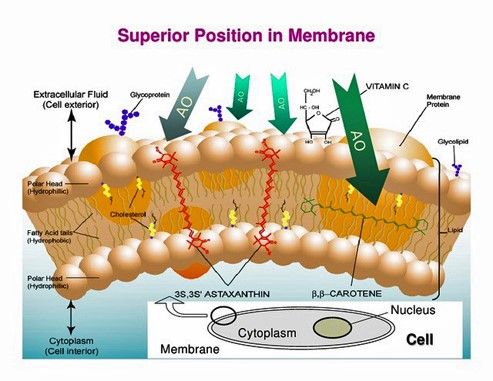
Figure: Membranes protected by Vitamin E, beta-carotene, astaxanthin and Vitamin C
- Fatty acid preference for beta-oxidation in mitochondria of murine cultured astrocytes
-
Lipid Protection
We already know that vitamin E (tocopherol mix, with gamma-tocotrienols), beta-carotene (via diet), and astaxanthin are frequently cited for counteracting ROS (reactive oxygen species scavenger effect). And more generally, an intake of vitamin C, magnesium, zinc, and selenium (GPx enzyme) is also recommended.
Last but not least, it is essential to maintain the lipid bilayer composed of phosphatidylcholine (PC).- Magnesium acts as a moderator (inhibitor) of PLA2. PLA2 is the enzyme that releases arachidonic acid (a pro-inflammatory precursor) from cell membranes (AA cascade).
Mg2⁺ stabilizes the phospholipid bilayers, reduces the activation of calcium-dependent PLA₂, and decreases eicosanoid production. 350-420 mg/day of elemental magnesium.
=> Magnesium bisglycinate. 2.5 g/day, divided into 2 or 3 doses. To reach 450 mg. More, in case of stress (after the event; do not anticipate stress in case of "upset"; otherwise, it is not appropriate). - Selenium, to ensure that the GPx4 enzyme can repair any lipid oxidation that occurs. (GPx4 = glutathione peroxidase 4). GPx4 specifically degrades lipid hydroperoxides in membranes, thus maintaining redox homeostasis.
100 mcg 2 to 3 times/week. More frequently if inflammation is present. Double the dose if detoxifying ML.
Note: More is not better. Actual needs are met. An overdose can cause fatigue and systemic problems, as the residues lead to an overload of the liver and kidneys (neutralization and elimination). - Tocos Mix (with Gamma): To act as a bodyguard for fat-soluble molecules. 400 IU tocos mix (with gamma tocotrienols) 2 to 3 times per week. Or 20-25 mg per day.
Note: More is not better, here too. - Zinc: Zinc stabilizes membranes by protecting thiols, inhibits lipid peroxidation induced by NADPH oxidase, indirectly limiting the arachidonic acid cascade. 10-15 mg/day.
Key refs:
• Prasad, Am J Clin Nutr, 2009 – zinc, oxidative stress, inflammation
• Ho et al., Free Radic Biol Med, 2008 – Zn and membrane oxidative stability
Mechanistically: ↓ membrane peroxidation → ↓ PLA₂ activation → ↓ free AA → ↓ PGE₂, independent of COX inhibition. - Stearic acid: Consider adding a source of stearic acid (such as cocoa butter) to "solidify" the membranes (balance between fluidity and structure).
Phosphatidylcholine (PC)
Function of PC Choline
Phosphatidylcholine (PC) is the main structural phospholipid of membranes, generally constituting 40 to 60% of the phospholipid composition, with a particularly high concentration in the outer (exoplasmic) membrane. Its fundamental role is to maintain the structural integrity, fluidity, and functionality of membranes, acting as a molecular buffer that allows the membrane to fold without rupturing.
=> Integrity, fluidity, maintenance (repair), protection (surfactant, hydrophobic agent)
PC vs. Choline
Although choline is the essential nutrient, the phosphatidylcholine (PC) form is more effective for direct membrane repair because it is already integrated into a phospholipid structure. Choline bitartrate could be only about 30% bioavailable (metabolized in the intestine into trimethylamine (TMA) by the microbiota, depending on the dose).PC choline as a missing link in stabilizing or improving membrane integrity (AA cascade) that leads to inflammation
Phosphatidylcholine (PC), often called PC choline, plays a crucial role as a "missing link" in stabilizing and improving the integrity of cell membranes, notably by regulating the arachidonic acid (AA) cascade that leads to inflammation.
Here's how PC acts as a stabilizing element in this context:
1. PC as a Reservoir and Membrane Stabilizer
• Major Composition: PC is the most abundant phospholipid in mammalian cell membranes (40–50% of the total). It is essential for membrane fluidity, structure, and permeability.
• Membrane Repair: PC provides structural building blocks that maintain membrane integrity. A PC deficiency can weaken the membrane, making it more susceptible to degradation.
• Arachidonic Acid (AA) Control: Arachidonic acid (AA), a precursor of inflammation, is stored in the membrane, often bound to phosphatidylcholine (AA-PC). Ensuring sufficient PC levels stabilizes membranes, preventing excessive AA release.
2. PC and the Arachidonic Acid (AA) Cascade
• The Release Link: During inflammation or injury, the enzyme phospholipase A2 (PLA2) hydrolyzes PC to release arachidonic acid, which is then converted into inflammatory mediators (prostaglandins, leukotrienes).
• Modulation of the Cascade: PC acts as a buffer. If the membrane is rich in healthy PC, it can better manage lipid remodeling. Conversely, degradation of membrane PC activates the AA cascade, leading to pain and inflammatory responses (e.g., neuropathic pain).
• Effect of Lysophosphatidylcholine (LPC): When PC is degraded by PLA2, it forms lysophosphatidylcholine (LPC). It has been shown that LPC can act as a "brake" on membrane merger, thereby regulating the final stages of AA release.
3. Impact on Integrity and Resilience
• Homeoviscous Adaptation: PC helps maintain optimal membrane fluidity ("homeoviscous adaptation") in the face of stress.
• Neuronal Protection: In neurons, AA-PC is concentrated along the axon, and its integrity is associated with actin dynamics and tactile sensitivity.
• PC Synthesis: The CDP-choline pathway is the primary pathway for synthesizing PC, which is essential for membrane stabilization.
In summary, PC choline is not just a passive component, but an active player which, by stabilizing the membrane structure, modulates the speed and intensity of the arachidonic acid cascade, thus acting as a key regulator of inflammation and cellular integrity.Sources & References
https://mirzoune-ciboulette.forumactif.org/t2172-pc-choline-pour-stabiliser-les-membranes#30616- Which form and where to buy PC choline.
- Magnesium acts as a moderator (inhibitor) of PLA2. PLA2 is the enzyme that releases arachidonic acid (a pro-inflammatory precursor) from cell membranes (AA cascade).
-
I think mitolipin from georgi is the only saturated PC I know of that is accessible.
-
@bio3nergetic said in PC choline to stabilize membranes:
I think mitolipin from georgi is the only saturated PC
Probably yes. It's stearic and palmitic support, at 39.99 $ + 16 $ for costs abroad.
When I can get mine in 420 mg softgels or from eggs, guess the next step
*) Natural factors 420 mg 90 gel. 12.64 € => 0.14 € /gél. *
Gelatin, glycerin
*) Thorne 420 mg 60 gel. 26.74 € => 0.45 €
Gelatin (bovin), glycerin -
@bio3nergetic It doesn't matter. Your body will break down the PC into lysophosphatidylcholine + free fatty acids.
Back in the body, your body will a join the lysophosphatidylcholine with circulating fatty acids. When the enter the cell, it breakds down back into lysophosphatidylcholine, and rejoins with fatty acids in the cell back into PC.So as long, as you eat saturated fat with the PC, then basically, you will be receiving saturated PC.It's not a scam by Haidut, because he is selling what it says on the label, but it's useless when compared to alternetive forms of PC, which are sold for much much cheaper.
-
@alfredoolivas said in PC choline to stabilize membranes:
Your body will break down the PC into lysophosphatidylcholine + free fatty acids.
Back in the body, your body will a join the lysophosphatidylcholine with circulating fatty acids. When the enter the cell, it breakds down back into lysophosphatidylcholine, and rejoins with fatty acids in the cell back into PC.So as long, as you eat saturated fat with the PC, then basically, you will be receiving saturated PC.This doesn't seem to make enough sense for me. The fact there is a kind of lipolysis makes the fact even more crucial that there be a saturated PC. If the original PC contains PUFAs like linoleic acid (18:2), those PUFAs are released into circulation and can be incorporated into tissues, including mitochondrial and cellular membranes, where they increase oxidative stress and inflammation.
Even if lysoPC is re-acylated with saturated fats, some PUFA has already entered the system, and it’s not excreted immediately. Crucially, the enzyme LPCAT3 responsible for re-acylation, strongly prefers polyunsaturated fatty acyl-CoAs, especially arachidonic acid. Although, I tend to use different language in describing that, as more or less a hijacking than anything else.This means that even in a high-saturated-fat context, the body prioritizes incorporating PUFAs into PC when available. And although metabolcally and typically, saturated fats are preferential fuel over PUFA, in the case of the building PC, PUFA wins, hence why I prefer the term hijack. So if dietary PC contains PUFAs, they’re more likely to be retained and recycled, not replaced.
Studies show that LPCAT3 knockout mice have reduced PUFA content in PC and are protected from diet-induced fatty liver! This was a indirect evidence incidentally, because the researchers were looking at total overall PC from high fat diet as related to disease progression. But guess what, the high fat diet is your typical formula: 25 grams Soybean Oil and almost 300 grams pig lard. This confirming that this enzyme drives PUFA incorporation into membranes. The takeaway being it is doubly important we use saturated PC.
High-fat diet-induced upregulation of exosomal phosphatidylcholine contributes to insulin resistance
Anil Kumar, et al -
@bio3nergeti The PC breaks down and creates another PC with already circulating fatty acids. Saturated or not.
That's why I suggested that you EAT saturated fat with PC. To supress lypolysis and increase saturated fat that pairs with the lysophosphatidylcholine.
Eating saturated PC will break down and pair with circulating fatty acids anyway. No point paying 40 dollars + shipping for 30 doses of 200mgs of saturated PC, which provides very little free choline.
If you were to inject saturated PC intravenously? Sure, that would be awesome because the PC would stay intact. But in the gut it breaks down and forms different PC based off of blood levels. In the cell it breaks down again, however, the PC delivers fatty acid into the cell and likely the same PC is formed again.
-
@bio3nergetic said in PC choline to stabilize membranes:
High-fat diet-induced upregulation of exosomal phosphatidylcholine contributes to insulin resistance
And what has this got to do with supplementing saturated or unsatured PC?
"obese mice fed a HFD or from patients with type II diabetes. HFD altered the lipid composition of exosomes from predominantly phosphatidylethanolamine (PE) in exosomes from lean animals (L-Exo) to phosphatidylcholine (PC) in exosomes from obese animals (H-Exo)"
Nothing was mentioned about saturation, just about what class of molecules compose exosomal space.
-
@alfredoolivas You are looking at it from the perspective of PC count. For myself, the added PUFA is problematic due to the LPCAT3 preference. Eating it with saturated fat doesn't mitigate the lipolytic action. Insulin will, but you are then right back to extra PUFA in circulation. What you're saying still doesn't make sense. It is as if you are saying make an exception for PUFA if taking in PC, and for no apparent reason.
@alfredoolivas said in PC choline to stabilize membranes:
@bio3nergetic said in PC choline to stabilize membranes:
High-fat diet-induced upregulation of exosomal phosphatidylcholine contributes to insulin resistance
And what has this got to do with supplementing saturated or unsatured PC?
"obese mice fed a HFD or from patients with type II diabetes. HFD altered the lipid composition of exosomes from predominantly phosphatidylethanolamine (PE) in exosomes from lean animals (L-Exo) to phosphatidylcholine (PC) in exosomes from obese animals (H-Exo)"
Nothing was mentioned about saturation, just about what class of molecules compose exosomal space.
Yes, this is why I mentioned "indirect evidence." You have to pay attention to method and materials to sometimes derive unintended conclusions. Peat often did this as well. I had said: "This was a indirect evidence incidentally, because the researchers were looking at total overall PC from high fat diet as related to disease progression. But guess what, the high fat diet is your typical formula: 25 grams Soybean Oil and almost 300 grams pig lard. This confirming that this enzyme drives PUFA incorporation into membranes. The takeaway being it is doubly important we use saturated PC."
-
@bio3nergetic said in PC choline to stabilize membranes:
Studies show that LPCAT3 knockout mice have reduced PUFA content in PC and are protected from diet-induced fatty liver!
I don't understand - that says nothing about why supplementing unsaturated PC is bad!
Where is the evidence that PUFA preferentially is used for PC synthesis? A
And where is the evidence that saturated fat is just disregarded as a substrate for PC synthesis?
How will using saturated PC combat this? It is broken down in the gut releasing a miniscule amount of saturated fat along with lysophosphatidylcholine.Study on soybean dervied PC still having beneficial effects on fatty liver:
https://pubmed.ncbi.nlm.nih.gov/25445436/So far there is two vitro studies on saturated PC, about it being beneficial for PUFA cytotoxcity. Sure if you insert saturated PC into a cell it will act as a carrier for saturated fat, and reverse PUFA effects. But ingesting is incomparable.
-
Whatever the fat is [C16-0 (palmitic acid) or C18-n2 (LA, omega-6) or 18:3 n-3 (ALA, omega-3)], the PC will be hydrolyzed before reaching the destination. Need lipoprotein transport.
Excerpt:
Any dietary PC (egg yolk, soy lecithin, sunflower lecithin, krill oil, PC supplements) is broken down into LPC + a fatty acid in the intestine before absorption.
So even if you take PC, your body creates LPC during digestion.What happens in the intestine when we get choline form food or a supplement?
Pancreatic phospholipase A2 hydrolyzes PC → lysophosphatidylcholine (LPC) + a free fatty acid.
LPC and free fatty acids are incorporated into mixed micelles with bile salts. These micelles facilitate absorption into enterocytes.
So we need effective bile to optimize things.
I take betaine HCL 1x/day, rather at the evening meal, since pH secretion is top between 11 – 14 o’clock (for proteins) (with ginger and pepsin). (1)
Using forms that enhance cellular uptake
We know choline from food or from supplement are going to be emulsioned. Thus there is a change in the absorption way, no mitochondrial delivery, at the moment. Whatever the form is.
PS: I've tried to understand how the metabolism manage to assimilate PC choline. => 9 pages to summarize "How PC Is Digested, Emulsified, Transported, and Ultimately Reaches Mitochondria".

-
@alfredoolivas The knockout LPCAT3 mice have reduced PUFA content in PC AND are protected from diet-induced fatty liver. The correlated fatty liver disease from high fat/high PUFA diet, as it increased (unsaturated) PC, was lacking in these mice. This is rather straight forward in understanding. A mainstreamer perhaps would miss the connection as they don't think of the PUFA component.
Well for starters, from that study there are links to harder evidence for LPCAT3 PUFA preference. Others include:
Fatty acid remodeling by LPCAT3 enriches arachidonate in phospholipid membranes and regulates triglyceride transport
Tomomi Hashidate-Yoshida
PNPLA3 is a triglyceride lipase that mobilizes polyunsaturated fatty acids to facilitate hepatic secretion of large-sized very low-density lipoprotein
Liver X receptor agonist upregulates LPCAT3 in human aortic endothelial cells
Delphine Bousquet,
PNPLA3 is a triglyceride lipase that mobilizes polyunsaturated fatty acids to facilitate hepatic secretion of large-sized very low-density lipoprotein
Scott M. JohnsonThe PC process is one of incorporation: you incorporate the lipids you ingest. The studies that show benefit from soybean oil PC have to do with contextual facts i.e. no PC is worse than some PUFA PC.
-
LPCAT3-driven PUFA-PC synthesis in high-fat, high-PUFA diets promotes fatty liver by fueling lipogenesis and VLDL overproduction.
-
Dietary soybean PC, however, acts as a hepatoprotective agent by improving lipid export, reducing inflammation, and supporting membrane health BUT likely because it bypasses uncontrolled remodeling.
Extra exogenous PC is better than nothing at all in the face of high fat diet. Exogenous PC (especially PUFA-PC like soybean or polyenylphosphatidylcholine/PPC) acts as a functional "rescue" molecule in high-fat diets, even if not ideal. However saturated PC is more stable and less prone to oxidation, making it potentially safer in the context of metabolic stress. Deciphering these studies often takes understanding the context or situation the lab animal is in.
-
-
@bio3nergetic I am not reffering to how prone saturated PC is to oxidation - I am referring to how pancreatic phospholipase A2 and stomach acid a pH of 1 would break PC bonds. There hasn't been a study on saturated PC in humans, but for other PC (polyethylene Pc)
"this suggests that most oral PC was hydrolyzed to lysolecithin before absorption.”
https://pubmed.ncbi.nlm.nih.gov/7175371/"PC digestion occurs in the small intestine… Chemical breakdown of PLs is carried out primarily by pancreatic phospholipase A₂ (PLA₂) … It interacts with PLs at the sn-2 position to yield free fatty acid and lysoPC.”
https://pmc.ncbi.nlm.nih.gov/articles/PMC3257636/ -
@alfredoolivas said in PC choline to stabilize membranes:
"PC digestion occurs in the small intestine… Chemical breakdown of PLs is carried out primarily by pancreatic phospholipase A₂ (PLA₂) … It interacts with PLs at the sn-2 position to yield free fatty acid and lysoPC.”
Pancreatic phospholipase A2 and stomach acid a pH of 1 breaking PC bonds does not at all mitigate risk or toxicity of oxidation products, bioactivity of lysoPC, and systemic inflammatory potential of dietary oxidized lipids regarding PUFA. You are conflating these inherent processes with the idea that somehow the physiology is safe from the usual culprit.
-
Talk with AI
Context:
Title: PC choline to stabilize membranes.
I put in excerpt:
You aren’t talking the same language:-
- One is speaking about altered PUFA as carrier (fueling lipogenesis and VLDL overproduction, upregulating LPCAT3 in human aortic endothelial cells), making saturated PC more stable and less prone to oxidation. The added PUFA (in the supplement) is problematic due to the LPCAT3 preference.
-
- The other one excerpting that most oral PC has been hydrolyzed to lysolecithin before absorption / incorporate in tissues (breakdown of PLs is carried out primarily by pancreatic phospholipase A₂.
https://bioenergetic.forum/topic/9164/pc-choline-to-stabilize-membranes/8?_=1770916434026
- The other one excerpting that most oral PC has been hydrolyzed to lysolecithin before absorption / incorporate in tissues (breakdown of PLs is carried out primarily by pancreatic phospholipase A₂.
My comment (LucH):
Whatever the fat is [C16-0 (palmitic acid) or C18-n2 (LA, omega-6) or 18:3 n-3 (ALA, omega-3)], the PC will be hydrolyzed before reaching the destination. Need lipoprotein transport.
Excerpt:
Any dietary PC (egg yolk, soy lecithin, sunflower lecithin, krill oil, PC supplements) is broken down into LPC + a fatty acid in the intestine before absorption.
So even if you take PC, your body creates LPC during digestion.*) Request to AI
A comment to set things clear, though they don’t seem to speak the same language, trying to argue sth different.
Analyze, please, with an advice to set the eyes again in front of the holes!Answer from AI (gemini3)
It looks like you've stepped into a classic "forest for the trees" debate. Both sides are technically correct about specific mechanisms, but they are arguing from different stages of the metabolic pipeline.
To "set the eyes back in front of the holes," we need to look at the transition from ingestion to integration. Here is a breakdown of the two positions and the reality of the biochemistry.- The Disconnect: Mechanism vs. Metabolism
The two sides are talking past each other because one is focused on downstream signaling (what the molecule does once it's in the cell) and the other is focused on upstream processing (what happens in the gut). - The Digestive Reality (The "Hydrolysis" Filter)
Your comment (LucH) hits the nail on the head regarding the "gatekeeper." When you ingest Phosphatidylcholine (PC), it doesn't travel through your blood like a whole Lego set.
The Breakdown: Pancreatic phospholipase A₂ cleaves the fatty acid at the sn−2 position.
The Result: You are left with Lysolecithin (LPC) and a Free Fatty Acid (FFA).
The Absorption: These components are absorbed into the enterocytes (intestinal cells).
The Re-assembly: Inside the enterocyte, they are often re-esterified into new phospholipids or triglycerides to be packed into chylomicrons.
The Bottom Line: You cannot "target" a specific membrane with a specific oral PC molecule because the body deconstructs it and puts it into the general fatty acid pool or re-assembles it based on current metabolic needs. - Where Side A Has a Point (The LPCAT3 Factor)
While Side B is right about the breakdown, Side A is right about the preference. Even if the PC is broken down into LPC, the enzyme LPCAT3 is the "re-builder."
LPCAT3 has a high affinity for polyunsaturated fatty acids (PUFAs). So, if your diet (or supplement) is flooded with PUFAs, LPCAT3 will preferentially grab those to rebuild the membrane. This is where the "fueling lipogenesis" and "VLDL overproduction" concerns come in. It’s not that the PC stayed intact; it’s that the raw materials provided by the supplement gave LPCAT3 the tools to build the "wrong" kind of membrane.
Advice to Re-Center the Debate
To clear the air, the conversation needs to move away from "What does this supplement molecule do?" to "What does this supplement do to the Intracellular Pool?"
The "Eyes in Front of the Holes" Perspective: Stop arguing about whether the PC stays intact (it doesn't). Start focusing on the ratio of fatty acids being introduced. If you flood the system with a PUFA-based PC supplement, you are providing the specific substrate that LPCAT3 uses to drive the exact metabolic pathways Side A is worried about.
The takeaway: The specific fatty acid "tail" on your PC supplement matters not because it survives digestion, but because it dictates the "parts list" available to your cells for reconstruction.
Would you like me to draft a concise "rebuttal" or summary you can post back to that forum thread to bridge these two points?
LucH says:
No need. Fine so. Just find a bullet end image. Analogy if pertinent. Material brought to VLD particles.
AI says
Think of the liver as a factory floor. The oral PC supplement isn't a "finished machine" arriving at the loading dock; it is a delivery of raw scrap metal.
The Gut (The Shredder): Digestion is the shredder that breaks the PC into individual components (LPC and Fatty Acids).
The Cell (The Assembly Line): Inside the cell, enzymes like LPCAT3 are the workers on the line. They don't care where the scrap came from; they just grab what is closest to them.
The VLDL (The Shipping Crate): If you deliver a pile of PUFA-heavy scrap, the workers (LPCAT3) will build PUFA-rich membranes and pack them into the VLDL shipping crates.
The Point: If the parts you supplied are "oxidizable" or "pro-lipogenic" (PUFAs), it doesn't matter how expensive the original "Ferrari" was. Your body is now built out of those specific parts.
Bottom Line: Stop looking at the "PC" label on the bottle and start looking at the Fatty Acid profile on the back. That is the only material that actually makes it into the VLDL shipping crate.
Would you like me to generate an image of this "Biological Assembly Line" packing those VLDL crates?
LucH says:
Yes, but only with a two-side direction lines (==>). PNG.
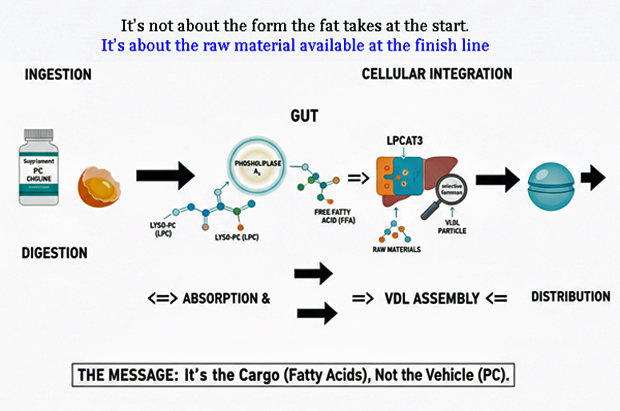
The specific fatty acid "tail" on your PC supplement matters not because it survives digestion, but because it dictates the message available to your cells for reconstruction. Raw material available at the end will serve as a cargo. It’s not about the form the fat takes at the start; it’s about the raw material available at the finish line.
LucH says :
End. Thanks.
AI says:
It sounds like you've got a solid handle on the "cargo vs. vehicle" distinction now—the perfect way to bridge that gap in the forum debate. -
-
@bio3nergetic said in PC choline to stabilize membranes:
and systemic inflammatory potential of dietary oxidized lipids regarding PUFA.
0.65g of soy / sunflower fatty acids in a gram of PC? I wouldn't worry about that at all.
-
@alfredoolivas Right, and as the understanding now settles into a different argument i.e. amount, it simply makes no sense to add in more PUFA regardless of amount when addressing PC exogenously. Where I allow my daily PUFA comes from whole food, eggs, etc. IF I consider exogenous use I'd look at something like mitolipin..
-
@bio3nergetic Every single study apart from two in vitro studies on the thread of Mitolipin, that showed it's beneficial effects were done using unsaturated phosphatidyl choline.
It's the end result that matters, not the theoretical effects of less than 1g of PUFA. To me.
Topical Administration:
The skin-permeation-enhancing effect of phosphatidylcholine: caffeine as a model active ingredient. - PubMed - NCBI
The hypocholesterolemic and antiatherogenic effects of topically applied phosphatidylcholine in rabbits with heritable hypercholesterolemia. - PubMed - NCBI
Effects of phosphatidylcholine on the topical bioavailability of corticosteroids assessed by the human skin blanching assay. - PubMed - NCBIGeneral/Miscellaneous:
Cell membranes and apoptosis: role of cardiolipin, phosphatidylcholine, and anticancer lipid analogues. - PubMed - NCBI
Biochemical effects of phosphatidylcholine treatment in rats. - PubMed - NCBI
Rapid stopping of A23187 action by phosphatidylcholine. - PubMed - NCBI
Blockade of alpha-adrenergic receptors by analogues of phosphatidylcholine. - PubMed - NCBI
The effect of mixed phosphatidylcholine liposomes on beef heart cytochrome c oxidase [proceedings]. - PubMed - NCBI
Cytochrome c Interaction with Cardiolipin/Phosphatidylcholine Model Membranes: Effect of Cardiolipin Protonation - ScienceDirect
Inhibition of mammalian cytotoxic cells by phosphatidylcholine and its analogue
Studies on cytochrome oxidase. Interactions of the cytochrome oxidase protein with phospholipids and cytochrome c. - PubMed - NCBIInflammation:
Anti-inflammatory action of a phosphatidylcholine, phosphatidylethanolamine and N-acylphosphatidylethanolamine-enriched diet in carrageenan-induced... - PubMed - NCBI
Anti-inflammatory effects of phosphatidylcholine. - PubMed - NCBI
Protective effect of phosphatidylcholine on lipopolysaccharide-induced acute inflammation in multiple organ injury. - PubMed - NCBI
Soy phosphatidylcholine inhibited TLR4-mediated MCP-1 expression in vascular cells. - PubMed - NCBIBrain/Memory/Mood/Cognition/Nervous system:
Protective effects of phosphatidylcholine on oxaliplatin-induced neuropathy in rats. - PubMed - NCBI
Dietary phosphatidylcholine improves maze-learning performance in adult mice. - PubMed - NCBI
Impairment of brain mitochondrial functions by β-hemolytic Group B Streptococcus. Effect of cardiolipin and phosphatidylcholine. - PubMed - NCBI
Protective effects of a phosphatidylcholine-enriched diet in lipopolysaccharide-induced experimental neuroinflammation in the rat. - PubMed - NCBI
Effect of phosphatidylcholine on explicit memory. - PubMed - NCBI
A report on phosphatidylcholine therapy in a Down syndrome child. - PubMed - NCBI
http://www.amsciepub.com/doi/abs/10.2466/pr0.1986.58.1.207?url_ver=Z39.88-2003&rfr_id=ori:rid:crossref.org&rfr_dat=cr_pub=pubmed&
http://www.sciencedirect.com/science/article/pii/S0140673683921086
[Combination of phosphatidylcholine and pentoxifylline in the therapy of progressive obstructive stroke]. - PubMed - NCBILiver/Gallbladder:
Prevention of hepatocarcinogenesis with phosphatidylcholine and menaquinone-4: in vitro and in vivo experiments. - PubMed - NCBI
Accumulation of lipid in rat liver was induced by vitamin B₆ deficiency and was ameliorated by supplemental phosphatidylcholine in the diet. - PubMed - NCBI
Hepatoprotective effect of phosphatidylcholine against carbon tetrachloride liver damage in mice. - PubMed - NCBI
Hyperreactivity of Blood Leukocytes in Patients with NAFLD to Ex Vivo Lipopolysaccharide Treatment Is Modulated by Metformin and Phosphatidylcholin... - PubMed - NCBI
[Effects of phosphatidylcholine pretreatment during acute experimental biliary reflux]. - PubMed - NCBI
Dietary phosphatidylcholine alleviates fatty liver induced by orotic acid. - PubMed - NCBI
Phosphatidylcholine-enriched diet prevents gallstone formation in mice susceptible to cholelithiasis. - PubMed - NCBI
http://www.ncbi.nlm.nih.gov/pubmed/7539565
http://www.ncbi.nlm.nih.gov/pubmed/24292666
http://www.ncbi.nlm.nih.gov/pubmed/21745592
http://www.ncbi.nlm.nih.gov/pubmed/20832797
http://www.ncbi.nlm.nih.gov/pubmed/8276192
http://www.ncbi.nlm.nih.gov/pubmed/8276177Gut/Bowel/GI/Endotoxin:
http://www.ncbi.nlm.nih.gov/pubmed/25250596
http://www.ncbi.nlm.nih.gov/pubmed/25477376
http://www.ncbi.nlm.nih.gov/pubmed/18496240
http://www.ncbi.nlm.nih.gov/pubmed/17975182
http://www.ncbi.nlm.nih.gov/pubmed/24796768
http://www.ncbi.nlm.nih.gov/pubmed/18461026
http://www.ncbi.nlm.nih.gov/pubmed/16482629
http://www.ncbi.nlm.nih.gov/pubmed/15951544
http://www.ncbi.nlm.nih.gov/pubmed/15345455
http://www.ncbi.nlm.nih.gov/pubmed/11469682
http://www.ncbi.nlm.nih.gov/pubmed/7493735
http://www.ncbi.nlm.nih.gov/pubmed/23295697
http://www.ncbi.nlm.nih.gov/pubmed/22576006
http://www.ncbi.nlm.nih.gov/pubmed/22100851
http://www.ncbi.nlm.nih.gov/pubmed/21105858
http://www.ncbi.nlm.nih.gov/pubmed/21081908
http://www.ncbi.nlm.nih.gov/pubmed/20926877
http://www.ncbi.nlm.nih.gov/pubmed/20595010
http://www.ncbi.nlm.nih.gov/pubmed/20135022
http://www.ncbi.nlm.nih.gov/pubmed/20048683
http://www.ncbi.nlm.nih.gov/pubmed/19594939
http://www.ncbi.nlm.nih.gov/pubmed/19120061
http://www.ncbi.nlm.nih.gov/pubmed/8430278
http://www.ncbi.nlm.nih.gov/pubmed/8399676
http://www.ncbi.nlm.nih.gov/pubmed/1596725
http://www.ncbi.nlm.nih.gov/pubmed/1289171Heart/Kidney:
http://www.ncbi.nlm.nih.gov/pubmed/23684996
http://www.ncbi.nlm.nih.gov/pubmed/1420493Cancer:
http://www.ncbi.nlm.nih.gov/pubmed/17399847
http://www.ncbi.nlm.nih.gov/pubmed/24772432
http://www.ncbi.nlm.nih.gov/pubmed/19579625Obesity/Diabetes/Metabolism:
http://www.ncbi.nlm.nih.gov/pubmed/25445436
http://www.ncbi.nlm.nih.gov/pubmed/22468042
http://www.ncbi.nlm.nih.gov/pubmed/22145579
http://www.ncbi.nlm.nih.gov/pubmed/21614002Bones:
http://www.ncbi.nlm.nih.gov/pubmed/19766625
http://www.ncbi.nlm.nih.gov/pubmed/19296835Anti-viral/anti-bacterial:
http://www.ncbi.nlm.nih.gov/pubmed/9708184
http://www.ncbi.nlm.nih.gov/pubmed/8516563
http://www.ncbi.nlm.nih.gov/pubmed/1570416
http://www.ncbi.nlm.nih.gov/pubmed/1530351 -
@alfredoolivas For myself, and PUFA sensitivity as well as past IBD experience, it is not theoretical it is practical. My exception of PC , again is primarily through food first. That is my threshold of tolerance. Outside of that I have no interest in adding more PUFA. There is no reasonable or convincing argument to do otherwise if one's diet is sorted. The understanding of PC and its benefits are again, as a necessarily evil not as a point of putting PUFA on a pedestal. The effects mentioned have been demonstrated without the PUFA risk with saturated lipids. The understanding that far is sufficient to deduce that IF one is to use PC exogenously opt for saturated. If you don't want to for personal reasons, by all means go ahead.
-
Choline pathway explained
PC choline is hydrolyzed when metabolized (digestion).
2 situations:
Ratio is fine: PC → LPC → ## ↓ PLA₂ activation → ↓ free AA → ↓ PGE₂, when PL plays as a buffer (stabilizing the membranes). PLA2 acts as a "double-edged sword" (phagocytosis & downregulation of oxidative stress after ischemia).
Ratio is bad: PC → LPC → ## ↑ PLA₂ activation → ↑ free AA → ↑ Prostaglandins (PGE) and leukotrienes (Lts), when integrity is impaired.Degradation of membrane PC activates the AA cascade, leading to pain and inflammatory responses (e.g., neuropathic pain). PC helps maintain ideal membrane fluidity ("homeoviscous adaptation") in the face of stress.
Neuronal protection: In neurons, AA-PC is concentrated along the axon, and its integrity is associated with actin dynamics and tactile sensitivity. The CDP-choline pathway is the main pathway for synthesizing PC necessary for membrane stabilization. Said on another way, citi-choline (or CDP-choline, it’s the same molecule) is required to go through the BBB.
Abbreviations:
AA = Arachidonic Acid
PLA2 = Phospholipase A2 (enzyme that cleaves membrane phospholipids, remodeling when required, used in host defense and signal transduction. Critical regulator).
PC = phosphatidylcholine
LPC = lysophosphatidylcholine
PE = phosphatidylethanolamine
PS = phosphatidylserineKey Aspects of the Anti-Inflammatory Action
Mechanisms: The diet reduces the inflammatory leukocyte reaction. It also suppresses pro-inflammatory enzymes, such as those responsible for reactive oxygen species (ROS) production, and inhibits TNF-induced activation of the NF-B pathway.Phospholipid Roles:
o PC: Known to stabilize cell membranes, modulate T-cell function, and reduce pro-inflammatory signaling in intestinal epithelial cells.
o PE: Regulates mitochondrial function in macrophages and aids in anti-inflammatory responses.
o NAPE (N-acylphosphatidylethanolamine): Linked to endocannabinoid metabolism, contributing to reduced inflammatory activation.
• Therapeutic Potential: Studies suggest that this combination (often studied with 1% PC, 0.4% PE, and 0.1% NAPE) can act as a novel, non-toxic, nutritional approach to managing chronic inflammatory conditions.
The combination of these phospholipids helps modulate the inflammatory cascade, suggesting they are potential agents for reducing systemic inflammation.What happens in the intestine?
Pancreatic phospholipase A2 hydrolyzes PC → lysophosphatidylcholine (LPC) + a free fatty acid.
LPC and free fatty acids are incorporated into mixed micelles with bile salts.
These micelles facilitate absorption into enterocytes.
LPC is re-acylated to PC using available fatty acids, then incorporated into chylomicrons and released into lymph → blood.
Key point
There is no direct route from dietary PC → mitochondria. Instead, PC enters systemic pools and participates in membrane turnover.
Mitochondria do not import PC efficiently from the cytosol. Instead, mitochondrial PC is mostly supplied by:
Phosphatidylserine (PS) import → decarboxylation → PE → methylation → PC
Contact sites between ER and mitochondria (MAMs)
PC is essential for mitochondrial membrane structure and protein translocases.
Important insight
Dietary PC does not directly enrich mitochondrial PC. Instead, it contributes to the general cellular PC pool, which indirectly supports mitochondrial membrane homeostasis.
Mitochondrial PC depends on intracellular lipid trafficking, not diet.
Mitochondria rely on:
• ER–mitochondria contact sites (ER = endoplasmic reticulum). ER forms a tubule / sac, for direct and functional contact with mitochondria for lipid and calcium signaling.
• Lipid transfer proteins (bridge organelles to allow transfer in aqueous spaces, like with PS or PE.
• Internal synthesis pathways
These mechanisms are rate limiting, not the dietary form of PC. (This statement implies that the rate-limiting step for maintaining mitochondrial phosphatidylcholine (PC) levels is the internal production and transport of phospholipids, rather than the amount of PC ingested in the diet).
 Final Practical Takeaway
If you take PC → your body makes LPC.
If you take Alpha GPC → you get GPC directly.
• PC supplements give you the raw material for membranes, but they’re digested into LPC first.
• LPC is not taken as a supplement; your body makes it from PC.
• GPC (Alpha GPC) is a purified choline fragment of PC and is the easiest to supplement directly.
• Citicoline (CDP choline) → best for brain choline, not relevant to LPC (bypass way, direct incorporation))
🧬 The Link Between PC/LPC/GPC and Cardiolipin
Cardiolipin (CL) is the signature phospholipid of mitochondria, essential for:
• cristae structure (high-curvature structure to receive PC on an easier way, forming a highly organized structure to optimize the exchanges).
• electron transport chain stability
• cytochrome c anchoring
• ATP production
But cardiolipin is not made from PC, LPC, or GPC. Instead, the connection is indirect. The environment shapes CL and PC controls the membrane environment where cardiolipin is remodeled. So PC status indirectly determines cardiolipin quality.
 The Real, Practical Connection
PC, LPC, and GPC do not become cardiolipin — they maintain the phospholipid environment that allows cardiolipin to be synthesized and remodeled correctly.- PC = the membrane “scaffold” that allows PE and CL to be handled correctly.
- PE shapes the inner membrane so cardiolipin can function (appropriate curvature).
- PC and PE balance controls cardiolipin remodeling (tafazzin activity). The PC : PE ratio is a master regulator of cardiolipin quality.
 The Real, Practical Link
PC stabilizes the outer membrane, PE shapes the inner membrane, and cardiolipin organizes the respiratory machinery — all three lipids depend on each other to maintain mitochondrial cristae and ATP production.
Sources and references
-
Axonal Gradient of Arachidonic Acid-containing Phosphatidylcholine and Its Dependence on Actin Dynamics. doi: 10.1074/jbc.M111.316877 J Biol Chem. 2011
-
Arachidonic acid and lysophosphatidylcholine inhibit multiple late steps of regulated exocytosis.
https://doi.org/10.1016/j.bbrc.2019.05.106 2019 SciDir -
Phosphatidylcholine is the major phospholipid providing arachidonic acid for prostacyclin synthesis in thrombin-stimulated human endothelial cells.
https://doi.org/10.1016/0049-3848(84)90068-9 2024 Sci Dir -
Video 2.42’’ 2025: What is phosphatidylcholine? – The importance of PC. BOC Sciences
Youtube Video -
The critical role of phosphatidylcholine and phosphatidylethanolamine metabolism in health and disease. https://doi.org/10.1016/j.bbamem.2017.04.006
Phosphatidylcholine (PC) and phosphatidylethanolamine (PE) are the most abundant phospholipids in all mammalian cell membranes.
In recent years, the importance of phospholipid metabolism in regulating lipid, lipoprotein and whole-body energy metabolism has been demonstrated in numerous dietary studies and knockout animal models. The purpose of this review is to highlight the unappreciated impact of phospholipid.
Abnormally high and low cellular PC/PE ratios influence energy metabolism and is linked to disease progression. -
Synopsis of arachidonic acid metabolism: A review
doi: 10.1016/j.jare.2018.03.005 J Adv Res. 2018
Under stress conditions (e.g., oxidative stress, injury), the Arachidonic Acid (AA) cascade is initiated via the PLA₂ pathway to produce pro-inflammatory mediators.
The Cascade Process:
- Stimulus: Cellular stress (oxidative, inflammatory) activates Phospholipase A₂ (PLA₂).
- Release: Activated PLA₂ hydrolyzes phospholipids in the cell membrane to release free Arachidonic Acid.
- Metabolism: Free AA is converted by enzymes into bioactive lipids:
- COX Pathway: Cyclooxygenase (COX-1/COX-2) converts AA into prostaglandins and thromboxanes.
- LOX Pathway: Lipoxygenase (LOX) converts AA into leukotrienes.
- Result: Generation of pro-inflammatory mediators that cause inflammation and promote disease progression.
This pathway is a major contributor to inflammation, neurodegenerative diseases (like ALS), and cardiovascular conditions.
- Neuropathic pain
Arachidonic acid containing phosphatidylcholine increases due to microglial activation in ipsilateral spinal dorsal horn following spared sciatic nerve injury.
doi: 10.1371/journal.pone.0177595 PlosOne 2017 May 24.
Peripheral nerve injury induces substantial molecular changes in the somatosensory system that leads to maladaptive plasticity and cause neuropathic pain. Understanding the molecular pathways responsible for the development of neuropathic pain is essential to the development of novel rationally designed therapeutics.
To be continued on next post.


Hello! It looks like you're interested in this conversation, but you don't have an account yet.
Getting fed up of having to scroll through the same posts each visit? When you register for an account, you'll always come back to exactly where you were before, and choose to be notified of new replies (either via email, or push notification). You'll also be able to save bookmarks and upvote posts to show your appreciation to other community members.
With your input, this post could be even better 💗
Register Login