The processing of MILK and unsaturation
-
@penis said in The processing of MILK and unsaturation:
So they've found a way to really adulterate milk. (...)
But yeah milk is not just plain beautiful delicious milk anymore, what a pain in the assExcerpt from a more complete answer:
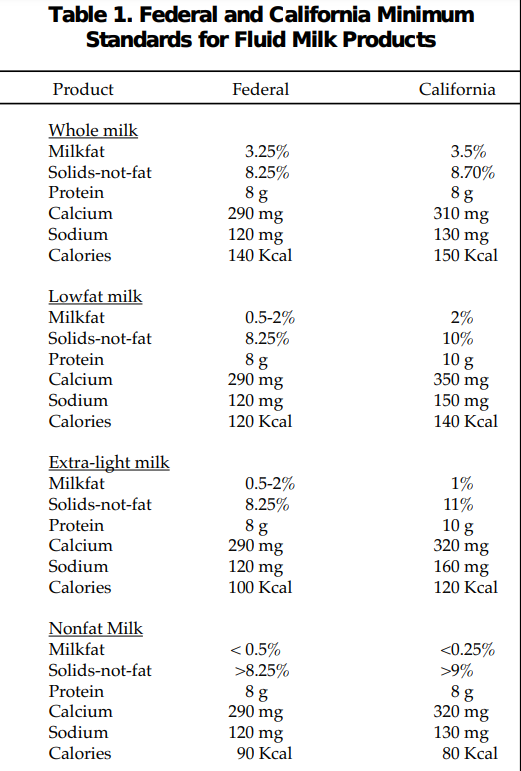
- If you see 3.5 g fat for full-fat milk, it’s probably an aldultered one.
- An organic label doesn’t protect us if the milk is UHT treated.
- Try to avoid the deconstruction/reconstruction process.
- Search for the term VAT (vat-pasteurized = slow-heated) in USA and check the fat type when mentioned.
- The difference between Pasteurization and UHT is not just a matter of degrees; it is a fundamental change in the molecular shape of the milk: protein integrity, enzymatic activity and CLT / stearic acid fat types.
- A cow fed with corn and soy during the winter time (6 months) suffers more from systemic inflammation. A ruminant needs fiber to optimize pH and avoid a compromised stomach barrier (LPS problem)
- In short: the cow’s rumen is a master-filter that turns polyunsaturated fats into saturated ones, but it needs the “scratch factor” of grass to keep its stomach lining intact. Six months of corn and soy essentially trades a healthy, diverse lipid profile (like CLA) for a more inflammatory one.
More details in this post:
English corner: Homogenized milk Vs pasteurized milk.
How to choose the right milk in a warehouse
https://mirzoune-ciboulette.forumactif.org/t2179-english-corner-homogenized-milk-vs-pasteurized-milk#30671 -
Actual milk has between 3.5% and 4.0% fat, depending on cow breed. But in America it seems even milk sold as "whole" milk, isn't actually whole. I checked the "whole" milk sold at Walmart and it only has 3%. For comparison in German supermarkets whole milk will always be either 3.5% or 3.8%.
All that removed fat is used to make cream or butter. It's just another way of trying to increase the profit margin of the product.
-
@pittybitty said in The processing of MILK and unsaturation:
For comparison in German supermarkets whole milk will always be either 3.5% or 3.8%.
If no other solution, see if it's pasteurized or UHT. No UHT at all (fake protein).
-
@pittybitty Yeah absolutely criminal they lie about not watering down milk, we just recombine it to the minimum, it's totally not the same! Whole milk should be 3.25% in USA at least.
I went to Walmart the other day and since there were lots of unsaturated fats in the milk I got the fat-free milk, thinking it has less seed oil toxins. It tasted drinkable at first but I was sipping water for the next half hour due to the aftertaste. I think it was so bad it gave me nightmares, cause I woke up in the middle of the night and was stuck ruminating over it, until I decided to get out of bed, pour out the Walmart "milk", and eat some food.
Then I went to costco and their UHT Organic a2 milk doesn't have the burnt taste some other UHT milks have. Peat was probably right recommending sourcing on taste, given a regular budget and how little information is provided with most milk, best not to be drinking uppackaged walmart-quality.
Sourcing raw milk is difficult but I'm going to aim for some on this road trip. The best tasting milk I have ever had was grass fed VAT milk but it was extremely expensive.
-
@penis said in The processing of MILK and unsaturation:
Then I went to costco and their UHT Organic a2 milk doesn't have the burnt taste some other UHT milks have.
The best tasting milk I have ever had was grass fed VAT milk but it was extremely expensive.
Haven't you still matched: UHT, even if this one tastes fine has fake proteins.
VAT milk has been flash pasteurized and should be less adulterated. Less in not OK. I gave links on my forum where to buy appropriate sources in USA.
And I wouldn't trust the word "organic" here. -
@LucH said in The processing of MILK and unsaturation:
I gave links on my forum where to buy appropriate sources in USA.
Thanks for this information. Of these three, do you have a preference? I've seen all three at Sprouts, and used to buy Straus, but the glass bottle deposit is psychologically hard to deal with...haha! It adds a significant amount each time, and you have to hassle with returning the glass bottles. It seems you prefer the A2, if I read correctly. Sprouts also has raw milk, at $19/gallon. It sounds like you think flash pasteurization is just about as good as raw.
· Kalona SuperNatural — only cream, no milk (Midwest/National): They are famous for being non-homogenized and vat-pasteurized at low temperatures. While they often use plastic or paper for their larger sizes, their smaller specialty batches and glass options are the "least handled" on the mass market.
· Alexandre Family Farm — $21.30/gallon (West Coast/National): They focus on A2 milk. Their 6% Whole Milk is a standout because it is not standardized—they leave the fat exactly as it comes from the cow (which is why it’s 6% and not the "legal minimum" 3.25%). Look for their glass bottles in high-end grocers.
· Straus Family Creamery — $15/gallon + deposit for two bottles (West Coast): A pioneer in glass bottling. Their cream-top whole milk is non-homogenized and minimally processed. They are very transparent about their "small circuit" collection from local family farms.
-
@Mossy said in The processing of MILK and unsaturation:
It sounds like you think flash pasteurization is just about as good as raw.
Yes, nearly. The third one seems fine.
I don't want to look parano but if you don't want tiny / nano plastic particles, a glass bottle is better. Alzheimer prevention. I do not buy plastic bottles for my daily water drink, except for the coffee machine (espresso) (less Ca).
Here for milk, I don't think it's a real problem: shorter storage. Never more than 6 months for water storage.A2 milk is easier to digest and people encounters less reactive immune responses.
More difficult to find too, except by a local farmer.
But I won’t drink a UHT A2 milk, even if it’s labelled organic (bio, here in French language).
As explained on the given link the difference between pasteurization and UHT is not just a matter of degrees (temperature); it is a fundamental change in the molecular shape of the milk: protein integrity, enzymatic activity and CLT / stearic acid fat types.
If you buy "Organic" from a major supermarket, it has likely gone through the exact deconstruction/reconstruction process we should try to avoid.
If you buy usual A1 milk, available in most warehouses, you should buy “Vat milk” (flash pasteurized). not the UHT oneVocabulary: Vat pasteurized
Raw milk is heated in a vat or tank to 145°F (63°C) and held there for 30 minutes. Usually more expensive than conventional milk and often found in specialized or local markets.
Here in West-Europe, the conventional one is a flash-pasteurized one but often deconstructed (low fat < 0.5 g) and afterwards reconstructed to get half one (0.5-2 g fat) or full-fat one (3.5 g). Not fine too.
If I see 3.5 g, I don’t buy it, even if it’s labelled “bio”. It's an adulterated milk.The Result: The Vat pasteurized milk retains its ability to be used for cheesemaking (clotting) and stays +/ biologically similar to raw milk. It isn't "shattered," just "sanitized."
But to remain objective, some people would react to both types – we’re not talking about lactase enzymes – but about immune memory. When we force the body to accept sth it can’t digest well, we weaken the ground. (…)
When I see people drinking one liter milk (2 gallons), they should know they play the game for an immune reaction. I don't say anything since I don't want to be labeled as a troublemaker (un empêcheur de tourner en rond => leave me alone, I know ... Boring...)Technical explanation A1 Vs A2 milk.
Histidine is the amino acid in A1 milk that causes more difficulty in digestion compared to A2 milk. In A1 milk, this amino acid is found at position 67 of the casein protein, which allows the breakdown of the protein into the inflammatory peptide beta-casomorphin-7 (BCM-7). A2 milk has proline instead, which prevents this formation.
In short:
A2 Milk: At the same position (67), A2 milk has proline. Proline does not break down in the same way, preventing the production of BCM-7 and making it easier to digest.LucH
My website: Chez Mirzoune et Ciboulette -
@LucH said in The processing of MILK and unsaturation:
Haven't you still matched: UHT, even if this one tastes fine has fake proteins.
@LucH said in The processing of MILK and unsaturation:
But I won’t drink a UHT A2 milk, even if it’s labelled organic
The other option, unfortunately, is no milk. VAT is as hard to find as raw milk in my limited experience. I don't have fridge space for and can't return glass bottles, nor can I pay huge amounts for milk. I have considerations such as sourcing, price, and space to consider here. We sleep in the wild and generally avoid passing through the big cities full of options. It happens my fridge can store 3 half-gallon cartons (which is what costco sells) but not two one-gallon jugs, It is not my ideal choice and you should not focus on it.
-
@penis said in The processing of MILK and unsaturation:
The other option, unfortunately, is no milk. VAT is as hard to find as raw milk in my limited experience. I don't have fridge space for and can't return glass bottles, nor can I pay huge amounts for milk.
OK then. But I'd limit the take to one portion 240 ml (half a gallon) a day. Less is best here. Extrapolation. Try to target the acid-base balance (specially potassium) and you'll need less milk.
Eat one portion cheese too. -
A single portion (240ml) of UHT milk is like welcoming just one tourist in Venice. Not overcrowded. You get the value of the nutrient, but the load is manageable, allowing your small metabolism to process and keep the not-well-fit amino-acid under control (not used).
If someone overloads himself with one gallon at a time, twice a day, it won't make you "more nourished." It will make you tired and leave your body feeling crowded and overworked by the demands of processing it all, when something is not well manufactured / recognized. Management is all. Even if you don’t perceive it. And don’t tell you know someone who …
Finally: Think, perceive and act, as someone not far from here would say
“If UHT milk is the only option, a single portion (~240 ml or half a gallon) is manageable. Think of it like one extra car on a quiet road — the system absorbs it without stress. Moderation keeps the metabolism in control. A moderate amount keeps the metabolism in control of what it can process and discard. -
@LucH Thank you for the additional detail.
I'm with you on avoiding plastic. I now use glass for water and food storage, whenever possible. But, for most of us, there is still plastic with foods that we buy and store.
Strangely, the Alexandre brand milk, the one with the true full milk fat (6%), A2, and 100% grass-fed, uses a plastic bottle. Too bad. They were so close to seemingly having the crème de la crème of milk (pun maybe intended, subconsciously...haha). Not that I could buy this on a regular basis, but if opportunity allowed, it would be nice to get this with glass.
It's also worth noting that Straus's pasteurization temp and time are on the higher end of the ~72°C/161°F, Flash classification. Per their web site: "76.6°C/170°F for 18 seconds".
P.S. I have to point out, to correct my comments above, that Alexandre's 100% grass-fed is not 6% milk fat. Their Whole Milk, at 80-20%, grass-corn, is the 6% milk fat. It's also worth pointing out that Alexandre's 100% grass-fed has 5x the amount of vitamin D per serving.
"To desire action is to desire limitation" — G. K. Chesterton
"The true step of health and improvement is slow." — Novalis -
@Mossy the plastic glass thing is kind of irrelevant cause milk isnt stored outside refrigeration so leaching is unlikely and secondly there are probably just as many plastic components like tubing or whatever in milk production for glass as there are for the milk that goes to plastic jugs. there was a study on glass bottled water and plastic and some of the glass ones actually had more plastics in them somehow.
-
@Mossy said in The processing of MILK and unsaturation:
Strangely, the Alexandre brand milk, the one with the true full milk fat (6%), A2, and 100% grass-fed, uses a plastic bottle. Too bad. They were so close to seemingly having the crème de la crème of milk (pun maybe intended, subconsciously...haha). Not that I could buy this on a regular basis, but if opportunity allowed, it would be nice to get this with glass.
Yes, indeed. I think so too. Milk has a shorter shelf-life than water. Water in plastic bottles are often 6 months old. So more time for nano particles to migrate. We speak here about nano, not micro-particles, enable to pass through the BBB.
If you mix tap water for usual drink, mineral water for coffee machine (less calcium) and flashed-pasteurized milk 250 ml (1/2 gallon) (whatever the source is, glass or plastic), it should be OK. OK if you get some kinds of polyphenols (EGCG, resveratrol, and Theracurcumin to moderate glial plaque.- The Taurine / Vitamin B6 (PLP) / Magnesium Trio.
NB: I fill a jar the day before (+/ 20 H) with tap water (chlorine evaporated and less Ca left) and afterwards in a magnetic thermos bottle (inox) for the the following daily use.
Useful info for other readers:
https://bioenergetic.forum/topic/9017/neuro-degeneration-a-multi-factorial-approach
=> Useful nutrients for the brain. Modulation of the nervous system.LucH
My website: Chez Mirzoune et Ciboulette - The Taurine / Vitamin B6 (PLP) / Magnesium Trio.
-
@sunsunsun Thank you, sunsunsun. That makes sense, that even though the end result is in glass, all the contaminants picked up along way simply have a better home, in their final state of glass. The ironies of the modern, "advanced" world. Even so, I just like the way water tastes out of a glass bottle. Maybe it's partly psychological, but the water just seems cleaner and to taste better after sitting in a cool, cold glass bottle. Same with homemade meals I make and put in glass containers.
-
@LucH said in The processing of MILK and unsaturation:
Yes, indeed. I think so too. Milk has a shorter shelf-life than water. Water in plastic bottles are often 6 months old. So more time for nano particles to migrate. We speak here about nano, not micro-particles, enable to pass through the BBB.
Ok, so arguably, potentially less nano particles with the glass, for milk. Apart from tubing and other contaminants during processing, the majority of storage will be in glass.
I don't buy water in plastic, I buy from a local water place and store in glass. Admittedly, for the short trip to the water place and home, I use plastic jugs for transportation, maybe 20 minutes total in plastic. Even as I type this I realize I may be hindering the advantage of glass, with this plastic go-between. Maybe I'll risk bringing the glass to transport with.
Ultimately, I don't worry about it. I consider what would be best, and I do all that I can, and then let it go.
-
@Mossy said in The processing of MILK and unsaturation:
I don't worry about it. I consider what would be best, and I do all that I can, and then let it go.
Well done, I agree.
If you use a plastic bottle for carrying water, it shouldn't be a problem (short time). Of course no stagnation from the preceding amount (dry). No bacteria.



Hello! It looks like you're interested in this conversation, but you don't have an account yet.
Getting fed up of having to scroll through the same posts each visit? When you register for an account, you'll always come back to exactly where you were before, and choose to be notified of new replies (either via email, or push notification). You'll also be able to save bookmarks and upvote posts to show your appreciation to other community members.
With your input, this post could be even better 💗
Register Login