Nuclear Peating
-
One of Ray Peat's most important recommendations to those following bioenergetics is to regularly measure yourself. Most commonly, this is body temperature and heart rate. Lab tests are also useful but less important because blood levels often do not match tissue levels for the things that matter most (hormones) but are still useful for what mostly lives in the blood, like cholesterol. Then, as a result of these measurements, you can adjust nearly in real time using the theory of perceive, think, act.
Unless someone can demonstrate the scientific invalidity of the methods used to diagnose hypothyroidism up to 1945, then they constitute the best present evidence for evaluating hypothyroidism, because all of the blood tests that have been used since 1950 have been shown to be, at best, very crude and conceptually inappropriate methods.
Another interesting point is how Peat focused much of his career on the so-called "reproductive aging." Basically, the idea is that the reproductive system is a good indicator of metabolic health because it's sensitive to numerous factors like thyroid, PUFAs, vitamins, sex hormones, glucose oxidation, almost if not everything. One big problem here is how it's often hard to quantify how healthy you are in this aspect. In women, you have ovulation and other obvious indicators like that. But in men, aside from the obvious symptoms of a metabolic issue like ED, which is limited in how much it can reveal and can be totally absent despite a metabolic disorder, gauging reproductive health is limited to lab tests and subjective feelings.
Well, as it turns out, I think I've found a way to do one of those lab tests at home. The size, quantity, and motility of sperm reflect input factors like LH/FSH, estrogen, and overall gonadal function. It turns out that to assess this all you need is a phase contrast microscope and cheap commodity consumables like plastic sample slides. This kind of microscope uses a neat optical trick invented in the 1930s and actually won its inventor the Nobel Prize. As a result, they're basically a commodity, albeit one that costs about $1000 to get started with.
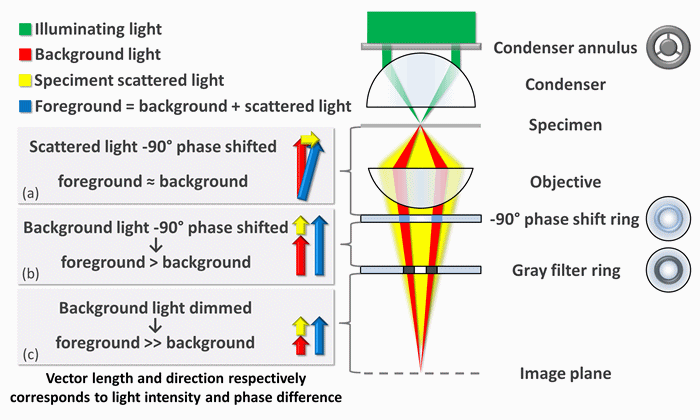
So why do such a thing? Aside from the body temperature and heart rate and subjective feelings, most of us don't get blood tests very often, usually on the order of yearly to every several months, and if you're dedicated, every month. But a phase contrast microscope would let you quantitatively monitor another metabolic factor on the order of every couple days. If you're like me then this sounds awesome especially if you are a recovering victim of keto dieting. I have already found a good looking used microscope on eBay and am almost ready to pull the trigger.
I'm calling it Nuclear Peating because it's "going nuclear" with the Peat philosophy of perceive, think, act.
-
Update:
I've ordered the microscope and a special F to X mount adapter for my Fujifilm camera to get "awesome" photos with.
-
@engineer poast sperm slides here
-
@engineer record the volume of each load you eject too plz
-
And please freeze each load, to preserve your godly neck genetics for humanity.
-
@engineer said in Nuclear Peating:
a phase contrast microscope would let you quantitatively monitor another metabolic factor on the order of every couple days
These changes however will be a reflection of what influenced metabolism up to 3 months ago. Depending on which phase of development or maturation had been affected. Tracking and evaluation of any influencing factors requires consideration of the delay and a lot of longitudinal data.
For the quantitative measurements you can probably get an AI programmed to recognize numbers and motility etc. from short video clips. No need to rasterize and manually count. Could be little effort for valuable long-term data.
-
@alfredoolivas said in Nuclear Peating:
@engineer record the volume of each load you eject too plz
I did try this recently with a measuring cup and got... 8mL? Apparently this is a lot?
-
@engineer yeah you are shooting ROPES
-
The phase contrast microscope has arrived
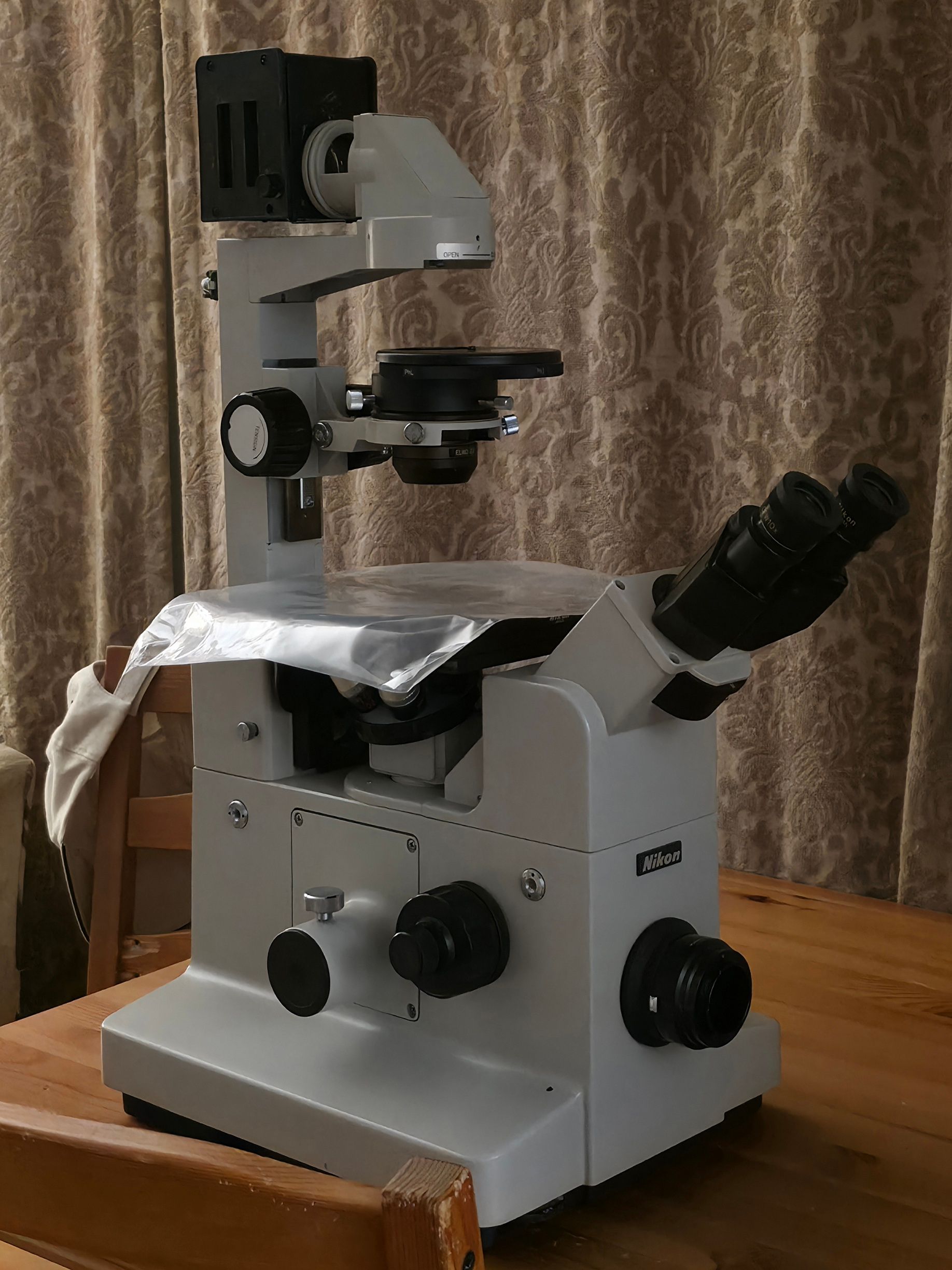
It's an old Nikon from possibly the 80s or 90s but is still great!
-
@engineer now for the best part

-
The results are in (translation: there's stuff happening down there)
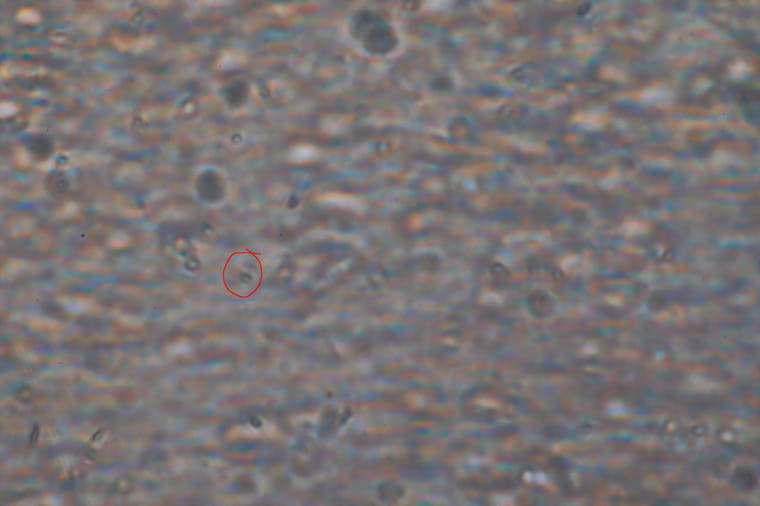
It looks slightly terrible on camera for some reason but is much clearer in person. Also, I don't have any proper microscope slides yet so the plastic bag used here is probably making it look slightly worse.
Next steps: get special slides and a warmer for them and maybe a better objective lens
Edit: looks like I also completely forgot to focus the condenser annulus.
-
@CrumblingCookie u still produce sperm daily tho like wut
-
Just ordered a Nikon Plan 100x/1.25 DL Ph4 objective
Stay tuned for more

-
Update
The 100x objective has arrived. Let's do some more Peaty
 metrology
  soon.
soon. -
@engineer
Very nice.i may be able to get one setup going myself. Have an old German stereo microscope but lacking eyepieces and a phase contrast attachment. Im just not sure if I should buy them, as they may turn out to be suboar in quality.
Its better to get a whole unit like the Nikon that you got.
But being to analyze sperm is one additional use for the microscope, which I had originally thought of using for live blood analysis.
-
@yerrag I was under the impression that blood analysis needed specialized lab tests with consumables and not necessarily a microscope. Or are you doing something different?
-
@engineer you can test cholesterol, lactate at home etc I think
-
@engineer I had done done blood analysis once with a naturopath/wholistic doctor. He had to spend about one and a half hour to analyze one blood sample as the sample showed some movement that needed time to identify as a fungus coming out of the red blood cell, indicating also there was hemolysis. Though the hemolysis was not of such a large amount that under a urinalysis it would not be detected. But I can see that my urine was amber colored and that visual could mean anything. But after taking turpentine and artemisia annua, which are antifungals, I could see that my urine color had turned to a definite bright yellow that is closer to mello yello or mountain dew, neon yellow even.
Still, that wouldn't even explain why I have a high LDH (250) and a high RDW (13.6), which I would attribute to an ongoing hemolysis of a lower rate of occurrence. Bexause of that hemolysis, destroyed red blood cells would get recycled by the speen and there would be an endogenous source of carbon monoxide produced. This would be confirmed by 2 occurrences of sudden drops in heart rate per minute, transient enough to appear like a stalactite pattern each time in a chart of my heart rate. As the drops should normally be accompanied by drops in spO2 were it a case of methemoglobinemia (oxygen lacking) in an spO2 chart from a ommon pulse oximeter, one would know that if there were no accompanying spO2 drops, it would indicate the drops were caused by the presence of carbon monoxide, as regular oximeters cannot detect CO as distinct from O2. A Massimo co-oximeter would do that, but it is expensive and only trauma centers have that.
I have managed to do with these workarounds, so there is no rush to have a phase contrast microacope. But having a phase contrast microscope around would be helpful as I try to stop the low level (though impactful) of hemolysis. I suspect it is of fungal nature (aspergillus niger) and I think it lowers my metabolism by inhibiting cytoxhrome oxidase, affecting the ETC in mitochondrial respiration. The colony of pathogens also require my innate immune system to onstantly produce inflammatory and oxidative responses that require a corresponding antioxidative response from my body (to prevent tissue destruction) and this depleted my albumin stores in blood. This causes hypovolemia and requires my body to compensate with higher blood pressure. And so far, 25 years since I began fixing my high BP, I am still stuck figuring out how to overcome this wall. But high BP is really hard to cure. Standard medicine only treats it.
Temporal thinking is the faculty that’s
engaged by an enriched environment, but it’s
wrong to call it “thinking,” because it’s simply
the way organisms exist... - Ray Peat Nov 2017 Newsletter -
@alfredoolivas looks like you can also test red blood cell count.
https://microscopeinternational.com/dark-line-etched-hemacytometer/
This same site sells a bunch of these counting slides so it's interesting how many tests are possible with a microscope.
-
Bad news: A reusable counting chamber for Nuclear Peating is another $1000.
https://microscopeinternational.com/makler-counting-chamber/





Hello! It looks like you're interested in this conversation, but you don't have an account yet.
Getting fed up of having to scroll through the same posts each visit? When you register for an account, you'll always come back to exactly where you were before, and choose to be notified of new replies (either via email, or push notification). You'll also be able to save bookmarks and upvote posts to show your appreciation to other community members.
With your input, this post could be even better 💗
Register Login