Methionine/Cysteine restriction increases longetivity AND energy expenditure
-
FGF21 overexpression alleviates VSMC senescence in diabetic mice by modulating the SYK-NLRP3 inflammasome-PPARγ-catalase pathway
https://pmc.ncbi.nlm.nih.gov/articles/PMC11214975/ -
"...we generated mice with adipocyte-specific FGF21 overexpression beginning in adulthood. When fed a high-fat diet, these mice lived up to 3.3 years, resisted weight gain, improved insulin sensitivity, and showed reduced liver steatosis."
https://pubmed.ncbi.nlm.nih.gov/40527315/ -
C3G the polyphenol from elderberries increases FGF21 4-fold in the liver.
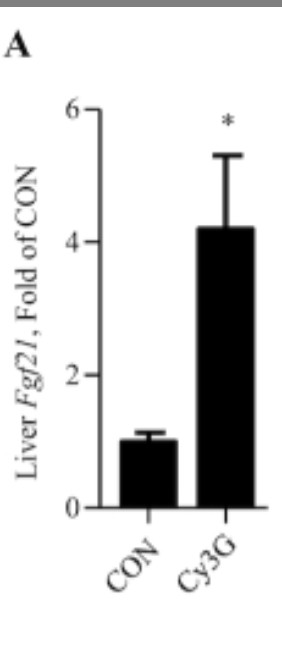
https://pubmed.ncbi.nlm.nih.gov/32470979/ -
I’m not sure cysteine is bad. There seems to be evidence (the short Baylor study for instance) that cysteine supplementation can be helpful. And cysteine <—-> methionine seems to be a metabolically expensive path and not much methionine is created by cysteine consumption. So I’m thinking NAC could be helpful.
-
@Ecstatic_Hamster If your read this thread, you'll see that even a small amount of cysteine can remove almost all benefits from methionine restriction.
@Mauritio said in Methionine/Cysteine restriction increases longetivity AND energy expenditure:
Just like a small amount of cysteine removed almost all the benefits of MR in this study.
-
@Mauritio thank you!
What do you make of the Baylor study?
Yes it’s short. But it points the way because they assessed a blend of signals that all showed much more youth and vigor in the subjects.
https://pubmed.ncbi.nlm.nih.gov/33783984/
Background: Oxidative stress (OxS) and mitochondrial dysfunction are implicated as causative factors for aging. Older adults (OAs) have an increased prevalence of elevated OxS, impaired mitochondrial fuel-oxidation (MFO), elevated inflammation, endothelial dysfunction, insulin resistance, cognitive decline, muscle weakness, and sarcopenia, but contributing mechanisms are unknown, and interventions are limited/lacking. We previously reported that inducing deficiency of the antioxidant tripeptide glutathione (GSH) in young mice results in mitochondrial dysfunction, and that supplementing GlyNAC (combination of glycine and N-acetylcysteine [NAC]) in aged mice improves naturally-occurring GSH deficiency, mitochondrial impairment, OxS, and insulin resistance. This pilot trial in OA was conducted to test the effect of GlyNAC supplementation and withdrawal on intracellular GSH concentrations, OxS, MFO, inflammation, endothelial function, genotoxicity, muscle and glucose metabolism, body composition, strength, and cognition.Methods: A 36-week open-label clinical trial was conducted in eight OAs and eight young adults (YAs). After all the participants underwent an initial (pre-supplementation) study, the YAs were released from the study. OAs were studied again after GlyNAC supplementation for 24 weeks, and GlyNAC withdrawal for 12 weeks. Measurements included red-blood cell (RBC) GSH, MFO; plasma biomarkers of OxS, inflammation, endothelial function, glucose, and insulin; gait-speed, grip-strength, 6-min walk test; cognitive tests; genomic-damage; glucose-production and muscle-protein breakdown rates; and body-composition.
Results: GlyNAC supplementation for 24 weeks in OA corrected RBC-GSH deficiency, OxS, and mitochondrial dysfunction; and improved inflammation, endothelial dysfunction, insulin-resistance, genomic-damage, cognition, strength, gait-speed, and exercise capacity; and lowered body-fat and waist-circumference. However, benefits declined after stopping GlyNAC supplementation for 12 weeks.
Conclusions: GlyNAC supplementation for 24-weeks in OA was well tolerated and lowered OxS, corrected intracellular GSH deficiency and mitochondrial dysfunction, decreased inflammation, insulin-resistance and endothelial dysfunction, and genomic-damage, and improved strength, gait-speed, cognition, and body composition. Supplementing GlyNAC in aging humans could be a simple and viable method to promote health and warrants additional investigation.
-
I've read through this thread again and pulled out some interesting bits for me:
-
Selenium supplementation, via the metabolite through hydrogen selenite, breaks down collagen. On the plus side this may tackle (liver) fibrosis. The drawback is broken down collagen (hair, skin) and a therefore probably significantly increased demand for resynthesis from glycine, ascorbic acid, prolin (via ornithine/arginine/citrullin).
-
The control feed + cysteine studies in rodents and the GlyNAC studies in humans sort of tell the tale:
If not doing MetR + CysR then a regular diet supplemented with cysteine actually consistently looks better in several aspects including body composition, fat pads, strength, inflammation. Peculiar.
The control feed + cysteine in rodents resulted even in better looking markers than MetR + cysteine. Strange. -
I surmise there must be crucially overlooked specific discrepancies in the transfer of mice study results to humans. Perhaps not least because glutathione is much more crucial for redox homeostasis and substance conjugation in non-ascorbic-acid-synthesizing humans in comparison to mice. Bridging to 4):
-
Regularly increased glycine and citrulline intakes to both balance the relative ratio to and the absolute uptake of Met and to scavenge methyl groups in the metabolism after absorption do appeal.
Very obviously, large protein intakes are bad for longevity not merely because of mTOR activation. Eating a typical protein composition but in low to moderate amounts only as in the previously quoted low-protein diets enhanced by extra glycine and citrulline (+proline) appeals. The latter will also benefit the maintenance and rebuilding of collagen structures and allow for use of selenium supplementation to reap to a large extent the quoted increase of fgf21.
Glycine also lowers its absorption. Although it's more true to say that methionine lowers glycines absorption , IIRC up to 86% !
"...l-Met uptake is very potently inhibited by l-arginine, l-citrulline, l-lysine and l-isoleucine in the rat intestine 53. "So if Met inhibits Gly absorption, and Cit inihibits Met absorption,
then Gly+Cit is ought to bring about win-win conditions. -
-
@CrumblingCookie - Thank you your review of the contents of this thread. I do not think that that combination of glycine and citrulline is a win-win strategy for reasons that do not relate to Methionine restriction.
The issue I have with this approach is using citrulline on regular basis. Citrulline is not a common protein found in the diet. It is found mostly in mellons which are seasonal (see). Citrulline is converted into arginine in the kidneys and taking citrulline supplements can effectively raise arginine levels in the blood. Studies suggest that citrulline supplementation may be more effective than direct arginine supplementation for increasing plasma arginine concentrations.
In 1998, the Noble Prize in Medicine was awarded to 3 people for their work on NO (see press release). This encouraged people to supplement with L-arginine to lower their blood pressure. The excessive iNOS from the supplementation had long term consequences that were not good. The fad of increasing plasma arginine levels is over but traces survive on the internet.
I think of the iNOS isoform of nitric oxide synthase as being related to inflammation, ischemia and intoxication all of which are generally unhealthy to have simmering in the body on a long-term basis.
Peatbot.com: iNOS, or inducible nitric oxide synthase, is an enzyme that produces nitric oxide (NO) in response to certain stimuli, such as inflammatory signals. It is one of the three isoforms of nitric oxide synthase, the others being endothelial (eNOS) and neuronal (nNOS). iNOS is not typically expressed under normal conditions but is induced in response to inflammatory cytokines and other stress signals.
Incidentally, I have known people who have resolved their long-standing viral issues by lowering their arginine to lysine ratio. Both arginine and lysine are found a wide variety of foods. I loosely monitor my A/L ratio using this table.
-
@DavidPS Thanks for your reply. Yes I'm aware of the iNOS bashing but reckon it's partly a chicken-and-egg problem – i.e. is removing the substrates to NO solving the underlying inflammatory issues or merely hiding them? Is keeping furniture in your house the actual fire hazard or is that only an issue because there are smoldering floorboards?
In any case I think Cit/Arg are daft ways for wanting to reduce hypertension, akin to trying to lower blood pressure by riding a continuous niacin-flush wave.
In the long run, however, Cit helps to maintain eNOS functionality. Which is universally accepted as beneficial? I deem Cit to be greatly preferred over Arg because of its greater systemic distribution beyond the tissues of initial exposure (GI lymphatics, liver).And I see Cit in the context of glycine because Cit's ultimately a substrate for proline, complementing Gly's impact on systemic vasculature and collagen structures, which then leads back to the contexts in this thread.
I'm thinking of reasonable amounts of Cit: 1-2g to make up for what should be provided by enterocytes in good health + an amount to achieve about 2g of Pro. So in overall not more of perhaps 3-5g Cit per day.I don't have an answer to the Arg/Lys and shingles/viral phenomena. I strongly suspect it's also a workaround to suppress immunological or excitatory pathways which ought to be cleared up from another angle.
One thought towards this is that since Arg is a precursor to Pro perhaps these peeps could also benefit from more Gly availability – because a greater ratio of Pro (or of ascorbic acid for that matter, or especially both in combination) may use Gly for collagen synthesis and in doing so rob other cells and tissues of what little amount of Gly had been available to them for their respective functions. In some circumstances elevated (OH)Pro deposits seem to be a culprit and are alleviated by more Gly, like in liver fibrosis by chronic alcoholism in rodents (link, link). In people with metabolic syndromes, plasma Gly's also been found to be depressed and it raises upon introducing physical improvements but, reciprocally, supplementing Gly by itself helps to bring about physical improvements of various aspects of metabolic syndrome (link, link). -
@Ecstatic_Hamster You do have a point!
I've come across studies in the past where NAC strongly increased life span and I couldn't really make sense of it.In the study you posted they used GlyNAC so they will ingest a lot of glycine as well. Should come down to like 7g of glycine and 9g of NAC. That's a lot. And there are studies posted in this thread showing strong anti-aging effect of such a dose of glycine.
So if you're lazy, you could just ascribe the benefits to glycine.
GlyNAC increases lifespan by 24% in mice.
https://pubmed.ncbi.nlm.nih.gov/35268089/But NAC alone has life extending properties,too. Although it's mostly in C.elegans.
https://pmc.ncbi.nlm.nih.gov/articles/PMC4449467/But here's where it gets interesting. NAC supplementation seems to partially mimic dietary restriction (a.k.a. caloric restriction, which includes protein restriction).
https://pubmed.ncbi.nlm.nih.gov/30263604/
That's surprising.But there's a connection between dietary/protein restriction and NAC: both increase glutathione.
In this post I talk about it . MR increased GSH by 278%!
https://bioenergetic.forum/post/19771This might explain the benefits of GlyNAC. IIRC correctly glycine can also increase glutathione so that would explain the synergy.
Many of the most successful anti-aging substances work through a antioxidant mechanism: ergothioneine, selegiline, over expressing catalase to mitochondria,...
And coincidentally they all increase life span to a similar degree as GlyNAC in the above study. It's always around 20-25%.
So that makes it seem plausible that the effects of GlyNAC are due to its antioxidant effect.But then the question remains: is the life extending effect of GlyNAC because or despite of the presence of NAC. I tend towards the latter (or at least the bigger part of the benefits stemming from glycine), since a larger amount of glycine had a life extension effect of 28%.
https://faseb.onlinelibrary.wiley.com/doi/abs/10.1096/fasebj.25.1_supplement.528.2On top of that im not comfortable with NAC's role in cancer.
https://pubmed.ncbi.nlm.nih.gov/31382676/Dare to think.
My X:
x.com/Metabolicmonstr -
@Mauritio said in Methionine/Cysteine restriction increases longetivity AND energy expenditure:
On top of that im not comfortable with NAC's role in cancer.
I won't take HD NAC with HD B3
When Niacin (or vitamin B3) and NAC (N-acetyl cysteine) are combined, especially under specific pH and concentration conditions, a chemical reaction may occur that forms pyrazinic acid (pyrazine).
Most sources specify that no interaction has been found between NAC and niacinamide (or nicotinamide). This is incorrect when there is prolonged concomitant use with a high dosage of NAC.
The toxic effects of pyrazinic acid may include cellular damage and oxidative stress, which is of particular concern for people with predispositions to oxidative stress-related diseases.
Source:
Hepatotoxicity related to anti-tuberculosis drugs: mechanisms and management
https://doi.org/10.1016/j.jceh.2012.12.001 2013.
The toxicity of pyrazinamide is both dose dependent with a higher dose at 40–50 mg/kg, with NAC combination. (2 800 to 3 500 mg NAC for 70 Kg/weight, or +/ 170 Lb).Moreover NAC may not be safe for people who bleed easily. NAC may raise your odds of bleeding problems if you have a bleeding disorder such as hemophilia or you take blood-thinning drugs (aspirin, some essential oils or curcumin, which have some impact on platelet aggregation).
=> Prolonged dose NAC interfere with platelet aggregation. -
-
"Here, we demonstrate that β-klotho (KLB)-expressing neurons in the hindbrain, specifically the nucleus of the solitary tract (NTS) and area postrema (AP), are both necessary and sufficient for FGF21's effect on energy expenditure and weight loss. "



Hello! It looks like you're interested in this conversation, but you don't have an account yet.
Getting fed up of having to scroll through the same posts each visit? When you register for an account, you'll always come back to exactly where you were before, and choose to be notified of new replies (either via email, or push notification). You'll also be able to save bookmarks and upvote posts to show your appreciation to other community members.
With your input, this post could be even better 💗
Register Login