Bile can serve as a reservoir for funghi, making them harder to treat
-
@CrumblingCookie I’ve had tons of success with BPC, both personally and with people I’ve recommended it to. One caveat is that it’s most effective at 10mcg/kg of body weight. There is a single doctor in TX who has actually been recording his clinical success rates with it and this seems the threshold. Many if not all of the oral versions do not contain high enough doses to reach the magical 10mcg/kg dose.
If you don’t find you’re having success, check your dose and try this doctor’s recommendation. It healed a separated shoulder that bothered me for over a year in about a month at that dosage.
I’ve also recently tried the liposomal preparation by Infiniwell, and it healed some tendinitis I was dealing with in about 5 days, (typically I need 2 weeks to see a tendon injury heal with BPC).
-
@lobotomize fungal infection can cause or increase risk of issues like liver damage or cancer or seizures, I suspect even warts and skin tags. a not-insignificant % of some organ cancers have been shown to have fungal infections as well and treatment of the cancer is more effective by treating the fungal issue too. OP thinks their issue is worth treating via the nuclear route so who are we to judge, especially when doctors generally don't take this kind of stuff seriously unless someone is already in the hospital and doing very poorly already. The potential toxic effect of flucocytosine might be worth it for the increased positive health potential afterwards.
-
@evan.hinkle would you be a gentlemen and post a link, and clarify that you were taking bps-acetate orally to heal an injury?
-
@sunsunsun https://infiniwell.com/products/bpc-lx-pro-spray
This is the liposomal spray I used recently and had a great experience with.
I’ve used their oral preparation in the past as well, but that’s the arginate version, (which you mentioned being less interested in)
-
@evan.hinkle link to tx doctor reports?
all I mean about arginate form is if someone can't get it , it doesn't matter. im pretty sure the acetate form works like 95% as good even orally
-
@sunsunsun the Texas doctor is something I came across a lifetime ago. I can’t imagine I could find it again. I may have heard about it via Jay Campbell’s podcast, (not bioenergetic orientated). Campbell was a somewhat mainstream early proponent of peptides. If it wasn’t there, then it was Ben Greenfield, (this was all pre-Peat for me).
-
Kestose sounds more like an alternative to fat binders if the goal is to lose body fat through constant steatarrhea and bile acid loss. To not be bothered by these changes I reckon one's stool must be quite good already or even on the dry, constipated side.
Not sure, it has the same mechanism as many other things discussed in this thread. Increase in bile acid synthesis. TUDCA does that too.
On top of that it increases short chain fatty acids like butyrate and also F. Prausnitzii, which lowers serotonin and glycolisis and increases OxPhos and salicylic acid.
Since Im more on the constipated side of things I'll give it a go. -
These essentials that contain esters that are generally antifungal: petit grain, lavender, ylang ylang, clary sage, geranium, roman chamomile
Aren't some/ most of them estrogenic?
Dare to think.
My X:
x.com/Metabolicmonstr -
These essentials that contain esters that are generally antifungal: petit grain, lavender, ylang ylang, clary sage, geranium, roman chamomile
Aren't some/ most of them estrogenic?
Yes, they are. But they're for therapeutic use.
Antibiotics can be harmful, but we take them because usage is limited.
Usage of these is not a lifestyle choice. -
Made a thread about this topic. Please reply here:
https://bioenergetic.forum/topic/9360/aspirin-causes-intestinal-damageInteresting study showing that short term admin of aspirin causes intestinal damage caused by an alteration of bile acids and downregulation of the bile acid receptor FXR. Unfortunetly the effect doesnt dissipate with time as with stomach damage induced by aspirin but the intestinal damage was there after 14 days of aspirin admin.
Im not sure why that damage occured because it seems to have increased the more benign bile acids like TUDCA. and dowregulated the primary bile acids as far as i can see.
"In the aspirin-induced intestinal injury model, conjugated bile acids (T-β-MCA, TCA, TUDCA, TDCA, and TLCA) were significantly increased, while CA and CDCA were distinctly decreased."
"...ASA decreased FXR expression in the ileum."
Now that i think about my cholestasis issue have gotten worse around the time i started taking aspirin daily... weird.
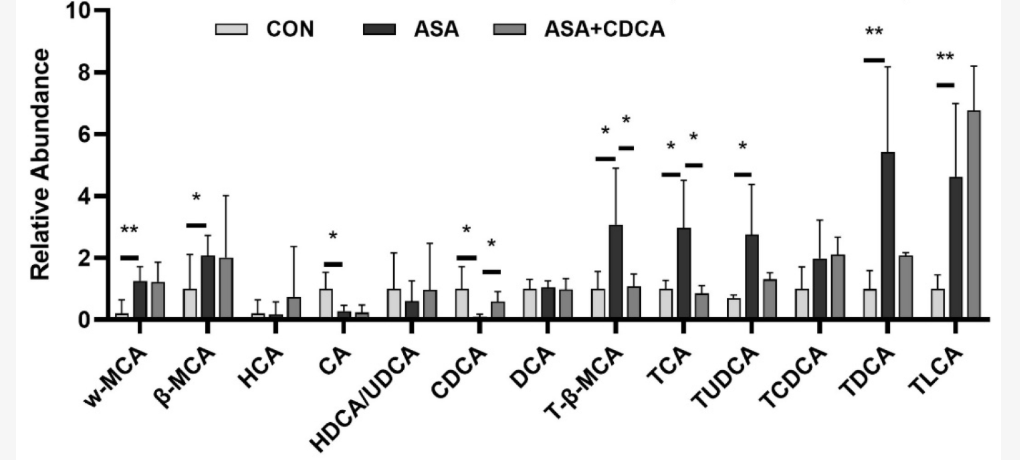
https://www.mdpi.com/1422-0067/25/6/3424
Heres another study 80% of the people in the aspirin group had intestinal damage, while only 20% in the control group did.
"After 2 weeks of treatment, the percentages of subjects with small bowel pathology were 80% in the Aspirin group compared with 20% in the Control group (p = 0.023)."
https://pubmed.ncbi.nlm.nih.gov/19246922/__
Heres two interesting editorials highlighting the intestinal damage. But it does not seem to be clear yet how pathological that damage really is.
https://karger.com/dig/article/79/1/42/106092/Is-Low-Dose-Aspirin-Really-Harmful-to-the-Small
https://karger.com/dig/article/79/1/40/106090/Low-Dose-Aspirin-and-Small-Bowel-Enteropathy
-
CrumblingCookie said:
So far there's not a hint of hematological / bone marrow suppression. CBC is as fine as always.
Retrospective addendum on this: At 95mg/kg BW FCy/5-FC daily and peak serum levels just under the therapeutic optimum my CBC showed a mild drug toxicity in the form of eosinophilia and basophilia. I did have a rash on the light-exposed backs of my hands for a few days around that blood-draw. Total lymphocyte and leucycyte counts weren't suppressed, though, which was most important to me.
Overall:
• My sinuses and upper airways have remained much clearer (perhaps itraconazole alone would have sufficed for this?).
• I can't really put it into words but my mental and physiological response to carbohydrates and sweets has distinctly changed to being calmer and more reserved.
• Still feeling dull in my head 10 days after finishing FCy/5-FC.@evan.hinkle Thanks for your reply wrt BPC 157. Good info on 10mcg/kg BW minimum for systemic effects from oral dosing! I've been pinning 500mcg subcutanously. Had really, really strong reactions to it for over a week, as in purge-like watery eliminations. Several people online report on such initial effects but for < 3 days so I'm clearly offside the usual, again. I also used 500mcg of the s.c. solution orally for three days in a row and that was just too much and seemed wasteful in the face of this ongoing "purging" reaction.
Ideally I'd like to binge on BPC also from the GI side but I don't have enough of it to do so at the moment. -
@crumblingcookie
I've tried gentian for the last 2 weeks, which you mentioned in one of your posts.
In the first week of worked really well for bile, also lost some weight and strongly decreased hair loss.
It also made me quite tired, turns out it's a NMDA antagonist.
In the 2nd week the benefits started fading. I seem to develope tolerance once again.
But if I can use this one week on, one week off on the future that's a win for me.Since this one worked, I'll try some of the other herbs you mentioned like dandelion.
-
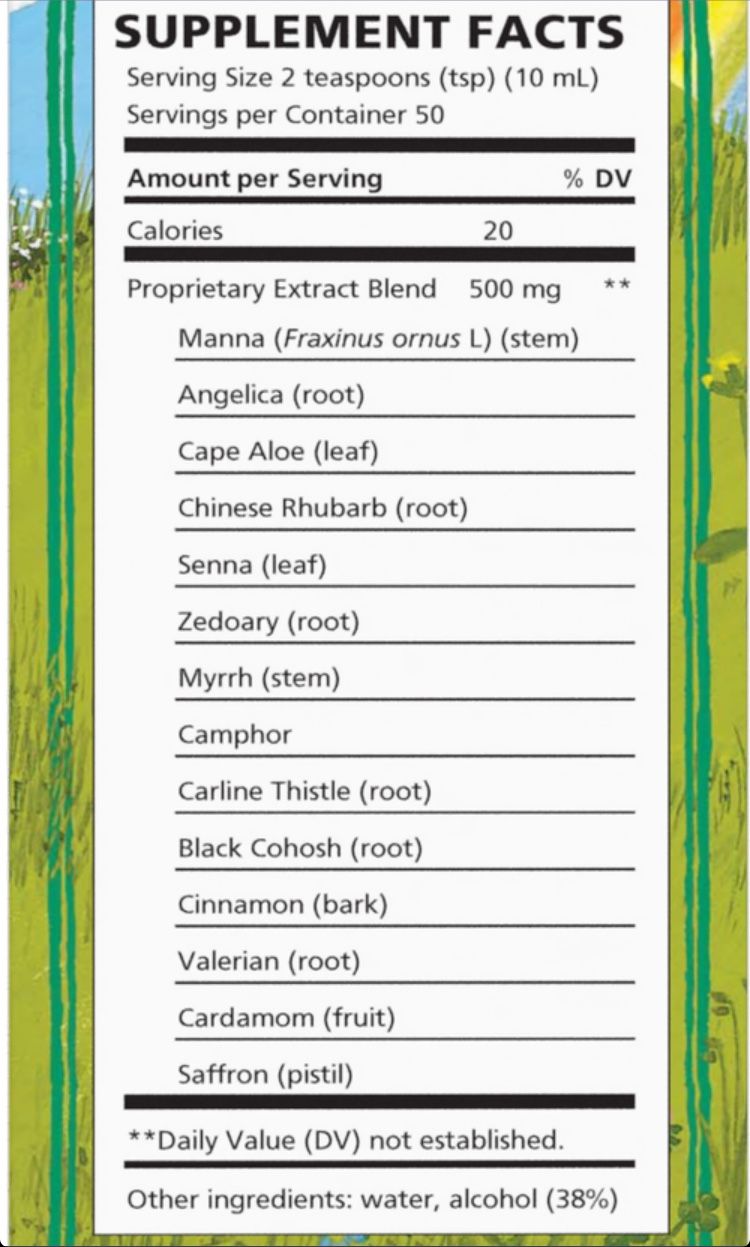
I like Swedish bitters for when I need alittle bile and liver help. This stuff is fantastic for warming you up and easing any liver gallbladder discomfort after eating a fatty meal or just over eating which I’m am know to do now and again.
-
Have any other fungal infectees had an appendectomy in the past? I'm wondering if my inability to permanently resolve this has to do with not having an appendix. If I recall correctly the appendix is supposed to be a refugium that helps repopulate your microbiome when it gets cleared out, maybe not having that makes it too easy for fungi to outcompete bacteria
-
@VehmicJuryman try replacing it with s. boulardii (florastor etc) . maybe it can out compete whatever yeast it is
-
I know this is pretty basic for a Ray Peat forum but have you all tried consuming large amounts of coconut oil? I did some research on it, apparently it's more effective against fungus in vitro than antifungal drugs like fluconazole. It has a similar mechanism of action as antifungal drugs i.e. it targets the ergosterol in the fungal cell membranes. It's one of the most commonly mentioned natural candida remedies on forums like reddit. Popular anti-candida supplements like Now Candida Support contain caprylic acid which is abundant in and sourced from coconut oil. Coconuts evolved for their drupes to survive in humid tropical coastlines and to float on ocean currents so the fats are probably evolved to be resistant to fungi.
-
The oral intake of coconut oil has the effect of getting the liver to metabolize coconut oil for energy. This leaves little of the antifungal components such as caprylic acid and lauric acid to be distributed by chyomicrons to the cells in the body.
To keep the,liver from metabolizing coconut oil, I have been using suppositories to deliver vco intact to the cells.
-
These are interesting findings from studies IMO:
Blood-group influence on Candida/fungal colonization:
It exists and has a signficant impact. It comprises two main known factors:No. 1:
The main groups A, B, 0, whereof 0 carries the greatest risk for (chronic) Candida infection. This is likely because type-0 cells show an L-fucose open end, to which Candida adhesins can preferably bind to.Here's an Iranian study on this in healthy people without fungal diseases:
A comparative study of Candida albicans mean colony counts and blood group antigens in the saliva of healthy subjects, 2014
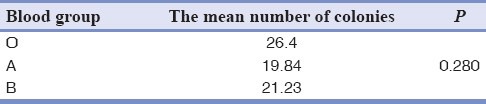
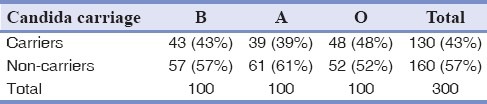
Tbh, I can't openly see why these stark differences from a sample size of 300 are not statistically significant.
However, the authors even point to a greater caveat and possibly much large impact:According to the molecular studies conducted on the interactions between adhesin receptor and oral epithelial cell-surface antigens, we should expect that most of the C. albicans fungi in blood group O are attached to the oral epithelial cells and fewer free fungal cells are found in the saliva. Therefore, it seems that saliva collection methods alone are not sufficient to calculate the amount of fungal cells in the oral cavity.
No.2:
Being a secretor/non-secretor through as determined by the FUT2 gene.
A functional FUT2 gene allows people to secrete their blood group antigens (sugars) into mucosal fluids like saliva, gut mucus, and tears. Homozygous FUT2 mutations make for a non-secretor.
These free-floating blood group antigens in the mucus act as decoy receptors (sort of like free mannose for E.coli). If you don't have this peripheral shielding your mucosal cells bear the full brunt of the fungal exposure.This one is from the U of Edinburgh:
Non-secretion of blood group antigens and susceptibility to infection by Candida species, 1989
This one from the U of Glasgow:
Blood group glycolipids as epithelial cell receptors for Candida albicans , 1996
In the 2nd week the benefits started fading. I seem to develope tolerance once again.
Wondering and curious about whether you are indeed developing tolerance via specific cytochrome upregulation or receptor downregulation.
Or whether your subjective benefits are exhausting some other pathway or regenerative substrate, like choline or calcium or anything. -
And I was looking for the answer on whether FMTs are a guarantor for clearance of fungal abundance in the small intestinal or colonic lumen.
Surprisingly, it's a no!
It appears to be even the other way round.Here's something interesting IMO about FMTs:
Gut fungal dysbiosis correlates with reduced efficacy of fecal microbiota transplantation in Clostridium difficile infection, 2018
In this study, it is shown that CDI is strongly accompanied by over-representation of Candida albicans and decreased fungal diversity, richness, and evenness.
Post-FMT, successful responders lack their previous C. albicans dominance but rather display a high relative abundance of Saccharomyces and Aspergillus.
High abundance of C. albicans in donor stool also correlates with reduced FMT efficacy.
In essence, therefore, annihilation of Candida dominance in CDI patients is crucial for FMT success and arguable it could be much advisable to pre-/co-treat any CDI with antifungals along with either ABx or FMT.Another study showed contrasting results of FMT on UC:
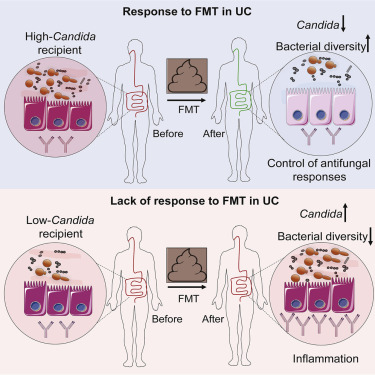
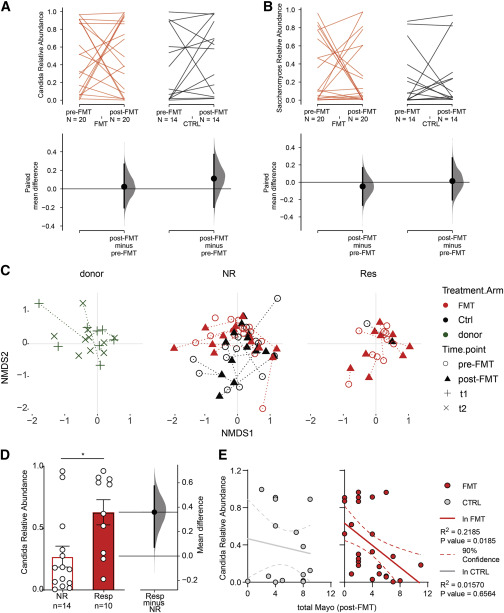
Fungal Trans-kingdom Dynamics Linked to Responsiveness to Fecal Microbiota Transplantation (FMT) Therapy in Ulcerative Colitis, 2020
Herein they showed that in contrast to FMT in CDI, clinically successful response to FMT in UC very much depended on high Candida abundance at baseline, which decreased after FMT. The authors argue that the prior Candida dominance may provide a specific niche for bacterial engraftment, ameliorating UC.
So, the very opposite of the pre-conditions in CDI.
However, what the authors do not talk about in their text but what their graphs clearly show is the following caveat: UC patients with a low relative Candida abundance at baseline did not only not clinically benefit from the FMT, but their dysbiosis, inflammation and Candida levels post-FMT was mostly even larger than before (confounders? Small sample size?):
 ´
´ -
Wondering and curious about whether you are indeed developing tolerance via specific cytochrome upregulation or receptor downregulation.
Or whether your subjective benefits are exhausting some other pathway or regenerative substrate, like choline or calcium or anything.Not sure. But I suspect its the liver becoming better at metabolizing it. Happens to me with many other supplements as well. Not caffeine though. So it seems to affect only cetain enzymes.
I'll try dandelion next.Also finally found some good aged cascara, and it really does seem to be good for liver health.
Dare to think.
My X:
x.com/Metabolicmonstr




Hello! It looks like you're interested in this conversation, but you don't have an account yet.
Getting fed up of having to scroll through the same posts each visit? When you register for an account, you'll always come back to exactly where you were before, and choose to be notified of new replies (either via email, or push notification). You'll also be able to save bookmarks and upvote posts to show your appreciation to other community members.
With your input, this post could be even better 💗
Register Login