Random, interesting studies
-
@Mauritio said in Random, interesting studies:
Seems like they do eat the honeycomb as well.
@cs3000
Youtube VideoThere's no moment in this video where we see the Africans eating the honey for several seconds without the shot changing, so there's not even time to see if they swallow it or spit the comb out after chewing, there is 2 hunters eating honey, and the first hunter legit still has a ball of wax in the inside of his right cheek right before camera switch. Are you looking for confirmation bias?
-
@random Yeah maybe they spit it out. Just came across this video randomly and thought it was interesting.
-
@Mauritio said in Random, interesting studies:
@random Yeah maybe they spit it out. Just came across this video randomly and thought it was interesting.
I suggest try to find videos where the camera focus on the hunters for long enough with out switching to see if they spit or swallow the comb
-
@Mauritio wax is about 10% of the size when u chew it down so they might let it build up a bit
in this one the older guy spits out the wax (& the dude with the 80s hairstyle)
https://www.youtube.com/watch?v=yJXpp8A1MSA#t=34m35s
and the guy on the right did https://www.youtube.com/watch?v=KMbbxwLyZLc#t=23m22s but the guy on the left was swallowing some tho https://www.youtube.com/watch?v=KMbbxwLyZLc#t=19m25scan build up & block the stomach / intestine anyway swallowing enough at once and not much to gain as can get the compounds in the wax other places & absorbed
-
@cs3000
Thanks for clearing up this issue of the policosanols in beeswax being non-hydrolysed and therefore essentially useless.I had been using 20mg policosanols daily (the Swanson product) for a couple of months: Mildly beneficial for digestion and maybe overall.
Then I had used yellow beeswax for a while and every now and then at equivalent amounts of c. 2grams, as per the older info on the RPF, and that never helped with anything and distinctly worsened digestion. From your answer I now finally know why. -
@CrumblingCookie np ah fits then, funny how this stuff works sometimes. soon after seeing this i got honeycomb as a gift. probably would have ate a decent amount & irritated my intestine damage more if not for this thread & looking into it. great timing
"World" as a source of new perceptions
https://substack.com/@cs3001 -
@cs3000 same I was about to reorder honeycomb from Italy, but don't want to risk stomach blockade or anything similar.
-
@Mauritio said in Random, interesting studies:
@cs3000 same I was about to reorder honeycomb from Italy, but don't want to risk stomach blockade or anything similar.
You Can still get different effects from it even if you dont swallow the comb, sometimes more powerfull than honey in jar.
There is claims on internet associated with ayurveda that scealed honey comb retain his prana much longer than honey in jar.
I suggest to buy it only from a beekeepers you Can ask questions, due to some beekeepers using plastic/synthetic materials that end up in the comb
-
Regarding low protein:
"Hong Kong has one of the highest meat consumption per capita in the world at 664g per day."
"Hong Kong people have a very long life expectancy. In 2023, the expectancy of life at birth for men and women was 83 years and 88 years."
Okinawans ate a lot of pork too when they topped the longevity charts. Not sure how to explain this contradiction. In general meat consumption correlates positively with lifespan:
https://pmc.ncbi.nlm.nih.gov/articles/PMC8881926/
Low protein looks great in studies but I didn't feel particularly good on it, nor did I lose weight.
-
Low protein looks great in studies but I didn't feel particularly good on it, nor did I lose weight.
I'm simplifying, but I think the benefits of restricting protein (or some amino acids) are proportional to the degree of metabolic dysfunction someone is in. The more dysfunctional the metabolism, the greater the possible benefits of restriction, the less dysfunctional the metabolism, the greater the potential detriments of restriction.
Ray's approach interests me more because it considers how needs change with ageing. Amino acids such as methionine, cysteine and tryptophan seem to have been considered in a growth context, they are “essential” but the amount in adulthood is much lower than in a growth phase, so the priority of amino acids changes
-
@TexugoDoMel That is in conflict with the study I posted above that shows a strongly protective effect for old people on a high protein diet. There metabolism should be more damaged so that doesn't add up.
I know it's only a correlation, but the correlation is so strong that it seems likely that there is causality as well.
What's intriguing as well that the correlation was removed when people consumed plant protein and not animal protein. Plant protein has a lot less methionine, which would explain the lower cancer rates. Cancer has what's called methionine addiction ...
Dare to think.
My X:
x.com/Metabolicmonstr -
I oversimplified haha, in “degree of dysfunction” I include the type of dysfunction, since I think everything that is healthy works in the same way but at different levels of complexity.
I don't know if I would consider that it conflicted with the study (I'm commenting based on what you said, I haven't read it yet), unless I only considered protein intake as a variable. If I put age in context the level of protein has a different effect, in a young person you would have a lot of protein in an environment with a lot more hormones (such as IGF-1, since you mentioned the cancer issue) but this would not happen with someone old since the hormonal environment is different, if high protein helps fight something simple like sarcopenia in old age then it would be enough to see a protective effect, since a healthy amount of muscle helps preserve independence and the ability to live normally and not locked up without being able to do anything without someone along.
The minimum of methionine, tryptophan, cysteine that a young person needs is probably higher than an elderly person in a general context, but consuming above a level should cause other problems that you wouldn't see in an elderly person because the general context is different. Maybe in the future high/low protein will take on a secondary role and amino acid composition will get more attention, because I doubt that high protein is in a context of high collagen, for example haha
-
@random I saw a boomer who uses used plastic and ink political voting signs for racks in his bee hives lololol
and once I found a plastic string inside a honeycomb, and also I found out they keep the hives under an airplane landing path next to the airport loloollol -
UNCOUPLING/DNP
Giving young mice a microdose of 1mg DNP had some interesting effects on their health. Thats an insanely low dose. While I'm usually cautious with DNP, this dose seems safe.
(1mg= HED, not sure if i calculated the dosage right)Benefits:
- Lowered weight gain
- Strongly increased oxygen consumption, especially in brain
- Strongly decreased free radicals concentration (hydrogen peroxide)
- Increases life span by about 7%
https://pubmed.ncbi.nlm.nih.gov/18505478/
Here is a great review on microdose DNP (HED of 0.5-20mg). And some interesting excerpts from it:
They tested DNP for neuroprotective effects and as in the study above the microdose was the most effective. It wan an HED of about 6mg, but as they increased the dose it became less effective.
"..dosed 6-month old aged C57bl/6 mice for 7-days at 0.5, 1, 5 and 10 mg/kg (HED 2–45 mg/day) and then the cortex was measured for changes in BDNF expression. Interestingly, BDNF was induced ~2.5× in the cerebral cortex at 1 mg/kg, but in a hormetic-like fashion, in that, the peak dropped going from 5 to 10 mg/kg, suggesting “less is more..."
Next, I want to clarify the myth that uncoupling is bad because it lowers ATP and damages the electrons transport chain somehow.
There is a drop in ATP, but it's likely transient and almost certainly not drastic. Uncoupling leads to mitophagy and increased ETC speed, leading to more not less ATP production .Some quotes:
"...at 3-days of dosing rats with DNP at 16 mg/kg (HED of 150 mg/day) there was no measurable change in intrahepatic ATP content (ATP pool)...""... might selectively push those already marginally functioning mitochondria into mitophagy to shift the global mitochondrial population towards better functioning high ATP producers and lower ROS producers..."
"It is essential to note, that mitochondrial chemical uncouplers are not inhibitors of the electron transport system, but enhancers [2]."
"..3-days of mitochondrial uncoupling, induced by low concentrations of dinitrophenol (10 and 50 μM) in cultured human HepG2 cells, that there is an adaptive effect in that DNP towards oxidative metabolism, with an upregulation of COXIV and ANT3 gene expression, two nuclear genes that encode mitochondrial proteins involved in oxidative phosphorylation [49]"
"So collectively, it is possible that the net outcome is a higher ATP pool through more efficient mitochondrial functioning under chronic DNP treatment, than could previously be generated without the uncoupler."
Low oxidate stress is a sign of longevity . And uncoupling is a very effective approach at preventing oxidative stress, before it even happens.
"While antioxidants attempt to neutralize ROSs after they have been made [33,34], uncouplers actually prevent overt ROS production [35,36], a potentially more effective point of intervention."
The doses mentioned above might translate relatively well to humans since the mechanisms are highly evolutionary conserved.
"Rarely does a mouse efficacious dose curve translate perfectly well to humans, but since mitochondria are extremely well evolutionarily conserved from mouse to humans, and the effect is non-genomic (not relying on the conservation of a protein or receptor from mouse to human), then the prediction of translation is excellent relative to other platforms."
Dare to think.
My X:
x.com/Metabolicmonstr -
@TexugoDoMel Yes, all fair points.
I was thinking along similar lines. The benefits of high protein, must somehow outweigh its downsides in old age. I think immunity and avoiding sarcopenia are two likely candidates for those benefits.
-
@Mauritio said in Random, interesting studies:
Anybody tried bees bread ?
In this study it did wonders for steroid health.
They gave mice on a HFD about 5-7g(HED) of bees bread and it completely rescued the levels of their steroidogenic enzymes.
Not only that, in many cases, giving them bees bread, increased the values above the normal control group.Testosterone was increased by about 60% above control levels.
StaR mRNA levels doubled !
Unfortunately estrogen was increased as well, but only to the level of the control group not above that.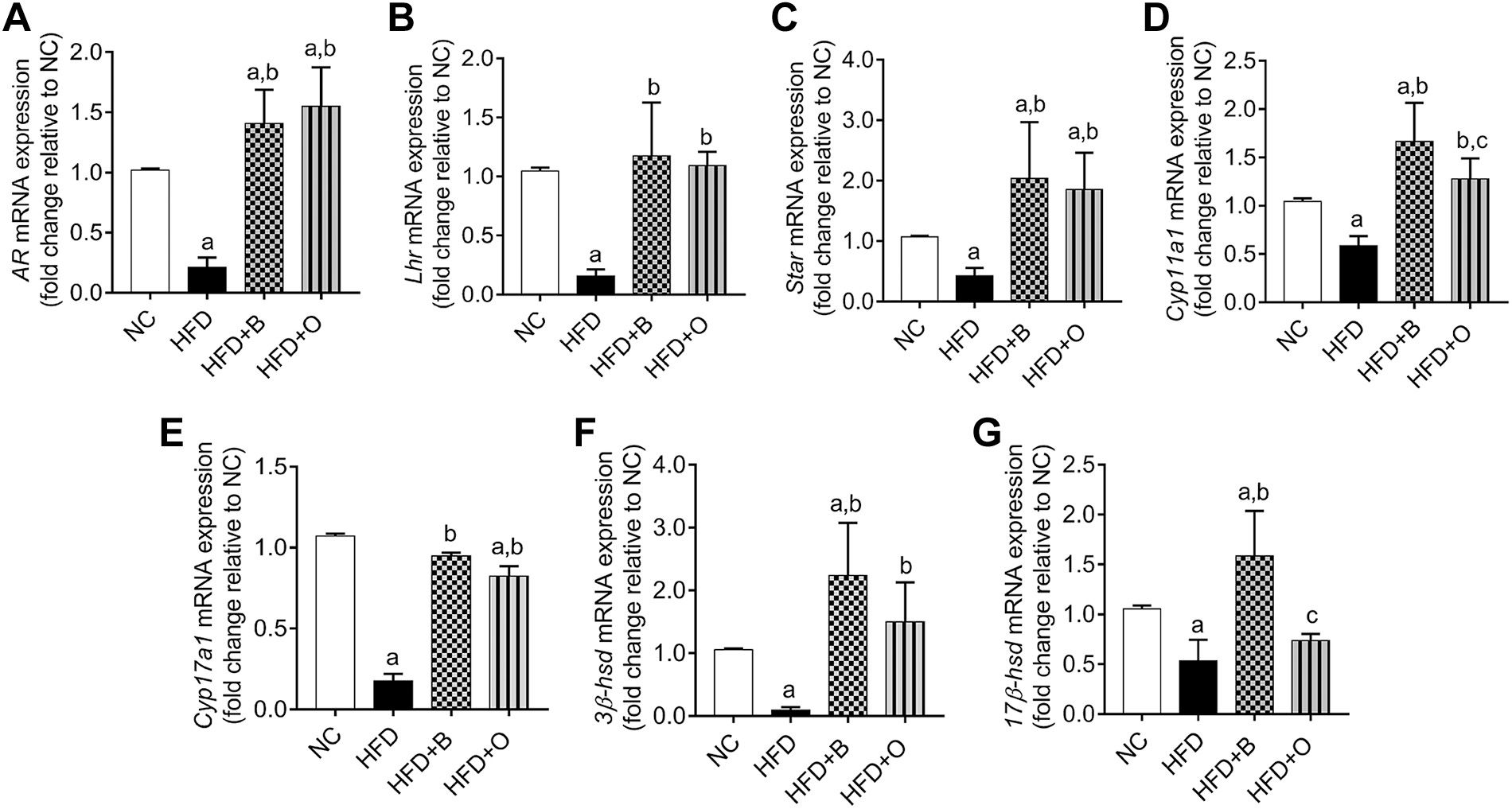
I was wondering where the strong androgenic effect from this study was coming from, it seemed hard to believe that it was only from an antioxidant effect.
I think I found the answer.
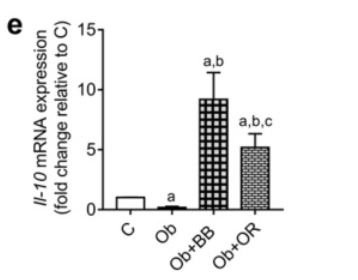
IL-10 has been shown to be responsible for the 5-10x increase in Testosterone from L. Reuteri in animal studies.
https://bioenergetic.forum/topic/2188/l-reuteri/50?_=1747639248664And bee bread drastically increased Il-10 in this study.
Compared to the control group the mrna increased about 10x and compared to the obese high fat group probably 30x . So that might be part of the androgenic effect.
I took 2.5g yesterday and today my muscle look insanely full, also notice higher libido and drive.
https://pmc.ncbi.nlm.nih.gov/articles/PMC8868291/#sec3-antioxidants-11-00255
-
Butyrate increases SERT more than two fold and lowers expression of various serotonin receptors in this study.
Only in vitro but still another win for butyrate . -
Trehalose strongly increases thermogenesis in this study.
Mechnism: increase in FGF21 ,PPAR-a, UCP1 etc.https://pubmed.ncbi.nlm.nih.gov/29996716/
It increases life span in worms:
"... extended the mean life span by over 30% without any side effects. Surprisingly, trehalose treatment starting even from the old-adult stage shortly thereafter retarded the age-associated decline in survivorship and extended the remaining life span by 60%."And healthspan as well:
"...trehalose increased the reproductive span and retarded the age-associated decrease in pharyngeal-pumping rate and the accumulation of lipofuscin autofluorescence. Trehalose also enhanced thermotolerance and reduced polyglutamine aggregation."
https://pubmed.ncbi.nlm.nih.gov/20477758/"Trehalose attenuates testicular aging by activating autophagy and improving mitochondrial quality"
https://pubmed.ncbi.nlm.nih.gov/39195433/It lowers lipogenesis in the liver and increases PPARa, AMPK and SIRT1.
https://pubmed.ncbi.nlm.nih.gov/37581638/Ray Peat on trehalose:
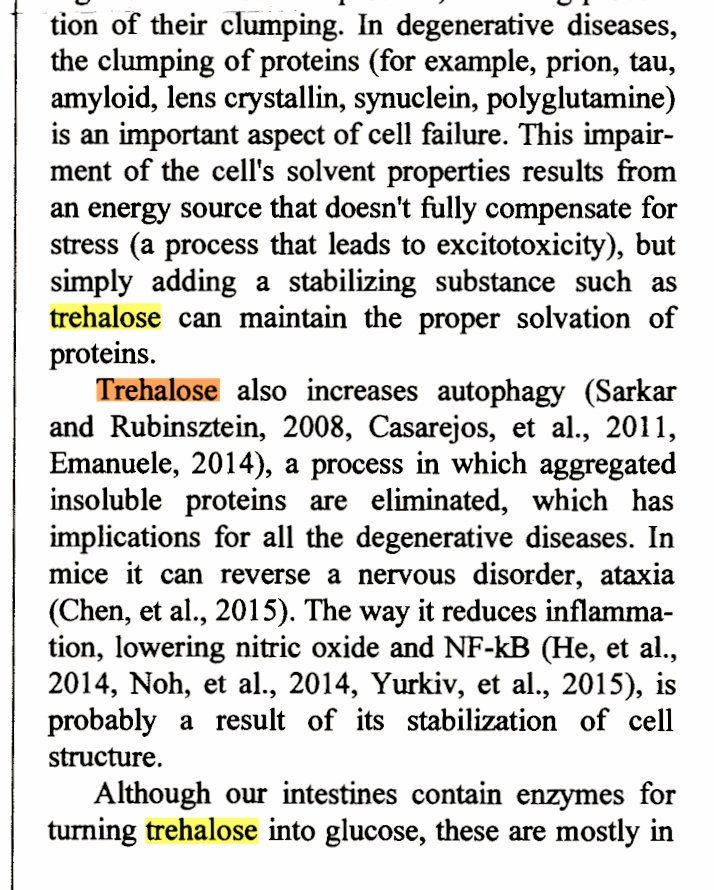
From a GE episode:
Q: "And does the mushroom sugar, is it called trehalose? Does that contributes to the functioning of the organism?"
A: "Yeah, that’s a stabilizing thing that opposes endotoxin. There’s been good research showing that there seems to be a direct structural effect of trehalose defending the cytoplasm against the disorganizing. There’s been good research showing that there seems to be a direct structural effect of endotoxin. And that’s kind of a metaphor for everything that’s happening, stressful in the organism.
And trehalose is one of the stabilizers that the progesterone, cholesterol, lanosteroids are another level or type of stabilizer." -
@Mauritio If using for BAT activation then you would need to reduce Fructose and Sucrose........Seems difficult IDK

-
@Wabi-sabi Why?




Hello! It looks like you're interested in this conversation, but you don't have an account yet.
Getting fed up of having to scroll through the same posts each visit? When you register for an account, you'll always come back to exactly where you were before, and choose to be notified of new replies (either via email, or push notification). You'll also be able to save bookmarks and upvote posts to show your appreciation to other community members.
With your input, this post could be even better 💗
Register Login