Obscure Health 1: Area-1255
-
This essay is the first part of a series examining individuals and collectives associated with obscure health. The (better) german version in second post.
>>GERMAN VERSION HERE<<
.
.Area-1255: The Right to a Finding
A health collective in search mode, between the black pharmacy and the diagnostic void
I. The Coded House
In a 2019 post on the dopamine D1 receptor, Gregory first declares his own theory true on the basis of experience; it makes him "creative, energized." In the same breath he discloses that "this article was written under the influence of a substance that increases Dopamine D1-receptor function." Both statements claim methodological transparency; warning and self-glorification are absent. The author records the experimental conditions under which the insight emerged as a scientist might document a laboratory setting; except the laboratory is his own brain, the report a Blogger post on a black background, and the thesis that dopamine D1 receptors are the mechanism behind social openness, creativity, tolerance, and political emancipation movements. Theory, experimental condition, and confirmation occupy the same post and run into one another. By Gregory's own assumption, the substance raises exactly the D1 function on which the entire social diagnosis rests. The disclosure contains no apology, and that is its defining feature.
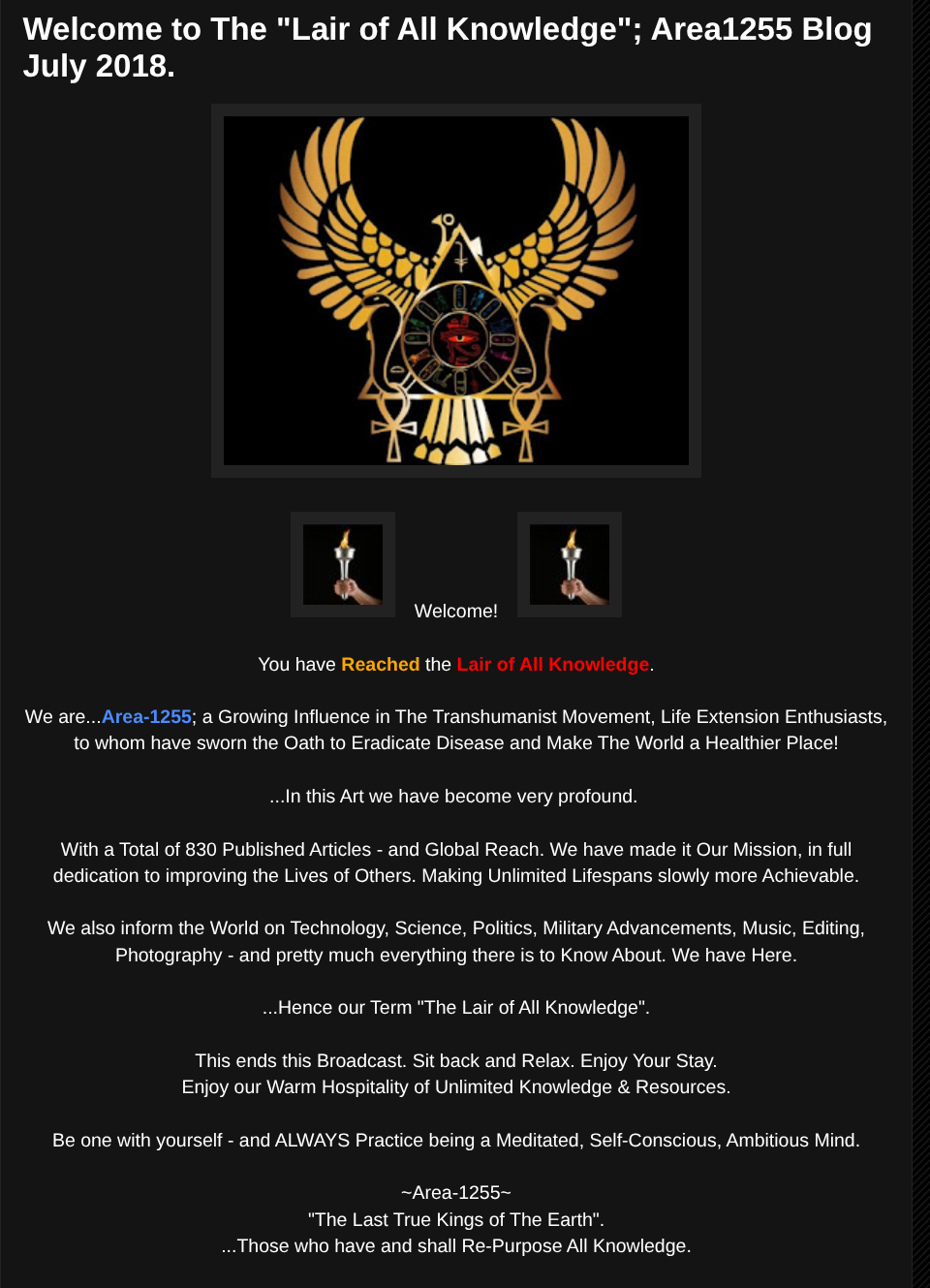
Area-1255 initially appears to be a health collective that emerged from none of the familiar forms: neither a wellness blog nor a biohacking brand, and even as a forum the place can only be described in part. Even the door sign refuses to choose a field; the main blog runs through "Immortalism, Transhumanism, NeuroScience, Spirituality, Bodybuilding, Technology" before arriving at "REALLY FUCKING ALL-KNOWLEDGE." The mixture of registers that later spreads through the archive is already there in the header. It is an outsider space built up in layers over years, something raw and overloaded: an archive of self-ignition that takes itself for a private medicine of intensity, in which bodily states fall out of symptom management and become access points, warning signals, political impositions, spiritual hints, technical problems, and personal declarations of struggle. It begins where someone has a condition but no finding. Area-1255 lacks the standardized safeguard layer of professional health communication, in which scientific framing, liability boundaries, and warnings about self-experimentation are visibly separated from one another. Some posts do protect themselves: The Power of Psychosis explicitly describes itself as a poetic representation rather than an actual intention or state of mind; the digital dot and color signatures are even meant, in places, to carry warning and disclaimer functions. What is missing is the warning's consistent institutional form. The reader receives no continuous reassurance; they are expected to judge for themselves in a space whose warning signs are partly built into the design.
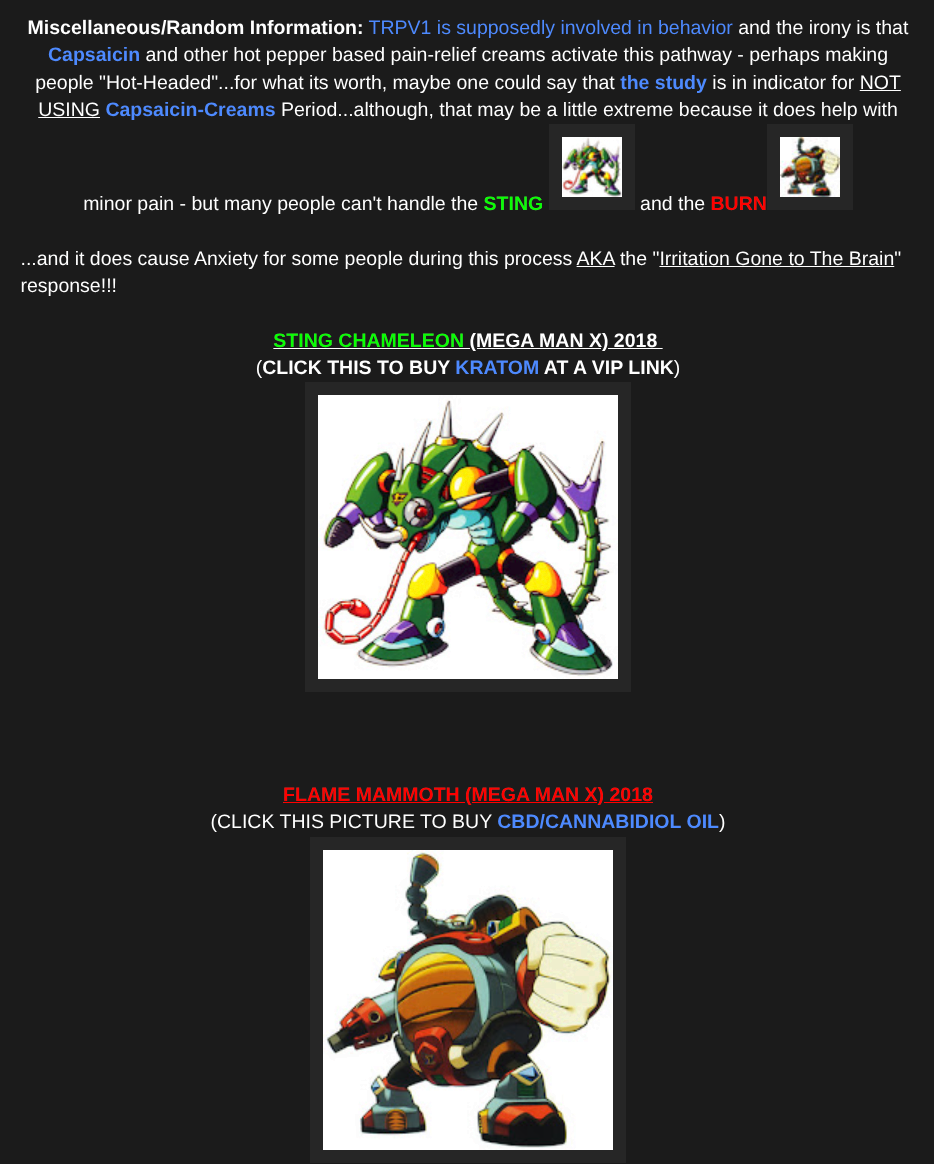
Before an argument begins, the surface has already altered the reading posture. Black background, white type, link blue, red for alarm, green for substance names, occasional magenta, at first without any consistent system visible to an outsider, fluorescent on the screen like a light table marking certain cells while leaving others in darkness. The result is a physiology of attention: the surface encourages scanning rather than calm reading, the eye jumping from emphasis to emphasis like a body that already has a question, because it usually does when it lands there. Anyone who has typed "PSSD treatment" or "WAY-100635 dosage" into a search engine does not need a friendly introduction. The interface built for that reader functions as a stimulus archive and distributes its arguments as signal islands. The surface turns reading into Information Foraging: link blue, red, green, substance names, and jump links give off an information scent from which the eye estimates the likely yield of the next click and moves on. In search mode, reading fixes on markers, symptoms, names, and sentences that suddenly address one's own condition.
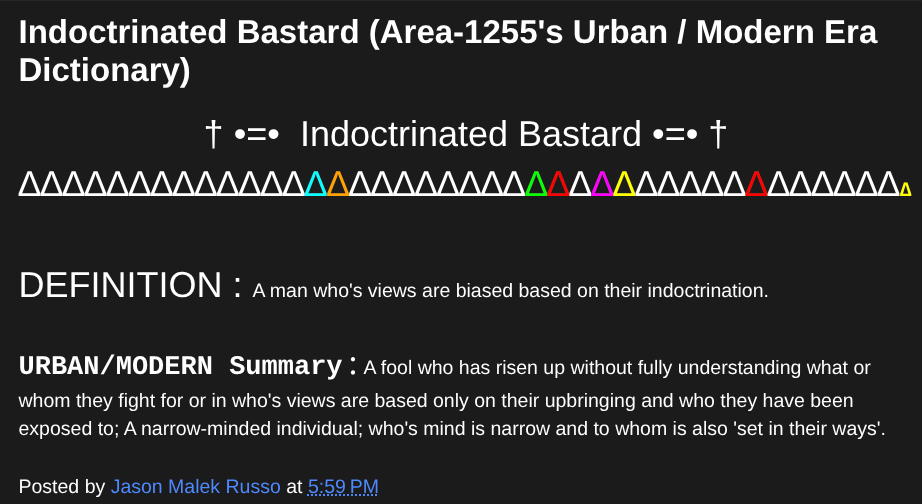
The site has, in this very specific sense, written its own neurochemistry directly into CSS. A later post on Area-1255's digital dot signatures and keyboard ciphers makes this internal logic explicit by treating dots, colons, and color sequences as signatures, time markers, warnings, and disclaimers intended to indicate priority, intensity, and internal routes through the material. The text explicitly addresses visual learners and traces the sign system back to older projects such as Cipher Elite Enterprises and to a genealogy of hacker groups. An early version already appears in 2015 in It's All About the Presentation: stretched-out letters, typographic disruptions, and strings of symbols are meant to force the reader out of habitual meaning-making and are then explained as an exercise against generalization. The surface considers itself legible; it wants to be coded because coding here also means guiding the reader. Stack X separates the substance machines from the main blog, the Light Portal reduces the optical strain, and male sexuality receives both a technically compressed version and a simplified sister version. Jump links also allow a sprawling neurocosmology to be skipped in favor of product recommendations. The chaos has audience layers: the long theory remains on the black main blog, the brighter side portal lowers the optical load, and jump links or sister versions bring other readers directly to the desired bodily function or bottle. For a time, even the blog's long header image served as a barely explained entrance to a forum of its own; coding organized both reading and access to the community.
Area-1255 is therefore less a pharmacy than a black kitchen. There, substances, studies, bodily reactions, and old rage are cooked together before it is clear whether the recipe holds. Many professional health interfaces pair visual order with signals of trust: white space, rounded buttons, clinical icons, a doctor photo, a safety sentence, a purchase button. Area-1255 works in the opposite direction, placing substances, theories, people, bodily reactions, old links, half-systems, spiritual debris, product reviews, and very loud convictions beside one another without translating them into a unified aesthetic of trust.
Even in 2026, the site still broadcasts via Blogger, whose surface recalls an early-2000s forum. Instead of fundamentally rebuilding the main house, side rooms and detours were added; the basic structure remained. Area-1255 stayed active, though far less frequently: seven posts in 2024 compared with 269 in 2018. Publication frequency has fallen while the archive continues to grow.
What becomes noticeable after a while: AMX capitalizes certain words—MAJOR, CRITICAL, REAL, INCREDIBLY IMPORTANT. Error and professional design intention are the wrong categories; the capitals transfer internal urgency directly into writing and do so without safeguards. Professional health communication often dampens such urgency through detached tone and standardized presentation. Area-1255 does the opposite and puts the urgency into the typography. Capitalization can thereby intensify subjective conviction without supplying additional evidence.
II. Voices in the Dark Hallway
The collective behind this site cannot be reduced to a clean editorial structure. It is more like a dark hallway with doors whose signs are read more often than others. Sobriety alone loses the myth, myth alone loses control, optimization alone loses the laughter; Area-1255 lets these registers run against one another.
Dan Gregory writes under the pseudonym AMx ReBorN, spelled out as Ascended Master X, Reborn in Christ, a stage name and pen name at once. He is the project's most concentrated voice and identifies himself with Area-1255 on the blog: "I am Area1255. My real name (true name) is Daniel Gregory." The PubMed URLs Gregory places beneath substance names are less academic citations than coordinates. Their implicit gesture is: It is there; check it yourself. Legitimacy comes from the finding, not the finder. In the texts on dopamine D2, D3, D4, the dopamine transporter, or nitric oxide, biochemistry appears as a secret operating manual for humanity. D2 becomes a door to ambition, "common sense," motivation, youth, perhaps even world-changing action; D3 connects to risk, money, decision, sexual function; D4 to exploration, creativity, novelty, intelligence, unusual energy; nitric oxide becomes the blood flow of viability; testosterone and DHT are read as factors of courage, hardness, libido, and presence. This stimulus logic separates Gregory's texts from advice prose. The receptor is not explained; it is charged. In Area-1255, language itself is used like a supplement: a term should act, a receptor ignite, a link serve as a possible point of entry.

Stack X, Area-1255's supplement offshoot, drives this principle to its extreme. The histamine stack transforms allergy and inflammation chemistry into “a prized neurotransmitter with powerful motive — the fulfillment of mind. The activation of human beauty. The crystallization of brewing, piercing light. Projecting so strong onto adamant minds, who then become succulent with penetrating thought.” This is pharmaco-magic on the scale of a cosmology. What matters is that Gregory retranslates abstract virtues of living—courage, drive, creativity, attractiveness, social force—into manipulable bodily mechanics. Loss of nerve becomes: “My noradrenaline is wrong”; lack of ideas: “My D4 receptor is running below capacity.” This strips failure of moral blame before the method has even been considered, and from there the path leads without much change of register to authority, rebellion, police, and doctors. For Gregory, politics begins where institutions gain access to bodies and then decide who may control young bodies, whom to criminalize, and when their own power receives the neutral-sounding name of order. The body is not to be finally determined by institutions, medication side effects, aging, sexual shame, or dead concepts. In 2024 Gregory carries this opposition into a presidential candidacy, presenting himself as the first “Anarchist-Conservative President,” invoking the New Anarchic Order, and speaking of secrets beneath the Vatican. In the comment section, this coexists with a spam offer for herbal penis enlargement.
In The Darkness Is My Ally, Gregory looks back on psychiatric admissions beginning at age eleven and on a succession of shifting attributions, from ADHD, OCD, and autism or Asperger's to ODD and schizotypal and antisocial labels. The diagnostic void does not begin only where there is no name. A body can remain just as unnamed under a stack of diagnoses as with none at all if none of those names produces a language in which it can recognize itself. Against this erosion of labels, the blog begins designing roles and images of states of its own. The poems and prose pieces are therefore not decorative trim around the biochemistry but a counter-record: The Power of Psychosis translates an endangered state into storm, flood, clarity, and euphoria while cautiously marking itself as a poetic representation; in Agent of Chaos, the same imagery becomes more aggressive, with chaos used as a means of exposing other people's fear, reactions, and hidden character. Self-description then becomes assignment. Rollo addresses his descendant directly in Go Forth Gregory, and Conquerud!!!. In the Russo-published Spiritual Guide 101, the voices of Maitreya and the next Buddha emerge from a DXM state even though Gregory has "little evidence other than what is in my Head." The institutionally named body writes itself an origin, a figure, and an assignment without keeping those levels cleanly separate. Even the fire-and-ice poem is interpreted immediately afterward, as though the instrument just built had to be calibrated once more before its next use.
Corageon writes out of logs, diet protocols, training plans, and reviews, closer to bottle, capsule, the next shift, and honesty about training than to Gregory's systems theory; on bodybuilding forums he is known for protocols of his own such as the PaleoXtreme diet and Xtreme Push-Up Routine, and he works in a Christian-motivational register. His own text is titled “Of Faith and Courage”. In an earlier text on detention and court proceedings, the same mix of risk, faith, and pragmatic confidence already rests on the experience that "weird things happen when I roll the dice". Russo researches primarily from family history, Gregory from systemic conviction, and Corageon from the experience of bodybuilding forums, closer to the body than the concept and closer to the next trial than the next world model. Their starting voltages differ, but their chemistry does not stay pure: Russo can shift just as completely into an incantatory collective “WE” in Thou Who Weareth the Mask of Immortality, and in The Age of Spiritual Achievement draw the abolition of death, Zelda, oxytocin, and world order into the same stream of sentences. The mixing is clearest in THE STORY OF DANIEL NICHOLAS GREGORY 2019, a text published by Russo that speaks to Gregory in the voice of Leviathan: people were supposedly directed to the site in dreams, Gregory had received “all knowledge,” guardians had been assigned to him, and his gifts, suffering, and later task had long since been recognized. Russo is not documenting Gregory's mythology from outside; he helps write its authorization.
Alongside them are names that strengthen the impression that no smooth authorial subject is speaking here: Anthony Khrist, Bruno, D.Stex, Fiendexxx, Morgan DaVinci, Tubzy, ENGEN, Team Iron Fitness. The 2014 Official Re-Introduction explicitly describes Area-1255 as a group of exactly eleven writers and presents psychology, neurochemistry, spirituality, personal testimony, and health research as their shared field of work. The collective is therefore more than a later projection onto scattered names. How stable that group was, who wrote regularly, and how much of the visible plurality remained distributed authorship under changing names cannot be determined from the archive with confidence. Even the VIP membership rules read like a small administrative remnant inside the underground: no blanket exclusion by country, but expulsion for traitors, fraudsters, and problem figures. Traces are the lowest form of community and sometimes the first.
III. What Remains of the Dead
Jason Malek Russo writes differently from the project's other voices, less as a function within the collective than as a person whose family history made the question unavoidable in the first place. What becomes visible in Russo is also a biographical foundation of the project: behind the landscape of receptors, libido, and testosterone lies something very simple. People die. Families lose fathers, bodies lose strength; medical administration can place such losses under causes of death, diagnoses, and jurisdictions, but it cannot answer the personal question of whether they were avoidable. Russo works as a construction worker on Staten Island and, by his own account, also as a lawyer in a nearby firm; he additionally describes himself as Egyptian-Persian in descent and red-haired. His name, he says, means the red-haired healer and king of kings in Arabic, which he writes down with the seriousness of someone who does not mean it metaphorically. His father died of a heart attack at fifty-five. His great-grandmother died at sixty-five of a rare bone disease. His aunt died of Alzheimer's at sixty-six. These three deaths explain at the opening of the immortalism post why Russo asks the question and what is at stake for him; without them it is hard to understand why fifteen years of PubMed research after work amounts to something other than a hobby.
Institutional research cannot organize that degree of personal stake in the same way: here, failure to find an answer is bound up with one's own death and the deaths of one's family. Russo researches because his family died and he wants to know whether that course might have been interrupted; he would rather search for the answer himself than leave it to a health system that issues lab values within the reference range and sends the patient away without asking what they actually wanted to know. What distinguishes Russo as a researcher is less the considerable breadth of his reading than the irreversibility of his question: he cannot stop wondering whether his father might have lived with better information, because stopping would declare the question unsolvable and the next death unavoidable once again. This structure produces a researcher who can be wrong and indeed is wrong, yet asks the question anyway because no one else in this context asks it. It is an attitude he knows from his own experience: by his account Russo returns after months spent "actually locked up" with a new article on dopamine optimization; there is no apology. The experience of institutional confinement thus stands beside the impulse to build an epistemic space of one's own.
There is a kind of human energy that is instantly recognizable in person and almost absent from well-edited prose: the energy of someone who does something because he cannot stop. Russo writes with that energy. You can see it in the record-like specificity of his locations, occupations, and ages. They sound like the details of someone who has stopped considering whether he should share them because he has realized they are the only thing that makes the question intelligible. Then there is the fact that he translates his own name—the red-haired healer and king of kings—without spending a single sentence cushioning it. This is someone who has learned that caution costs him nothing and brings him nothing, and has therefore stopped practicing it.
In the immortalism text, Russo builds a coordinated protocol against the accumulated dys-homeostasis of the aging body, with PQQ and coenzyme Q10 for telomere protection, selegiline for MAO-B inhibition, and Dihexa as a neurogenic compound. There are also reishi extracts in bottles marked with Chinese characters. The same immortalism text condenses Russo's protocol into a formula: "The MIND Must be at Peace & in LOVE — so the 'Immortal Cell Line' is induced." A dash connects biomedical terminology with emotional physiology, the cell line as a research concept with love as its claimed trigger. This immortalism from below differs from the polished longevity discourse of startups with blood markers and investors because it emerges from family history, illness experience, and biochemical tinkering. Anti-aging becomes the question of how a person remains combustible for goals, desire, work, and struggle. Academic cleanliness is absent; the biographical drive lies open.
IV. Protocols of the Body
Gregory, Corageon, and Russo practice experiential chemistry. Knowledge emerges here when people feel their bodily reactions, record them, connect them with fragments of studies, publish them, and eventually treat them as a model. PubMed reference and first-person report stand beside each other in the same post, so that the proposed mechanism immediately meets the documented bodily experience, as with altered vascularity after three weeks of Dioscorea Nipponica. Corageon explicitly wants "Not Relief of Depression but Determination against Depression," so that even a supplement review is asked to translate a condition not merely into relief but into agency. The purest form of this writing is the thirty-day Tyronene T3 log: drops on the forearm, running distances, concentration at school, weight loss, a thousand push-ups, and a so-called “skin-gasm” are plotted along a running curve, as if a life could spend a month hanging from its own measurements. In another thirty-day protocol, the L-theanine log, the same curve suddenly becomes, on day nine, simply "I FEEL alive today!"; amid blood values, repetition counts, and assumptions about mechanism, what is actually being measured appears for a moment. Measurement, bodily sensation, daily life, and a moment of grandiosity remain side by side, without the text deciding in advance which observation has the status of data.
At the same time, the site has a methodology paper of its own for reading research. The first of the 10 Rules for Assessing the Value of NeuroPharmacological Studies asks the reader to register "what is MISSING in the study" before what is present, turning absence itself into a methodological category; missing variables, indirect effects, receptor context, and the route a substance takes through the body all have to be read along with the result. This is not incidental PubMed decoration but an attempt to give the site's own reading of studies a set of rules. Yet the method ultimately returns to the conviction that "the best research is the one you do yourself." That is precisely where its strength becomes a danger: a methodology paper does not turn experiential chemistry into science, and the rules prevent neither selective evidence nor the leap from mechanism to certainty; without testing, the practice remains vulnerable to placebo, product interest, overinterpretation, grandiosity, poor dose logic, and the rapid move from a handful of findings to a closed system. Better questions sometimes emerge from this unstable relation, but so do models already confirmed by the observing body while that body is still producing them.
The log is its literary form: day one, day two, dose, effect, side effect, euphoria, doubt. Area-1255 writes health literature in the mode of the protocol; what emerges is a body novel following the alteration of a condition under a particular substance on a particular evening. In older natural history, such a record was called an experimentum: not a controlled trial but a witnessed report of experience. Health knowledge never emerged solely from detached observation. It also came from sickbeds, monasteries, kitchens, pharmacies, and the notes of those who could not wait for a responsible authority to return their suffering to them in the correct terminology. Area-1255 belongs to a wider network of Ray Peat forums, longevity forums, and peptide forums in which self-directed biochemical inquiry is taken seriously as a collective practice.
This practice is more reactive than the word archive initially suggests. Beneath a post on sexuality, a reader requests an article on exceptionally hard erections; soon afterward, the request is translated into its own factor model with brands and dosages. The comment section functions as an improvised commissioning desk; the reader becomes patient, questioner, and topic provider at once. Search-engine logic produces repetition in the other direction: the two Proviron posts on orgasm intensity and ejaculate volume are, for long stretches, almost the same text beneath two neighboring search questions. Knowledge and SEO accumulate on top of each other in the archive. Sometimes the same paragraph merely reappears beneath a different entrance sign.
The project's medical strand predates much of its later mythology. Insights into PSSD — A Collection of Data was already assembling symptom reports, different SSRI profiles, enzyme pathways, hormones, neurosteroids, and criticism of absent medical follow-up into a long dossier in 2014. In the archive, the diagnostic void predates Rollo, Thor, and planetary administration. The later PSSD text from 2019 stacks competing explanations involving androgen receptors, nNOS, 5-HT1A, epigenetic changes, and neurosteroids alongside the earlier theory. Area-1255 rarely corrects itself formally, but it lets mechanisms compete; an old certainty is not deleted, merely surrounded by new possibilities. For the reader, precisely this disorder may serve a different function than it does for the scientist. Anyone who recognizes their own condition in an AMX or Corageon log—perhaps the same exhaustion curve after an amphetamine phase, the same PSSD symptom constellation, or the same strange brightening of mood under a certain dose of selegiline—experiences the text as testimony rather than mere information. Reading Area-1255 at night, perhaps at three in the morning, a sentence can jump out of the text and describe exactly what they have experienced without ever having had a word for it: the texture of the condition, its time course, its difference from everything they had tried to explain to a doctor. The competing mechanisms remain untested, yet the experience leaves a trace, and with it the feeling that it took place even though no responsible authority documented it. For the person who needs that trace, it is enough at first.
The D1 post is the most ambitious version of this method. Gregory reads research on receptor density in inventors and people involved in social movements and recasts the global rise of depression, political fragmentation, and intolerance as a neurochemical problem. His diagnosis is collective D1 loss caused by pollution, poor nutrition, and structural stress; the solution follows in the form of Stephania extract, sulbutiamine, zinc, and vitamin D, available on Amazon. The social diagnosis thus ends directly in purchasable substances. Elsewhere the blog advocates a "fava bean revolution": fava beans contain L-Dopa, a dopamine precursor, and thereby become a political instrument on the blog. With Dihexa the movement repeats. "NOTHING in this World has stimulated my Creativity nearly as much as Dihexa," Gregory writes in the creativity post; a compound that stimulated neuronal growth to an unusual degree in animal models is recommended without hesitation to a person of "average intelligence" longing for genius. The SEO tags carry the same movement into the search engine, repeating variants of "SUPPLEMENTS," "DRUGS," "HERBS," "PILLS," "TABLETS," and "CAPSULES TO INCREASE CREATIVITY" in a long block of capitals so that the post appears where someone searches for creative genius at night. Society, receptor, product, search term, and the author's body form a single chain. Gregory connects these fields because he belongs institutionally to none of them. Creativity is part of the equipment of survival and can become strategic power or civilizational mobility; the D1 receptor gives a molecular name to the desire not to remain fixed.
-
Expectation, suggestion, and actual effect run through the same body and cannot be cleanly separated. Whether an observed change is owed to the proposed mechanism, expectation, or the placebo effect remains structurally undecidable—not only because there are no controls but because there is no position from which the experiment could be observed without becoming part of it.
The blog's seven societal plagues are narrow-mindedness, laziness, gluttony, self-criticism or pessimism, lack of alertness and attention, lack of insight and imagination, and habitual lying. The list resembles a medieval taxonomy of sins to which neurobiological explanations, supplements, and behavioral proposals have been added afterward. Sin becomes a repair list. The blog is less interested in damnation than in corrigibility.
V. Invisible Jurisdictions
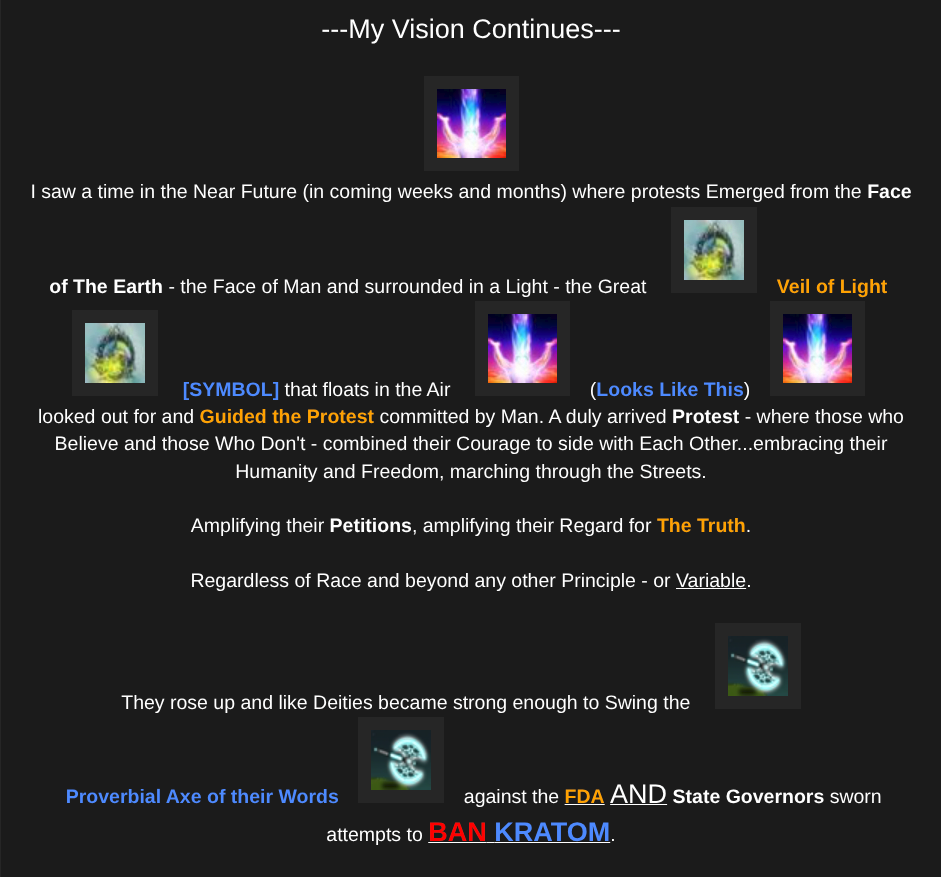
The occult texts on Lucifer, Pyreth, fallen angels, the moon, genes, and spiritual lineages initially seem like a separate, almost disruptive wing of the house. Yet myth performs the same basic function here as biochemistry because both name invisible forces: hormones make behavior legible, receptors make mood legible, spiritual names make fate, power, and one's own exceptional status legible. The Jim Arkin portal calls itself "Home of the Hebrew Deity and Guide to 'The Prophet' in Relation to AMx ReBorN" and explains Gregory's identity through incantation, genealogy, and intensification. A 2018 post extends this self-mythologizing into a twelve-point network with alleged roots in a hacker community from 2005; a separate prophecy branch claims that AMx ReBorN is slowly receiving the reincarnated spirit of the biblical prophet Daniel. Gregory's relation to this material is not always simply credulous. In I've Become an Illusion, he despises superstition while still using it "sometimes for Convenience, sometimes as an Armament." With Armament, myth itself moves into a technical and strategic register, becoming an instrument of self-activation, character testing, and framing.
Out of the individual figures, a cosmic bureaucracy gradually forms. The five planets appear as distributed jurisdictions until Jupiter actually becomes a "Spiritual Governor": one intervenes in enlightenment and liberation, another in government, finance, sexuality, or youth. Asmodeus and Azazel are deployed more than narrated. They advise, protect, drive curiosity, legitimize unrest, and give chaotic or highly gifted minds a name for their exception. The Antichrist also receives an almost DSM-like personality profile. Cosmology becomes administration: gods, demons, and planets receive jurisdictions; like receptors and portals, they give invisible forces an address. The individual acts of administration do not occupy the same epistemic level. The moon post leads from the full moon through an assumed decline in melatonin to histamine, wakefulness, and susceptibility to allergies, translating spiritual intuition into an apparently continuous neurotransmitter chain. The first pillar of this bridge is disputed; what follows belongs to ordinary neurochemistry, and that is precisely where the construction gains its persuasive force. Area-1255 gives the feeling of being affected by an invisible power a molecular sequence and therefore a possible jurisdiction. In the Thor neurochemistry post, Thor himself is supposed to create "Equilibrium (homeostasis)"; directly beneath it sits only the terse comment that Gregory should stop taking Adderall.

Where the project visibly crosses its own boundary is a 2017 post published by Jason Malek Russo under the title The Psychotic Supplement Stack: an explicit guide to deliberately inducing temporary psychosis. It names smoked Salvia divinorum and Mucuna Pruriens, which the text describes as a source of 5-MeO-DMT and other DMT components. Wild Dagga follows as a “super man add-on,” 5-HTP as a supposed spirit guide into one's own dreams, while Syrian Rue is meant to potentiate every other substance at once. This final combination in particular can be dangerous, because with 5-HTP it may contribute to serotonin syndrome, while with other psychoactive substances it can produce a highly unpredictable psychedelic effect. The blog itself says, “This stack is dangerous!” The tags nevertheless read “supplements to cause insanity,” “cause temporary insanity.” This is no longer optimization but dissolution; no longer finding an access point but overdriving every switch at once to see what remains. It belongs to the project, even if the project does not mark it as a boundary.
The telekinesis post continues this with a different structure. Adderall appears as the “ultimate energy unlocker,” Mucuna Pruriens as a DMT source, Lavender Spray as a means of producing a blue aura, and Black Tourmaline as an object to be worn on the left wrist. As a biological prerequisite, the text also names descent from the Lothbrok dynasty, from Rurik, or from Rollo's line, preferably all three. The dosages are precise; the ancestry requirement is presented literally. In the Psychotic Stack, the body was the experiment; here it becomes the prerequisite of the experiment. Not only what one takes but whom one descends from becomes a variable in the protocol. Experiential chemistry merges with genealogy, and a bodily mechanism supposedly open to anyone is tied to a condition that excludes most readers. Directly beneath it, unmoderated, stands Dr. Chukwu's healing offer for HIV and herpes; boundary crossing, genealogy, and spam occupy the same room. Gregory applies the ancestry logic to himself as well, tracing his bloodline to the Irish-Scottish Gregory clan with its blue dragon crest and drawing connections to Freemasons, Templars, and Norman nobility. Genealogy functions in this archive like a login. Surnames become access codes, percentage mixtures acquire the aesthetics of mathematical certainty, and ancestral voices become authorization messages; anyone from the right line is supposed to have qualities, rank, or strategic jurisdiction unlocked. A separate post on Dracula's alleged gene line shifts the same mechanism from personal ability to political power. The blog connects an allegedly “immortal cell line” to named contemporary figures from the British royal family and the Bush family and places PubMed articles beside the claim even though they do not substantiate the genealogical construction. Scientific fragments are assembled into a genealogy of power: origin is meant here to explain political reality and certify rank. In The Conqueror Gene Line, a list of surnames replaces genetic evidence, while in the text on mental-health issues inherited from Vikings, Gregory treats his own Rollo ancestry almost as a guarantee of impartiality. Personal involvement becomes a certificate of neutrality, and origin becomes an answer to the question of who may speak, act, heal, rule, or attempt telekinesis.
In Histamine & Brain Differences Among Different Ethnic Groups, ethnic groups are wired through histamine and gene hypotheses to libido, mania, narcissism, and emotionality; AntiSocial Personality — Its The Weather, Man! explains personality through climate and racialized groups, and the attached disclaimer of non-racism does not undo the generalization. Elsewhere Rollo's line is charged with pain resistance, strength, fertility, disease resistance, and superior sperm, while the Antichrist receives an ethnic percentage recipe, and the purported debunking of China as the Antichrist merely shifts the conspiracy toward European royal houses and Jewish bloodlines. This is no longer merely eccentric genealogy but racialized pseudobiology and ethnic essentialism. It also runs directly against the early program of It's All About the Presentation, where Russo's stated agenda is still "to make generalizations disappear." The same mechanism that relieves the individual by translating character into chemistry can assign entire populations a biochemical essence; the access point becomes a stereotype generator and does not stop there. Psychopathy appears as a manipulable state for career and leadership, Jason Malek Russo rationalizes murder in defense of illicit business in another text, another post develops strategies for war, and the CIA Psychological Tactics explicitly aim "to Redirect the Thoughts & Spirit of others" so that "YOU can Achieve your Own-Ends." Even creativity is explicitly put to work for surveillance, assassination, and chemical warfare. The search for switch points thus tips out of self-description and into a technique of controlling others; a method that promises access everywhere contains no internal reason to stop before gaining access to other people.
VI. The Zone Between
Between medically unremarkable and clearly unwell lies a crowded zone: the diagnostic void. Post-SSRI sexual dysfunction has been known for years and by now has a diagnostic code in some countries, while an established treatment option is still missing. WAY-100635 shows clear effects in animal models, but according to the blog it can only be ordered from a Russian peptide market and arrives in an unmarked package because no regulated supply chain exists. Alongside it, a 2019 PSSD post gathers hypotheses involving androgen receptors, nNOS, and 5-HT1A, as well as compounds such as DXM, memantine, risperidone, lecozotan, and metergoline. The list is not a treatment standard but a search protocol built from mechanisms and candidate compounds, precisely because medicine has scarcely established the condition as something treatable. That the condition persists after the intervention first breaks only the simple logic of return: substance gone does not necessarily mean condition gone. Without claiming a mechanism for PSSD, the course itself has to enter the explanation; a body after an intervention is not automatically the same body minus the intervention.
People caught in the diagnostic void can receive lab values within the reference range and still leave an appointment with the feeling that their experience did not take place there. In the blog's 11/11 anniversary post, patients become "RESEARCHERS THEMSELVES" while doctors, in the counter-image, often "simply read-from-a-script." Elsewhere, the combative position begins with an almost conventional plea that doctors should "have a heart" and "LISTEN MORE" to their patients' often complicated cases. In the same textual environment, the plea already tips into the language of boycott and protest. The diagnostic void produces counter-knowledge and a political temperature of its own: patients are to produce the knowledge themselves because, in the site's view, the system does not provide it for them. Where questions remain unattended despite existing need, or never become research priorities at all, not-knowing takes on an institutional form. Science studies calls this undone science; counter-knowledge grows in its vacuum. This does not excuse bad substitute science; it explains why substitutes arise in the first place.
Digital health systems organize access through apps and portals, recommendation algorithms, login walls, and trackers. They collect data and structure procedures while the underlying mechanisms often remain behind the surface for users. Area-1255 responds to this distance with a drive toward switch points at which a condition might be changed directly. Impatience becomes a force for action: the body is meant to leave the role of a symptom that is merely managed.
In this zone the body reclaims sovereignty over its condition, while the institution assigns categories without experiencing the condition itself. Standardized care registers conditions through categories and values; compliance, in turn, describes how the patient relates to the prescribed treatment. Area-1255 immediately translates the claim to sovereignty into a world of blockages in which serotonin blocks libido, stress blocks life extension, melatonin blocks nighttime wakefulness, government blocks freedom, doctors block self-access, dopamine transporters block motivation, and an unfavorable receptor profile blocks creativity. The world becomes a system of inhibitions, the human being a creature that ought to flow. Behind a diffuse condition, the blog suspects a switch point, a place where something can be changed. This can turn the body into a control panel and the world into a collection of molecular stories in which uncertainty is prematurely explained in chemical terms. The counter-position is not automatically more mature knowledge; it can also stop at unresolved not-knowing. Even How to Become IMMUNE to Stress leaves some aspects of dealing with stress "ALWAYS" psychological. Even here, the biochemical control panel has an edge beyond which it does not reach.
In this logic, tiredness becomes a list of suspects on which dopamine, nitric oxide, thyroid function, testosterone, light, inflammation, too little salt, and too much screen time stand beside one another, while stress is expected to cover bureaucratic mail, money worries, loneliness, work pressure, and sexual insecurity all at once. Area-1255 resists such compression into uselessness because, at its best, it wants world-reach: health as recovered range and the ability to enter the world again. Life is to be extended and made responsive, and response is an underestimated word. The tired body does not respond; the depressed body responds late; the sexually dampened body does not respond where the world and closeness call it. Responsiveness therefore means being able to get up and then do more than merely get up, answer a message without already being exhausted by it, and hear music again as something more than registered sound. Cold, eye contact, desire, work, risk, and future can then be experienced as fields. The same pavement after good sleep and after four hours of sleep is not the same pavement. In this sense, Supplements to Restore Love Fantasies already treats romantic imagination as a lost bodily function in 2016. PEA, MAO-B, oxytocin, histamine, and dopamine are supposed to raise libido and, beyond that, restore the ability to expect love, dream of it, and enter the world with the youthful idea that someone in it might still be meant for you. The post first describes this direction as perhaps too "girly" for the rest of the blog and ultimately wants nothing less than "to encourage humans to be humans." The counterlight of tenderness does not stand outside the switch-point logic: love, too, becomes addressable, doseable, and treated as a chemically buried form of contact with the world.
After years of depression, a better mood may also bring back aggression, desire, appetite for work, and even grandiosity. This may be the return of something for which official health conversations have no category, although it occupies a precise place in human life. Libido therefore functions in Area-1255 as an indicator of life. In a culture that markets sexuality continuously while making sexual vulnerability, medication effects, and fear of aging difficult to discuss, a black market in language emerges. Area-1255 belongs to it when it speaks of erections, libido, DHT, PSSD, and testosterone boosters with the urgency of someone for whom sexual function is a return signal. The body responds to the world again; health becomes erotic in the broader sense, and libido the visible index of a returning desire for contact, risk, and leaving a trace of one's own. Yet this index also escalates: How to Turn Sex-Obsessed with an Out-of-Control Libido moves beyond restoring a dampened ability toward producing a permanently sex-obsessed “super-freak.” The return signal tips into an escalation target. Libido is no longer meant to indicate that something has returned but to swing as far as possible itself; the indicator becomes the target and, in doing so, loses part of its original informational value. Area-1255 frequently confuses vitality with maximum amplitude.
VII. The Grip
Gregory's "Freedom of The Unthinkable" exists outside a "Bubble of Normalcy". That is the project's liberating side; but every drive toward actionability reaches a point at which it begins pressing the body harder. This is the more dangerous side of switch-point logic. Once every condition appears addressable, access no longer concerns only depression, loss of libido, fatigue, and creativity but eventually empathy and conscience as well; a later post explicitly discusses ways of manipulating moral inhibition so that ruthlessness becomes more likely. A system that seeks access does not automatically stop before states a culture would rather call untouchable. Its great relief is initially that no condition remains mute: it receives names, receptors, studies, substances, and time courses. Every complete explanation, however, creates a new dependency, because anyone who has learned to read mood as dopamine oscillation, fatigue as nitric-oxide deficiency, and sexual dampening as a receptor problem soon looks behind every experience for invisible chemistry. Liberation from the mute condition ends in a form of attention with an appetite of its own.
Substances are handier than ways of life: a capsule is smaller than a new social environment, an antagonist sounds more precise than a year of better sleep, more reliable relationships, training, sunlight, and less humiliation, and each compresses a complex problem of living into an action that fits in one hand. In Area-1255, substances therefore become carriers of access; supplement review and spellbook treat the same matter as a possible opening. This compression produces product magic. The supplement stands at a threshold, first in the shopping cart, later as a capsule beside the laptop while the browser tab remains open and the package unmarked, and for a brief moment it seems plausible that the correct capsule will begin a new version of life. A substance does not automatically change the sleep, relationships, training, light, or humiliation that also constitute the starting condition. Stack culture is consumption and asceticism at once: dose and time are observed, effect and countereffect recorded, and the next trial prepared through the next log. The body enters a self-chosen order whose modern practitioner sits before a screen and organizes discipline through tabs, studies, and substances.
Then there is search mode, which produces its own opposite, because behind every found state another waits: more energy, more libido, more focus, more youth, more blood flow, more dopamine, less serotonin, better receptor balance. The search logic does not end with a hit; every finding opens the next optimization parameter. The date, too, becomes part of this coupling. "The Great Celebration of 11:11 Is the Celebration That Finances the Great Revolution," writes the blog, joining celebration, revolution, and financing in a single sentence. The posts gather wishes to be able to love, work, sleep, and fight again, to push back against aging, and to feel neither ridiculous nor at someone else's mercy. The collective emerges less through coordination than through the shared pressure of wanting more life. Where health in encounters with institutions appears primarily as the absence of abnormal findings, the difference between that absence and the presence of life can remain unnamed.
The vitality logic barely sees one particular body: the body currently being protected by its own dampening. There is no post about the grieving person whose low energy is not a malfunction but work, and none about the person who needs less rather than more. Without an external reference, calibration itself no longer remains outside the experiment. Measuring instrument, experimental body, and interpreter partly coincide in the same person and shift together over time; calibration drift then becomes part of the experiment itself. Sovereignty over one's condition can thereby tip into an illusion of sovereignty, because self-experiment bias cannot be fully corrected from within and, inside a closed system of conviction, every new observation can still be read as confirmation.
Among these texts are posts in which love and compassion take the form of social safety. As early as 2014, nobility means for Russo in Preserving Nobility, Cherishing Brotherhood, and Being Alive in Excellence that no one rises by putting someone else down — "you don't rise at all." Later, The Power of Compassion & Love in the 21st Century wants social security built "around the Power of Love for one another," while The Resurrection of Anarchy explicitly includes "empathy" and excludes only "passivity." Those lines sit uneasily beside the same author's later boundary texts on violence and illicit business, and for that reason prevent any retrospectively monochrome version of him. Care therefore remains inside an archive that places love beside psychopathy, universal possibility beside genealogical access rights, and empathy beside militant control, without any one of those loyalties reliably canceling the others.
In A World Where Kratom Rules!!! begins with a Salvia-and-cannabis vision and moves from there to plant freedom, hostility toward the FDA, a people's movement, a protective social order, and a “People's Psalm” of its own. The plant appears as the basis of a political community; a republic grows out of intoxication. The 11:11 ritual places anniversary, financing, charity, revolution, and the site's own “famous pieces” on the same date. The anniversary gathers the community in time, while the "famous pieces" canonize its texts; through PayPal, money is also collected for the project's next form.
VIII. Open Tabs
Someone searching for PSSD without finding a doctor who treats it, living for months with lost energy that no lab value explains, or looking at a father, an aunt, and a great-grandmother and wondering whether the sequence can be interrupted may find, in a black Blogspot interface, the only place where someone pursues the question with real effort. An archive is an imposition on the present because it says: someone was here before you searched. For obscure health this is decisive, because many of the conditions people search for at night produce a terrible loneliness; people remain alone with something too specific and intimate to enter conversation easily. The obscure here names what has not yet been institutionally consolidated, both the dump and salvage yard of modern health culture, full of broken theories and genuine observations without an official place. Anyone who sees only scrap is lazy; anyone who sees only gold is too suggestible. In the 11/11 anniversary post, Area-1255 is explicitly not there for easy solutions but "for BREAKTHROUGHS." Elsewhere, the health posts are also supposed to "encourage THOUGHT in addition to Goals; not as a replacement for them," and readers are meant to become more knowledgeable while "still ENJOY LIFE."
The tabs remain open for years and visible to everyone. The sidebar with archive months, labels, comment traces, and search field shows that this place consists of sediment: years, months, recurring authors, traces of membership, fragments of comments. A bodily condition becomes collective as soon as a server retains it, makes it shareable, commentable, and findable again. Hosting, old banners, comment sections, monthly archives, and search functions form the material infrastructure for this. Once a trace can be found again, it begins to coordinate on its own: a log, comment, or search term can alter the search path of someone years later who never met its author. The blog thus became a substitute for a collective wherever people outside the available categories sought spaces in which they would not immediately be pathologized, monetized, or transplanted into an ideology; but it was not the only such space. By early 2015, Area-1255 had a forum of its own, initially focused especially on PSSD, anhedonia, and conditions for which other discussion spaces had disappeared. On the main blog it was not presented as an ordinary menu item. The long header image of the logo and scientific diagrams served, on the desktop version, as the portal into it; in 2017 Russo explicitly described the inconvenience as part of the excitement while calling the room behind it an open community. Readers were directed out of the quieter comment sections and into the forum because their questions would receive more attention there. Area-1255 tried to build from texts and accumulating responses a conversation space of its own for people isolated by conditions without recognized diagnoses, half public and half concealed. The blog template remained hallway and memory, the search field the door to the archive; the image above the page was, for a time, the door to the others.
The search field sits small and white beneath the black superstructure: Search This Blog. As a plain interface element, it gathers the archive's previously distributed infrastructure into one place. You can type Nitric oxide, Depression, Lucifer, AMX, Dopamine transporter, Libido, or Immortality into it. Searching the blog means adopting, for a moment, the perspective of this place—its terms, archives, and peculiarities. The open internet contracts to this one vocabulary.
The uneven, persistent form and the preserved gestures of the old web make Area-1255 difficult to reduce to mere pose. There is an amateur seriousness in this: interest remains visible even when the explanation is wrong. Long titles, dense sidebars, and shifting registers show thought at work, uncertain and at times poor, yet actually working on the condition. Standardized health content can turn bodily anxiety into consumable clarity; Area-1255 instead keeps the search movement visible. Deviations appear as possible sources of signals.
Area-1255 markets things too, yet its better layer is testimony. A person records what they felt and how they understood it, connects the condition to a mechanism, and leaves a trace another person can find even when the explanation is wrong. Debunking alone therefore falls short: disproven individual claims do not explain why the phenomenon found a form in the first place. Many answers here are wrong; some questions remain necessary.
-
 R rohmilchbubi referenced this topic on
-
IX. The Counter-Institution
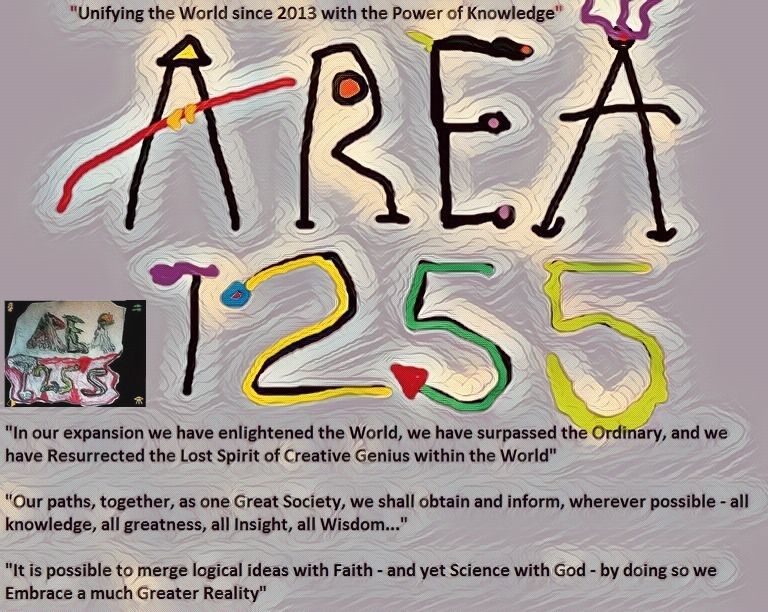
Taken as a whole, the archive is the most honest thing Area-1255 produces, and it never planned to. Old posts from 2016 and 2017 stand unchanged beside those from 2024 even where later research has limited or qualified their mechanistic hypotheses; there is no editorial note, no silent revision, no footnote marking a claim that has become false as adjusted in light of new evidence, a phrase that sounds like transparency but is really evidence management. No correction mechanism exists; the errors remain visible because the experiment is unfinished and the experimenter remains the object of the experiment, while no one is responsible for telling the past that it has since become obsolete.
Area-1255 describes itself as a counter-institution promising life extension, chemical cures, a healthier and eventually disease-free world, and medical-political enlightenment; it also maintains its own list of famous pieces, canonizing selected texts within the project. The main blog is only one chapter, because Area-1255 has expanded, in its own description, into "many different 'realms' and 'portals' which are essentially additional chapters of the same organization": Stack X gathers supplement material, Realm of Fire aggressive and dangerous discussions, City of Shadows psychological texts, Swamp of Mystery psychedelic posts, and Troll-Watch the site's forum ecology. A room is built for every condition no institution claims. Some of these rooms become practical: in 2018, under the title Private Investigative Services, Area-1255 offered, for payment, to locate people, evaluate digital traces, and produce background reports; databases, tracking software, and decrypting tools appear beside PayPal and a forty-eight-hour turnaround. For a moment, the counter-institution becomes an intelligence service, security company, and people-search bureau; hidden knowledge becomes findable people, and PayPal makes access billable. Between the psychedelic texts in Swamp of Mystery sits a fable about a "King Cabbage" who loves kratom and becomes gentler through kratom. The mature form of this project would therefore not be its taming into a normal health portal. Area-1255 is the basement drawing of a health institution that was never built: neither forum nor clinic nor university, but a place where people learn to read their bodies in a language no official institution teaches them. In the basement, with more pressure of lived experience and immediacy than in the architect's office, stand the ugly and intimate questions that friendly abstractions omit: freedom, desire, technology, community, future. Without them, health becomes management of the body.
Jason Malek Russo, the red-haired healer and king of kings in his own words, began after his father's death to ask whether it had been unavoidable; fifteen years later, the archive is the ongoing, unindexed, and uncorrected answer, right in places and wrong in others, yet often the only available one, produced by people claiming the right to a finding of their own because they are the ones living in the body at issue. The real imposition lies in the asserted validity of this knowledge from within the condition itself: it does not view a condition from outside but arises within it and therefore demands no external authorization. The "Grand Order of Immortalists" is given the codename Order X-166 in its own design and is meant to create a place "Where Alzheimer's Disease is no longer about KNOWLEDGE, but about ACCESS!" From that shift from knowledge to access follow a hidden VIP forum, levels of access, and a medieval castle metaphor; fantasies of worldwide companies and research institutions are added, as if a counter-medicine could be built simultaneously as an order, a corporation, and a fortified city. The design envisages home trials with products that failed in clinical development, legal support, and a mental-health crisis hotline explicitly promising not to have callers committed. Levels of access, legal support, and the hotline are meant to sort knowledge, produce belonging and protection, and at the same time respond to institutional jurisdiction as a possible threat; Area-1255 wants to read, treat, collect, and decide for itself who enters which room during a crisis. The alternative would be to wait for an official finding; institutions think in approval procedures and guideline updates, while the body thinks in years that cannot be recovered.
This gap explains why the project could arise and why people find something in it. It does not render its medically dangerous, racialized, and violence-related transgressions harmless. Gregory condenses the continuing demand into three lines in an earlier post: "By any means necessary I shall be, what I ought to be." Beside it stands no guarantee but the sediment of the archive: old hypotheses, countervoices, shopping carts, ancestral lines, and the traces of other searchers.
At the bottom remains the search field: Search This Blog. Someone sits in front of it, probably not optimally lit, probably not completely healthy, probably too awake for the hour, and types a word that is symptom, hope, product, fear, myth, and question at once.
Portal Directory
- Area-1255 Main Blog
- Area-1255 Forum
- Light Portal
- Stack X — Revolutionary Supplement Stacks
- City of Shadows
- Realm of Fire
- Swamp of Mystery
- Troll-Watch
- Jim Arkin's Blog of Hebrew Power & Prophecy
- AMx Workshop
Selected Posts
Immortalism
- The Path to Immortality is Within Our Reach — Immortality & Maximal Life-Extension (2018)
- Establishing The Grand Order of Immortalist (2018)
Prose / Poetry
- I will either return three times as strong, with twice as much as I had before, or I will return to the place I came and make the path I should have long ago. (2014)
- Preserving Nobility, Cherishing Brotherhood, and Being Alive in Excellence (2014)
- It's All About the Presentation - Societal Mishaps, Stigmas & The Final Blow to Generalizations (2015)
- † The Truth of my Sustenance - The Spirit in my Voice (AMx_ReBorN) † (2015)
- The Power of Psychosis (2017)
- In A World Where Kratom Rules!!! (2018)
- The Darkness is My Ally Poem (2018)
- The Promise of Adaptation (2018)
- As Humanity and The World, Together, Are Enlightened (2018)
- To Surpass Others Is To Outdo Normalcy (2018) (2018)
- Annual Celebration of 11:11 for Area-1255 (2018)
- Thou' Who Weareth' The Mask of Immortality; Shall Be Imbued With Immortality & God-Sense (2018)
- I've Become an Illusion - One that Has Formed like a Wolf and yet a God! ...And yet I am REAL (2018)
- Go Forth Gregory, and Conquerud!!! (2018)
- Agent of Chaos ~ AMx ReBorN (2018)
- The Line of Fire Meets The Ring of Ice (2018)
- Dedication to THOR 2019 Post : The Power of 2 and Unity (2019)
- THE STORY OF DANIEL NICHOLAS GREGORY 2019 (2019)
- Spiritual Guide 101 (2019)
Biochemistry
- 10 Rules for Assessing the Value of NeuroPharmacological Studies; How a Substance will Affect You & Why (2015)
- Insights into PSSD — A Collection of Data (2014)
- Advances in the BioChemical Realm of Neuro-Endocrine Enhancement (2018)
- All The Pathways Involved in Testosterone Production (2018)
- How to Become IMMUNE to Stress (2018)
- The 7 Societal Plagues of Mankind (2019)
- NEW THEORIES on How to CURE AntiDepressant Sexual Issues (2019)
- Dopamine D1 Receptor, Creativity, Passion & Youthful Energy (2019)
Sexuality / Libido
- How to Cure Weak Male Orgasm (2018)
- The Future of Male Sexual Enhancement (2018)
- How to Turn Sex-Obsessed with An Out-of-Control Libido (2018)
- How to Create Super Hard "Enhanced" Erections (2018)
- Does Proviron increase Orgasm Intensity? (2018)
- Does Proviron increase Ejaculate Volume? (2018)
- How to Make Myself Want Sex as Much As a Teenager (2022)
Substance Protocols
- The Hyperbolic Histamine Stack (2016)
- Supplements to Restore Love Fantasies (2016)
- The Psychotic Supplement Stack (2017)
- Supplements to Increase cAMP (2019)
- Supplements to Make You Into A Psychopath (2019)
- How to Unlock Telekinesis with Drugs (2019)
- Supplements to Restore Dopamine D1 Receptors (2019)
- Haidut's Tyronene (T3) REVIEW (2019)
Genealogy, Genetics, and Origin Mythologies
- Histamine & Brain Differences Among Different Ethnic Groups (2018)
- Where Did The "Warrior-Gene" Come From? (2018)
- Count Genomes: The Transcendence and Superiority of Dracula's Gene Line (2018)
- The AntiChrists Ethnic Background (2018)
- The Conqueror Gene Line: Rollo the Viking's Inheritance (2018)
- The Vandals — World's Most Mysterious Tribe (2018)
- Unraveling The Mystery of Fallen Angel DNA and the So-Called "NEPHILIM" or Giants of the Earth (2018)
- Mental Health Issues Passed Down from the Vikings 2019 (2019)
- AntiSocial Personality - Its The Weather, Man! (2021)
Occult Systems
- How Does Thor Influence the Human Mind (2019)
- Using the Power of 'Holy Abilities' Granted by the Christian God ALONG with Darker Abilities Granted by THOR (2019)
- Asmodeus's Quotes (2019)
- THE 5 PLANETS, THE DECISION OF KARMA, THE SPLIT OF FATES (2019)
- What Personality Will The AntiChrist Have? (2019)
- Azazels Mystery & Accomplishments - The Reason Why Azazel Exists (2019)
- The Five Major Planets (2019)
- The Moon and Neurotransmitters (2021)
Spirituality / Self-Mythology
- Champions of the Faith, All Directions Are Possible (2017)
- Lessons in Positive Energy & Spiritual Activation (2018)
- The Age of Spiritual Achievement Shall be Paralleled Only by Oncoming Blight of Inevitable Death (2018)
- The Power of Compassion & Love in the 21st Century (2019)
- What is Worse Than Violating the Ten Commandments (2019)
Politics / World Events
- Why Murder to Protect Illicit Business (2018)
- Debunking the Myth of China as the Antichrist (2018)
- Area1255's Military Strategies in Event of a War (2018)
- CIA Psychological Tactics (2018)
- Achieving the Paradise of Anarchy - Why Anarchy is the Only "Religion" of the Enlightened! (2019)
- The Resurrection of Anarchy (2019)
Creativity
- Creativity: The Only True Military Power (2018)
- The Deterioration of Creativity in the 21st Century (2018)
- Methods to Increase Creativity (2019)
Project Self-Description
-
@rohmilchbubi said:
the substance under which the author is writing this post is currently raising his D1 levelThat much is clear.
Did this need another thread. A condensed excerpt or summary may be a better way to make a point or generate a conversation rohm.
-
-
I've completely updated the essay, improved its readability, and added images to better convey the subject matter. However, this is the final version. The next essay will be about the nootropic grandmaster ISOCHROMA.
-
@rohmilchbubi said:
I've completely updated the essay, improved its readability, and added images to better convey the subject matter. However, this is the final version.The site's yours?
-
R rohmilchbubi referenced this topic



Hello! It looks like you're interested in this conversation, but you don't have an account yet.
Getting fed up of having to scroll through the same posts each visit? When you register for an account, you'll always come back to exactly where you were before, and choose to be notified of new replies (either via email, or push notification). You'll also be able to save bookmarks and upvote posts to show your appreciation to other community members.
With your input, this post could be even better 💗
Register Login