The Mysterious Case of Pufa Depletion
-
@TexugoDoMel oh yes I completely agree with your first point
Someone placed on a HCLF diet might experience similar effects as someone who is pufa depleted. The pufa is safer stored away, however you have to be meticulous a stay on top of it before the 4-6 year mark where stress no longer triggers a cascade of negative effects from pufa release.
My theory is that if someone used high dose thyroid or DNP to oxidize the stored pufa quickly while keeping the electrons flowing extremely quick (to prevent inflammation) , one could get their overall PUFA stores quite low. To do such a thing , at some point you’d reach an extremely low body fat. After doing so, you can refeed with saturated fats as your only fat source, thus adding more fat to your frame and tissues , whilst keeping PUFA stores the same . I.e, diluting the % of stored pufa
Because to my knowledge , it isn’t the overall amount of pufa that causes problem but it’s the percentage of SA:PUFA that causes issues
In fact, there is a theory held by some that the effects of thyroid hormone on metabolic rate are largely caused by the shift in the saturation-to-unsaturation ratio that it induces.
It would be interesting to use thyroid hormone in a weight-loss diet where omega-6 fatty acids account for no more than 0.5% of total calories.
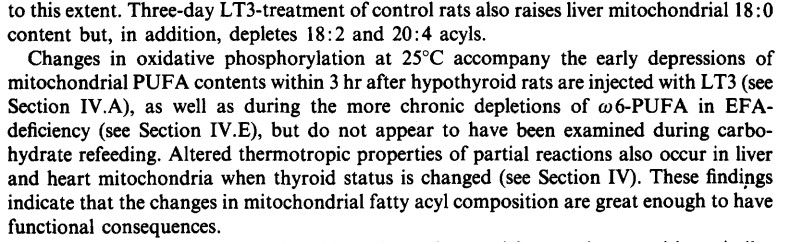
@TexugoDoMel I see your point about lipogenisis aiding in PUFA depletion, however, what do you think about Brad Marshall's theory of lipogenisis stealing oxygen, if you have formed any opinion on it? If he is right it would mean that the process of depletion of PUFA via a fat free diet, would slow down the metabolic rate via this mechanism (until a PUFA depleted is reached)
It seems reasonable to me and I struggle with the idea that lipogenisis is a good thing given how it is upregulated in many diseased states, but the latter point isn't entirely relevant.
I’m not familiar with his theory on lipogenesis; I know he has one involving desaturases "stealing" oxygen as well, keeping the metabolic rate high "unnecessarily."
This happens with EFAD animals; you can lower the metabolic rate somewhat by directly adding saturated and/or monounsaturated fat, which is far less costly than, in a fat-free diet, having to take carbs, convert them into palmitic acid, elongate, and desaturate it once, twice, or three times...
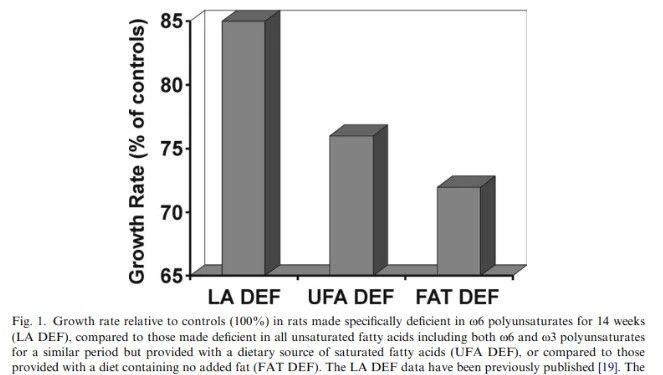
I consider lipogenesis, in response to a high-carb diet, to be a natural dissipation response. Regarding increased lipogenesis in other situations, I have my own theories:
- The need for unsaturation, as in the case of cancer, in which lipogenesis is increased to provide raw material for desaturases. Something similar happens with PUFA depletion; I’ve even written about it here
- It doesn’t make sense to me that someone with excess PUFAs in their tissues would have high lipogenesis and desaturase activity. I believe that in these cases of PUFA excess, the increase in lipogenesis and desaturase activity serves as a saturating mechanism, since MUFAs have only one double bond and compete directly with PUFAs in cell membranes. Replacing two or more double bonds with one would reduce unsaturation
My original question still stands. Is it unreasonable to believe that cutting down to a very low body fat (via dnp or high dose thyroid) thus resulting in low overall pufa shortage, then refeeding with high saturated fat , cause a dilution of PUFA and essentially resulting in a % of PUFA in the tissues )only normally achievable after 2-6 years of slow detoxification) even achievable ??
-
@TexugoDoMel thank you!
So: fat free diet = oversaturation
Oversaturation = higher SCD 1
Higher scd 1 = more oleic acid
Higher oleic acid = more expression of the elongase and desaturase enzymesMore activity of these enzymes means more LA metabolism, depleting it further.
Cells maintain correct levels of desaturation in the process
Is what I am understanding, your argument ?
-
@TexugoDoMel oh yes I completely agree with your first point
Someone placed on a HCLF diet might experience similar effects as someone who is pufa depleted. The pufa is safer stored away, however you have to be meticulous a stay on top of it before the 4-6 year mark where stress no longer triggers a cascade of negative effects from pufa release.
My theory is that if someone used high dose thyroid or DNP to oxidize the stored pufa quickly while keeping the electrons flowing extremely quick (to prevent inflammation) , one could get their overall PUFA stores quite low. To do such a thing , at some point you’d reach an extremely low body fat. After doing so, you can refeed with saturated fats as your only fat source, thus adding more fat to your frame and tissues , whilst keeping PUFA stores the same . I.e, diluting the % of stored pufa
Because to my knowledge , it isn’t the overall amount of pufa that causes problem but it’s the percentage of SA:PUFA that causes issues
In fact, there is a theory held by some that the effects of thyroid hormone on metabolic rate are largely caused by the shift in the saturation-to-unsaturation ratio that it induces.
It would be interesting to use thyroid hormone in a weight-loss diet where omega-6 fatty acids account for no more than 0.5% of total calories.
@TexugoDoMel I see your point about lipogenisis aiding in PUFA depletion, however, what do you think about Brad Marshall's theory of lipogenisis stealing oxygen, if you have formed any opinion on it? If he is right it would mean that the process of depletion of PUFA via a fat free diet, would slow down the metabolic rate via this mechanism (until a PUFA depleted is reached)
It seems reasonable to me and I struggle with the idea that lipogenisis is a good thing given how it is upregulated in many diseased states, but the latter point isn't entirely relevant.
I’m not familiar with his theory on lipogenesis; I know he has one involving desaturases "stealing" oxygen as well, keeping the metabolic rate high "unnecessarily."
This happens with EFAD animals; you can lower the metabolic rate somewhat by directly adding saturated and/or monounsaturated fat, which is far less costly than, in a fat-free diet, having to take carbs, convert them into palmitic acid, elongate, and desaturate it once, twice, or three times...
I consider lipogenesis, in response to a high-carb diet, to be a natural dissipation response. Regarding increased lipogenesis in other situations, I have my own theories:
- The need for unsaturation, as in the case of cancer, in which lipogenesis is increased to provide raw material for desaturases. Something similar happens with PUFA depletion; I’ve even written about it here
- It doesn’t make sense to me that someone with excess PUFAs in their tissues would have high lipogenesis and desaturase activity. I believe that in these cases of PUFA excess, the increase in lipogenesis and desaturase activity serves as a saturating mechanism, since MUFAs have only one double bond and compete directly with PUFAs in cell membranes. Replacing two or more double bonds with one would reduce unsaturation
My original question still stands. Is it unreasonable to believe that cutting down to a very low body fat (via dnp or high dose thyroid) thus resulting in low overall pufa shortage, then refeeding with high saturated fat , cause a dilution of PUFA and essentially resulting in a % of PUFA in the tissues )only normally achievable after 2-6 years of slow detoxification) even achievable ??
It is not unreasonable, and I think is achievable. If you're not close to 10% bodyfat I actually don't believe in slow depletion not even in a lifetime.
@TexugoDoMel thank you!
So: fat free diet = oversaturation
Oversaturation = higher SCD 1
Higher scd 1 = more oleic acid
Higher oleic acid = more expression of the elongase and desaturase enzymesMore activity of these enzymes means more LA metabolism, depleting it further.
Cells maintain correct levels of desaturation in the process
Is what I am understanding, your argument ?
Basically, yeah!
I think "more expression of the elongase and desaturase enzymes" happens already with oversaturation triggering SCD1.
You can even see this effect in the livers of rats in a fat-free refeed
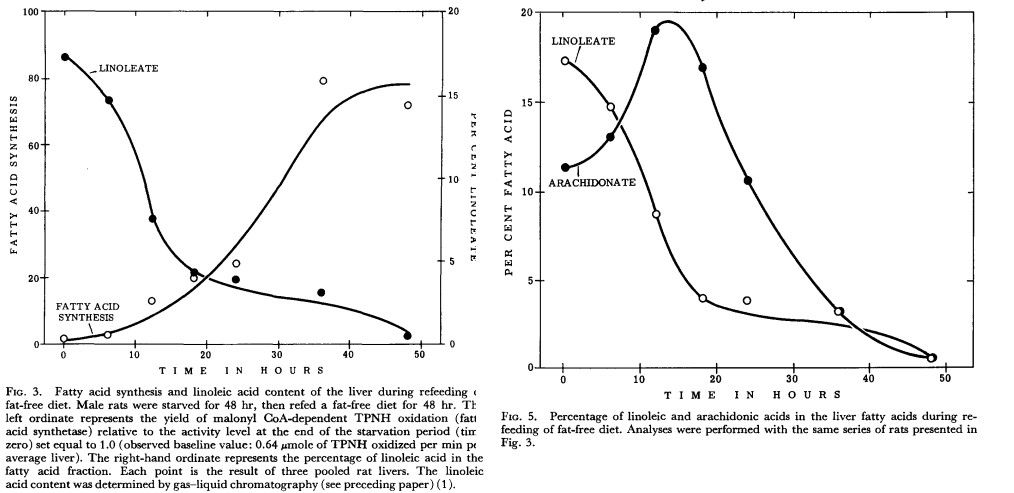
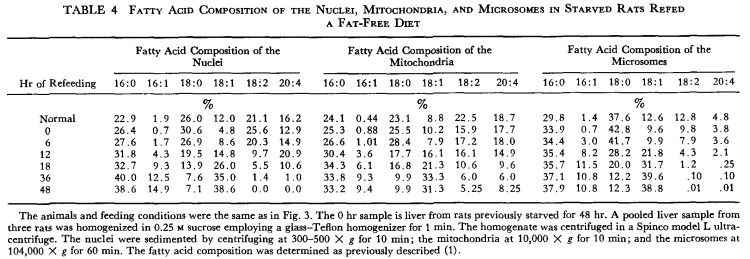
The greater the lipogenic capacity, the greater the effect; therefore, the liver will always show a discrepancy compared to other organs with low lipogenic capacity
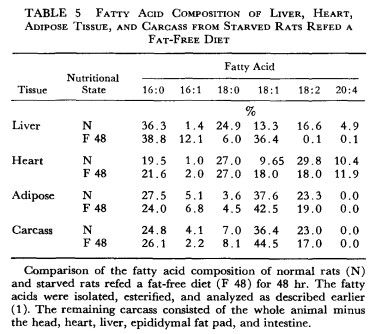
Wrote a little bit about these effects on desaturase here
-
@TexugoDoMel Thank you.
Now I have a slightly different question. Is there a benefit to mead acid itself? Or is it simply a fatty acid / biomarker that strongly suggests a linoleic acid depleted organism?
-
@TexugoDoMel Thank you.
Now I have a slightly different question. Is there a benefit to mead acid itself? Or is it simply a fatty acid / biomarker that strongly suggests a linoleic acid depleted organism?
Since it hasn’t been studied much, it’s hard to know everything about it, but it’s just as (or more) anti-inflammatory than omega-3, with the added benefit of having 3 double bonds compared to EPA’s 5 and DHA’s 6. IMO phospholipase/COX and leukotriene inhibitors are basically partially mimicking the effects that Mead Acid would have in full.

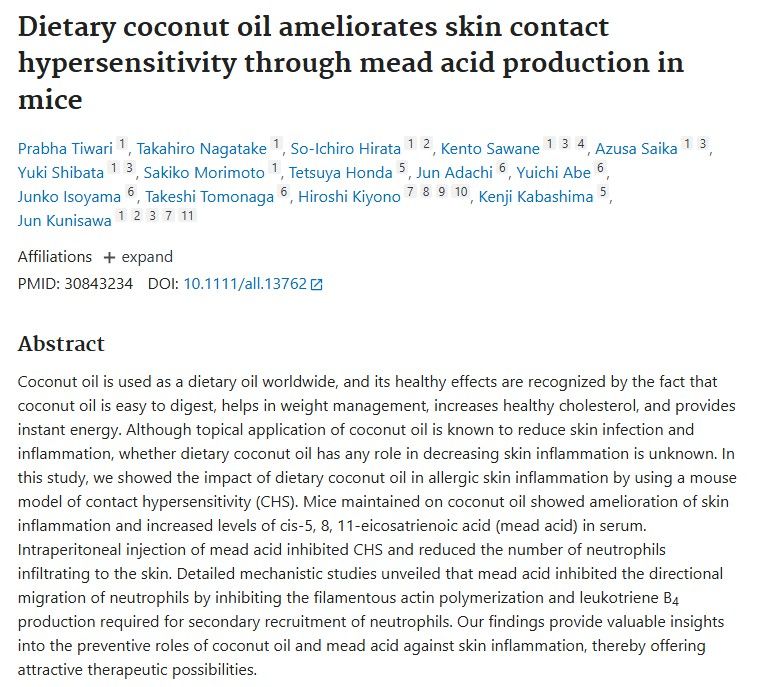
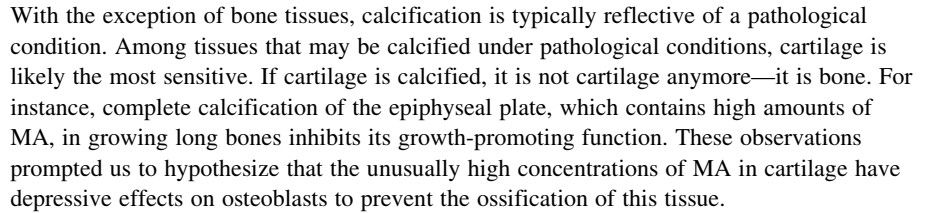
There are other benefits as well: cartilage is rich in Mead Acid, and it appears that its depletion is one of the causes of cartilage degeneration; there’s even a theory that the depletion of Mead Acid is what causes bones to stop growing
-
@TexugoDoMel thanks for your answer. I wonder why you say that about pufa depletion not being possible if not a low BF. I want to gather as much info as possible because I’m essentially a diabetic from years of pufa consumption and stress (I have bloodwork)
I’m going to attempt the DNP while taking things that keep ETC flowing / other things , diet down to <10% bf then refeed with saturated fat. If my theory is correct , my metabolism should greatly improve and respond better to thyroid
-
@TexugoDoMel Very interesting stuff thanks. Other omega 9s are created too right? I imagine those are even more understudied.
-
@TexugoDoMel thanks for your answer. I wonder why you say that about pufa depletion not being possible if not a low BF. I want to gather as much info as possible because I’m essentially a diabetic from years of pufa consumption and stress (I have bloodwork)
I’m going to attempt the DNP while taking things that keep ETC flowing / other things , diet down to <10% bf then refeed with saturated fat. If my theory is correct , my metabolism should greatly improve and respond better to thyroid
Adipose tissue seems to be able to store PUFAs for long periods—far longer than 2–6 years, even in a fat-free diet(based on animal studies). I still think it’s possible to deplete it in one year (depending on the case) by losing weight—down to about 10% body fat—on a diet low in PUFAs; IMO thyroid would be better than DNP for this purpose.
@TexugoDoMel Very interesting stuff thanks. Other omega 9s are created too right? I imagine those are even more understudied.
Omega-9 fatty acids are simply the ones most commonly known, but several endogenous PUFAs are produced. These include omega-5s, omega-7s, and even some that can’t be classified in this way
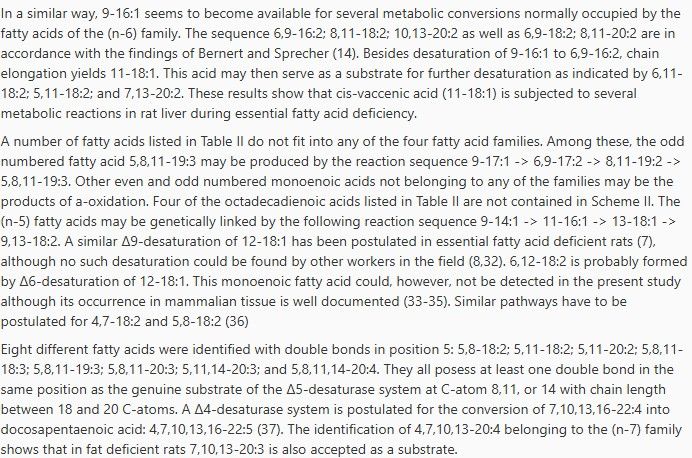
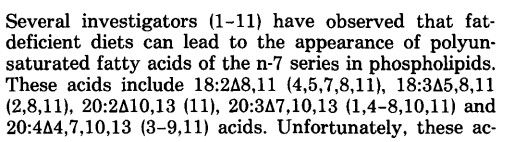
Some can even be used to produce prostaglandins isomers

-
@TexugoDoMel unfortunately I can’t use thyroid here as an uncoupler, it would destroy my cholesterol.
If I understand correctly, the 2-6 year turnover applies to those who go the “safe” route: supporting the metabolism and keeping stress low while lowering pufas. The one year or less route goes for those who choose to literally burn the pufas off, which can be done safely with uncouplers. I understand pufas are preferentially released during stress so it should be easy to accomplish, as long as uncouplers are used. I wonder if it’s possible to get to 2% within a year .
Any holes in my argument?
2.) Do you think omega quant tests are accurate for testing for fat unsaturation?
3.) I don’t mean to bug ya
 but one last thing. Any general recommendations for speeding up the process? Would you recommend keeping a low fat approach? Or eating something like cocoa butter throughout ? Or low protein? I’ve seen some other posts you’ve made and commented on and you seem to be just as curious of this as I am. I want to guinea pig this
4.) anything to protect me other than Vitamin E?
-
@TexugoDoMel unfortunately I can’t use thyroid here as an uncoupler, it would destroy my cholesterol.
If I understand correctly, the 2-6 year turnover applies to those who go the “safe” route: supporting the metabolism and keeping stress low while lowering pufas. The one year or less route goes for those who choose to literally burn the pufas off, which can be done safely with uncouplers. I understand pufas are preferentially released during stress so it should be easy to accomplish, as long as uncouplers are used. I wonder if it’s possible to get to 2% within a year .
Any holes in my argument?
2.) Do you think omega quant tests are accurate for testing for fat unsaturation?
3.) I don’t mean to bug ya
but one last thing. Any general recommendations for speeding up the process? Would you recommend keeping a low fat approach? Or eating something like cocoa butter throughout ? Or low protein? I’ve seen some other posts you’ve made and commented on and you seem to be just as curious of this as I am. I want to guinea pig this4.) anything to protect me other than Vitamin E?
I should have been more specific; I meant using thyroid hormone as a supplement to keep the metabolic rate high, but not to an uncomfortable degree.
No, actually, the "safe route" is based on a study regarding linoleic acid saturation, not depletion. If you cut back on PUFAs, you will deplete them over time; IMO however, without reducing adipose tissue, you might reach age 80 with enough PUFA stored in your fat tissue to supply your body for another 20 years—that’s what I meant.
Why the focus on uncouplers as protective agents?
2.) OmegaQuant measures fatty acid composition in the blood, so I think it’s great as a "guide." However, you can "fake" an OmegaQuant result showing omega-6 depletion simply by eating a very low-fat diet for a week or two before taking the test. If you’ve stuck to the same diet for years, though, the chances of it reflecting reality are higher.
3.) I think a low-fat approach with focus on restrict omega-6 (since almost all the effects of PUFA depletion stem from depleting omega-6) combined with a slight deficit maintained until reaching low body fat levels is the fastest way to accelerate the process.
I have some posts on speeding up the process; I based them on animal studies showing accelerated results. I was thinking of something like:
- Low fat, max 0.5% of calories from omega-6.
- Stearic acid supplementation, since a significant portion converts to oleic acid, which accelerates tissue PUFA depletion through competition.
- Very low-protein days followed by high-protein refeeds—using an alternating schedule (one day restricted, the next not) or a "protein refeed" after every two days of restriction.
- I like keeping vitamin E and iodine intake high for protection, though iodine is a controversial topic in the Peaty community and tricky to get right as it requires balancing selenium and other vitamins.
-
Very low-protein days followed by high-protein refeeds—using an alternating schedule (one day restricted, the next not) or a "protein refeed" after every two days of restriction.
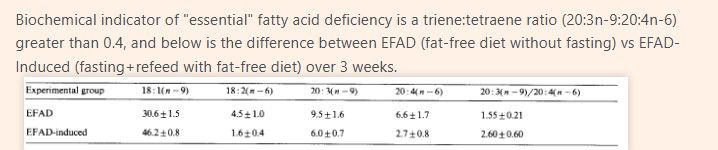
As you probably know, there is a study that shows the triene/tetraene ratio rose was inversely correlated to protein intake
-
Stearic acid supplementation, since a significant portion converts to oleic acid, which accelerates tissue PUFA depletion through competition.
Could you expand on this?
-
Very low-protein days followed by high-protein refeeds—using an alternating schedule (one day restricted, the next not) or a "protein refeed" after every two days of restriction.
As you probably know, there is a study that shows the triene/tetraene ratio rose was inversely correlated to protein intake
Yeah, restricting protein generally reduces desaturase activity. The result is a drastic decrease in unsaturation due to the limitation of PUFAs with multiple double bonds (caused by the downregulation of delta-6 and delta-5 desaturases); consequently, if the restriction continues, delta-9 desaturase activity eventually increases to prevent unsaturation levels from dropping excessively.
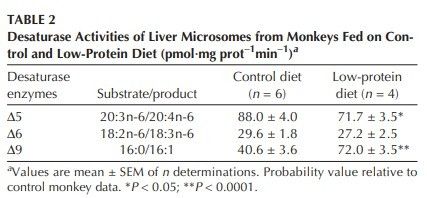
With delta-9 desaturase making more oleic acid available, a greater amount of oleic acid proceeds to the delta-6 desaturase, "winning" the competition against linoleic based on sheer quantity.
My theory regarding protein restriction and refeeding is that the refeed phase following restriction causes a massive spike in desaturase activity; if PUFA intake is limited, this creates an excessive flux of oleic acid being converted into Mead acid
Stearic acid supplementation, since a significant portion converts to oleic acid, which accelerates tissue PUFA depletion through competition.
Could you expand on this?
Unsaturated fatty acids (UFAs) compete with one another for enzymes and space (such as within cell membranes); therefore, increasing the level of one UFA inevitably reduces that of another once a certain threshold is crossed.
There are basically two ways to accelerate n-3/n-6 depletion, and both involve drastically increasing oleic acid levels:
- Accelerating delta-9 desaturase activity to boost the conversion of stearic acid to oleic acid; this is typically achieved through cycles of fasting and fat-free refeeding.
- Increasing oleic acid intake while on a PUFA-restricted diet.

Regardless of the diet, the body converts almost all stearic acid into oleic acid. Since it is generally difficult to find an oleic-rich food that doesn't also contain excessive amounts of linoleic acid, the best approach I’ve found is direct stearic acid supplementation; this allows you to increase oleic acid levels in proportion to the amount of stearic supplemented while adding zero PUFAs.
- Accelerating delta-9 desaturase activity to boost the conversion of stearic acid to oleic acid; this is typically achieved through cycles of fasting and fat-free refeeding.
-
@TexugoDoMel
Macadamia oil is the only oil I can think of that's high in oleic acid and low in PUFA. Downside of course is the high price.I've never been a big party attender, but I never went to a party where I didn't probably offend most of the people there by talking about what I was interested in. (Ray Peat)
-
@Luke Helianthus Annuus Hybrid Oil. Cheap and available. 3% PUFA, 88% MUFA, 9% SFA.
-
Helianthus Annuus Hybrid Oil
Is that the same as High Oleic sunflower oil?
-
-
@TexugoDoMel these are good theories. Especially the stearate and oleic acid one. PUFA depletion black pill kinda

I’ll personally lean towards more PUFA being burned from a higher metabolic rate. Would I be wrong?
Unrelated, but could you try to explain to me the glycine to methionine ratio? Like why does it matter in terms of protecting against the harmful metabolic effects of methionine.
-
well, the inspiration came from this quote on a GE podcast. Georgi: What about chemical interventions? I mean, there is a tremendous track record of things like dinitrophenol being able to cure effectively even extremely morbidly obese people, of course, under medical observation because it can easily kill you if you overheat. Wouldn't something like that be considerable?
Ray: Overdosing on thyroid does the same thing. At the right level, it can increase your safe oxidation of fats while helping to suppress the toxic or random oxidation. Both DNP and thyroid can carefully controlled can reduce the toxicity of getting rid of the fat.
But again thyroid overdose per se would render my cholesterol to undetectable levels. DNP even in high doses doesn’t seem to have that effect on me.
-
This post is deleted!




Hello! It looks like you're interested in this conversation, but you don't have an account yet.
Getting fed up of having to scroll through the same posts each visit? When you register for an account, you'll always come back to exactly where you were before, and choose to be notified of new replies (either via email, or push notification). You'll also be able to save bookmarks and upvote posts to show your appreciation to other community members.
With your input, this post could be even better 💗
Register Login