Cyproheptadine anti-stress alternatives?
-
@LucH The antihistamine effect is a nice add on but not necessarily what I'm looking for. What I typically benefit from most I suppose is the serotonin antagonism, (and consequent lowered ACTH activity) which pushes me towards "you must eat carbs or you will be tired" which IMO is a more desirable state for healing than leaving stress hormones open as a crutch.
-
@LucH I guess to answer your question better, I sometimes tend to undereat or fall back on cortisol/adrenaline. When I was on cyproheptadine (very low doses) for a couple months I ate like a monster but I did have resolution of some long standing issues which I think were being held up in "healing" by stress hormones.
Mirtazapine does seem like a natural fit here but I worry about it potentially being indirectly estrogenic by causing leptin resistance... (leptin stimulates aromatase) but otherwise it is sort of like cypro without the anticholinergic effect.
-
I like famotidine before bed. I don’t notice low stomach acid problems at night.
-
I sometimes tend to undereat or fall back on cortisol/adrenaline. When I was on cyproheptadine (very low doses) for a couple months I ate like a monster but I did have resolution of some long standing issues which I think were being held up in "healing" by stress hormones.
One clue, part of the problem.
Chronic stress and metabolic transition: In the face of sustained stress, the prolonged secretion of cortisol and catecholamines (adrenaline, noradrenaline) impairs insulin sensitivity and disrupts glycemic homeostasis. Glycogen stores—particularly in the liver and muscles—are no longer sufficient to meet the increased energy demand. A sustained elevation in pro-inflammatory cytokines (TNF-α, IL-1β, IL-6) amplifies this metabolic alarm signal (a prolonged "fight-or-flight" response).Another one:
Stress and inflammation = lack of B6 PLP. Have you recently tested homocysteine (blood test). + HbA1c to see how you manage glycemia.Another one:
If you eat pasta, bread, rice and potato at 2 meals with wine, and drink fuit juice or soft drink, eat a snack at midday, you probably lack B1. You need between 1.2 - 1.6 mg + 0.5 mg for each 1 000 K/cal. -
Another clue for excess cortisol
To lower stress hormones:
Salt! And Gelatin. (Search the forum for salt and also Co2)
Ray Peat: Salt, energy, metabolic rate, and longevity.
https://raypeat.com/articles/articles/salt.shtmlLiver function is really important. If your liver isn't working very well it won't be able to store enough sugar to get you through the night. If you run out of stored sugar, adrenaline spikes followed by cortisol.
From a preceeding conversation with Mostlylurking:
Thiamine (B1) is very helpful in multiple ways. Also magnesium. Magnesium bisglycinate.
A thiamine deficiency blocks the ability of the body to burn sugar (glucose) for energy (ATP). When the cells are starved for glucose, whether from low blood sugar or something blocking the burning of glucose in the mitochondria (thiamine deficiency or hypothyroidism) stress hormones rise.
NB: If you get an insulin spike, it won't match / it won't do the job: Stress reaction.
NB: I Always try to get 50% from glucose and 50 % from fructose.
Target breakfast like this:
2 peaces of fruit; one of which is low in carbs. Eat first 50 g (2 oz.) ham or cheese or 2 eggs from pastured chickens (w3/w6 balance). Take 6-8 macadamia nuts if you need more fat rich in MUFA, but very, very low in PUFA.
I'd rather drink green tea to avoid side effects (lower action than coffee). 2 or 3 cups a day, every 4-5 hours. -
@jimmynelson On the progesterone and pregnenolone gut problem, Ray Peat got asked about people getting bloating and weight gain from pregnenolone. His answer in that email was about who's making it: "For more than 50 years, in animals and people pregnenolone didn’t have those effects. When it became "a product," dozens of little companies, with no experience in steroid production, began making it."
That doesn't cover progesterone, but did both of them come from the same source? If two unrelated makers gave you the same gut shutdown, purity probably isn't the explanation.
-
@thebiooracle No I've tried numerous sources of both and its always the same. It's not an impurity it is some property of progesterone that is causing the issue. I think it is causing estrogen to be released by my tissues, but then the estrogen is deconjugated in my gut and reabsorbed, causing the gut wall to swell and retain water. It is also mildly anticholinergic which I seem to do very poorly with, same issue with cypro.
-
Decoding the anti-stress approach as I perceive it:
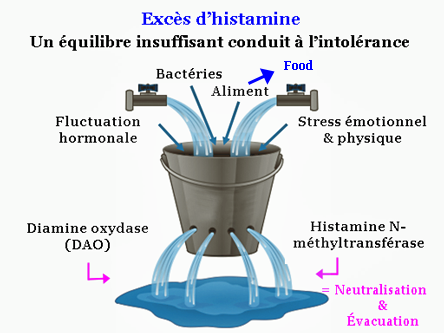
Your attempts to moderate or curb an excessive reaction that is already underway—acting, in effect, after the fact (rather than proactively). Ideally, one should anticipate the issue and intervene before the excessive reaction is triggered. To do this, it is necessary to understand the root causes of the problems—which, when they persist, rarely stem from a single source. If one persists in merely trying to "calm things down" instead of anticipating the issue, the underlying "culprit" will often attempt to leap over the obstacle—or find a roundabout path to manifest itself.
Figure: A leaky bucket
-
@LucH Man I know this. I'm really just asking if there are other good serotonin antagonists. I don't need bioenergetics 101.
-
OK, I didn't know precisely what you knew, excpt I could have guessed

I understand better now.
I didn’t handle 5-HT receptors very well, outside from the serotonin recapture and side effects, when targeting 5-HT1.
After a search, to try to help you, here is what I get.-
5-HT3: Target: The "Spasmodics" (Digestive system & Rejection reflex)
So you try to avoid to stimulate 5-HT3 (Nausea, reflux, intestinal spasms, accelerated transit), hoping to dampen its action (to get calm digestion, intestinal anti-inflammatory action). Neutral impact on alertness. -
5-HT2: You are looking to block them (specifically 5-HT2A and 5-HT2C). They are at the heart of the bioenergetic stress cascade.
Main 5-HT receptor you need to avoid to stimulate when serotonin level is high, with inflammation, anxiety and / or insomnia.
This is where a selective blocker is needed.
=> Your main target. Neutral if selective (Drowsiness if combined with an antihistamine). -
5-HT1: Central brake.
It is the thermostat (especially 5-HT1A) that prevents the system from overheating in terms of serotonin.
Comment (LucH):
As I can see, there are side-effects from mirtazapine
Excerpt:
If the goal is a stronger prescription medication that mirrors cyproheptadine's specific serotonin-blocking mechanism, mirtazapine is a tetracyclic antidepressant that acts as a potent antagonist at 5-HT2 and 5-HT3 receptors. It is highly sedating and increases appetite, so it shares similar side effects but is used clinically for mood and sleep regulation. [1]Here are some pieces of advice, for general purpose and other readers
There is an interaction through the HPA and HPT axis from LPS toxins.
Impaired alternation between the sympathetic and parasympathetic modes.
LPS endotoxins activate the HPA and HPT axes, disrupting the balance between the sympathetic and parasympathetic systems. This lack of autonomic alternation locks the body into an "alert" state, leading first to cortisol dysregulation and subsequently to a chronic inflammatory cascade.
NB: Not only from LPS toxins of course. Impact from the vagal nerve on the HPA and HPT axis.Over-the-Counter & Herbal Alternatives
If you are looking for non-prescription options that modulate cortisol or provide a similar calming, anti-stress effect, consider these:
• Magnolia Bark (Honokiol & Magnolol): This is one of the closest natural alternatives for cortisol management. It acts as a mild GABA-A modulator to reduce anxiety and actively helps lower elevated cortisol levels without the severe drowsiness of cyproheptadine. [1]• L-Theanine: An amino acid found in green tea that promotes alpha brain waves, elevating calming neurotransmitters like GABA and dopamine. It helps blunt the physical stress response and lowers stress-induced heart rate spikes without inducing lethargy. [1, 2]
- https://bioenergetic.forum/topic/9559/cyproheptadine-anti-stress-alternatives
- https://restorativemedicine.org/digest/natural-neurotransmitter-support-practical-guide-botanical-psychiatry/
• Ashwagandha: A widely studied adaptogen that regulates the hypothalamic-pituitary-adrenal (HPA) axis. It is highly effective at reducing baseline cortisol and mitigating chronic stress. [3]
3. https://www.mindlabpro.com/blogs/nootropics/serotonin-herbs• Magnesium Bisglycinate: Magnesium is heavily depleted by stress. The bisglycinate form crosses the blood-brain barrier effectively, acting as an NMDA receptor antagonist to calm over-excitation in the central nervous system. [1] I would associate B6 with Mg bisglycinate, and maybe taurine if present.
Hope it could help.
For the average reader: Here is a simplified overview of the serotonergic system to help you understand how these receptors influence immunity, digestive transit, alertness, and mood.
Serotonin (5-HT) acts like a key, while the receptors (ranging from 5-HT1 to 5-HT7) function as the locks. Depending on which lock is activated, the biological effect can be radically different—or even completely opposite.
In other words: the dosage and duration of treatment should be adjusted based on how you feel. It may be necessary to alternate your approach—again, based on how you feel—to allow your system to "recharge its batteries" (...) -



Hello! It looks like you're interested in this conversation, but you don't have an account yet.
Getting fed up of having to scroll through the same posts each visit? When you register for an account, you'll always come back to exactly where you were before, and choose to be notified of new replies (either via email, or push notification). You'll also be able to save bookmarks and upvote posts to show your appreciation to other community members.
With your input, this post could be even better 💗
Register Login