Dandruff or scalp irritation? Try BLOO.

    Bioenergetic Forum
    • Categories
    • Recent
    • Tags
    • Popular
    • Users
    • Groups
    • Register
    • Login

    the last piece of the peaty puzzle ? simplified with ai

    Scheduled Pinned Locked Moved Bioenergetics Discussion
    11 Posts 6 Posters 53 Views 8 Watching
    Loading More Posts
    • Oldest to Newest
    • Newest to Oldest
    • Most Votes
    Reply
    • Reply as topic
    Log in to reply
    This topic has been deleted. Only users with topic management privileges can see it.
    • lobotomizeL Offline
      lobotomize
      last edited by lobotomize

      core claims made by https://x.com/Zedzies across tweets.
      simplified version

      Why many people following pro-metabolic diets gain weight and can't lose it:

      1. Constant milk intake means mTOR is never off. Autophagy is never on. Damaged mitochondria accumulate, oxidative capacity degrades, and you slowly shift toward the glycolytic metabolism Peat spent his life warning against — not from PUFA or hypothyroidism, but from never letting the cleanup systems run.

      2. VDR knockout mice are lean and obesity-resistant across all genetic backgrounds. VDR overexpressing mice gain fat without increased food intake — via suppression of uncoupling proteins in adipose tissue (Narvaez 2009, Wong 2011). Vitamin D supplementation agonizes this same receptor in your fat cells every single day.

      3. At supplemental doses, 1,25D shifts immune polarity from TH1 (cytolytic, infection-clearing, night-dominant) toward TH2 (tolerogenic, immunosuppressive, day-dominant). It increases Treg IL-10 expression and induces T cell anergy — a state where T cells become functionally unresponsive. The "vitamin D boosts immunity" narrative is backwards. It's a net immunosuppressant at the doses most people take.

      4. During chronic infection, activated macrophages upregulate extrarenal CYP27B1 — an enzyme that converts storage 25D into active 1,25D locally, outside of normal renal feedback regulation. Low measured 25D in bloodwork often reflects consumption by this pathway, not deficiency. Supplementing more 25D gives these macrophages more substrate, producing more 1,25D, driving deeper VDR-mediated immunosuppression. You're treating the lab number while worsening the underlying biology.

      5. VDR activation expresses IDO1 in dendritic cells. IDO1 diverts tryptophan away from the TPH/melatonin pathway and into the kynurenine/NAD pathway. Chronic vitamin D supplementation holds IDO1 elevated around the clock. Melatonin synthesis drops. The downstream consequences cascade: RORα (melatonin's nuclear receptor target) can't drive the dark phase program — TH1 immune surveillance, glutathione synthesis via NRF2, and proteasomal degradation of intranuclear aggregates that autophagy cannot reach all remain suppressed. You are biochemically locked in the light phase.

      6. These systems are circadian-gated. NRF2 oscillates under BMAL1/CLOCK transcriptional control, driving rhythmic glutathione and antioxidant gene expression (Pekovic-Vaughan 2014). Autophagic and proteasomal flux follow 24-hour rhythms (Ryzhikov 2019). Eating around the clock — especially protein — overrides the gating. The maintenance systems are scheduled but never execute because production signals never clear.

      7. The full pattern: constant milk locks mTOR on and autophagy off. Vitamin D supplementation locks VDR/IDO on and melatonin down. Nighttime eating desynchronizes peripheral clocks. The circadian amplitude flattens. Your body never transitions from anabolic to maintenance phase. This isn't low metabolism. It's arrhythmic metabolism.

      complicated version


      1. AUTOPHAGY AND PROTEASOMES HAVE CIRCADIAN RHYTHMS

      Verdict: Well-supported, but the day/night split is more nuanced than claimed

      A major 2019 study in Cell Reports (Ryzhikov et al.) used proteomics to map daily oscillations in autophagic flux in mouse liver and related these rhythms to proteasome activity. They identified a globally harmonized rhythm for basal macroautophagy, chaperone-mediated autophagy, and proteasomal activity. This is solid evidence that both systems are circadian.

      However, here's the critical nuance Zedzies gets partially wrong: the study found that the dynamics of basal autophagic and proteasomal flux are roughly aligned such that liver protein catabolism is concentrated during the daytime in mice. In mice (nocturnal), "daytime" is the rest/fasting period. For humans, this would translate to the nighttime fasting period — not a clean day=autophagy / night=proteasome split. The Ryzhikov data show both systems peak together during the fasting period, not in antiphase as Zedzies claims. The autophagy-day/proteasome-night dichotomy is oversimplified.

      That said, the study did find two antiphase clusters of autophagic substrates distinguished by subcellular location, so there is some temporal compartmentalization — just not the clean VDR-day/RORa-night split Zedzies presents.


      2. HIGH-DOSE VITAMIN D DRIVES TH2 DOMINANCE & IMMUNOSUPPRESSION

      Verdict: Well-supported by substantial literature

      This is one of Zedzies' strongest claims. Experimental studies show that vitamin D regulates CD4+ T-cell responses by promoting Th2 cells and suppressing Th1 cells, thereby limiting Th1-mediated inflammatory responses.

      A clinical trial giving MS patients 20,000 IU/d vitamin D3 for 12 weeks found a shift in CD4+ T cell cytokine profiles, with increased IL-10+ CD4+ T cells and a decreased Th1/Th2 ratio. This directly confirms the Th2 bias claim.

      One study explicitly concluded that excess vitamin D supplementation could influence the development of a sustained Th2 response, leading to increasing allergy prevalence.

      Higher vitamin D levels are associated with higher Treg/total T cell ratios and a more immunosuppressive phenotype. Supplementation with cholecalciferol at doses of 12,000 to 30,000 IU per week can increase regulatory T cell ratios and their suppressive capacity.

      The claim that vitamin D drives tolerogenic, immunosuppressive effects at high doses is robustly supported. Zedzies is correct that the mainstream narrative of "more vitamin D = better immunity" is an oversimplification.


      3. VDR KNOCKOUT MICE ARE LEAN; VDR OVEREXPRESSION CAUSES OBESITY

      Verdict: Strongly supported

      Regardless of genetic background, both subcutaneous and visceral white adipose tissue depots were smaller in VDRKO mice than wild-type mice. The lean phenotype was associated with reduced serum leptin. VDRKO mice were resistant to high-fat diet-induced weight gain.

      Using a transgenic approach targeting human VDR expression in adipocytes, the aP2-hVDR transgenic mice developed obesity compared with wild-type counterparts without changes in food intake, mainly due to markedly reduced energy expenditure.

      VDR-knockout mice show a lean phenotype and high resistance to obesity induced by a high-fat diet, while conversely, overexpression of human VDR induces fat accumulation in mice.

      This is exactly what Zedzies claims and it's well-documented across multiple labs and genetic backgrounds. The mechanism involves UCP1 upregulation in white adipose tissue of VDR knockouts.


      4. EXTRARENAL CYP27B1 IN ACTIVATED MACROPHAGES → LOW 25D WITH HIGH 1,25D

      Verdict: Strongly supported — this is established immunology

      The pulmonary alveolar macrophage from patients with sarcoidosis was perhaps the clearest demonstration that the macrophage CYP27B1 was the same as the renal enzyme. Extrarenal CYP27B1 expression in macrophages is driven by inflammatory cytokines rather than the PTH/calcium feedback that governs renal production.

      Extra-renal production of 1,25(OH)2D in tissues infected with intracellular bacteria can result in excess production which may contribute to depletion and low levels of 25(OH)D. Low 25(OH)D may be a consequence of the inflammatory process rather than its cause.

      IFN-γ stimulates the production of 1,25(OH)2D from 25(OH)D by the disease-activated macrophage.

      Zedzies' point that low measured 25D can reflect consumption by activated macrophages rather than deficiency is well-established in the sarcoidosis and granulomatous disease literature. His broader application of this concept — that low 25D in chronic infection reflects ongoing immune activation — is a reasonable extension supported by the literature, though it remains more of an expert interpretation than settled consensus for all conditions he mentions.


      5. VDR INDUCES IDO1 AND TOLEROGENIC DENDRITIC CELLS

      Verdict: Supported

      Research shows that Vitamin D3 induces IDO+ tolerogenic DCs and enhances Treg populations.

      DCs differentiated in the presence of 1,25-dihydroxyvitamin D3 are poor stimulators of T cell responses and induce T cell hyporesponsiveness and differentiation of T cells with regulatory potential.

      When substantial amounts of 1,25(OH)2D escape the macrophage, the proliferation of VDR-expressing activated Th1 and Th17 helper T-cell populations will be quelled.

      The VDR → tolerogenic DC → IDO pathway is documented. Zedzies' claim that excessive VDR activation drives immunosuppression via this pathway is mechanistically sound.


      6. NRF2/GLUTATHIONE CIRCADIAN RHYTHMS

      Verdict: Supported, but phasing is more complex than claimed

      Peak NRF2 binding to antioxidant response elements was observed at ZT0 and ZT6 (light phase in mice) with lower occupancy at ZT12 and ZT18 (dark phase). This is in agreement with maximal nuclear NRF2 expression.

      Since mice are nocturnal, light phase = rest phase. For diurnal humans, this would roughly translate to NRF2 and glutathione synthesis peaking during the human rest phase (night) — which actually aligns with Zedzies' claim. Hepatic NRF2, Keap1, Nqo1 and Gclc mRNA levels were higher in the light-phase than the dark-phase in mice, and hepatic GSH presented marked circadian fluctuations.

      The circadian regulation of the NRF2/glutathione axis is real and well-documented. However, Zedzies' claim that NRF2 specifically boosts proteasomes at night while inhibiting autophagy is an oversimplified interpretive leap from the data.


      7. THE "DANNICK CYCLE" AS A UNIFIED FRAMEWORK (VDR ↔ RORα)

      Verdict: Creative synthesis of real biology, but significantly oversimplified

      The underlying components are real: VDR and RORα are both nuclear receptors involved in circadian biology. Melatonin does interact with RORα. 1,25D does agonize the VDR. There are circadian oscillations in immune function, autophagy, and redox status.

      What's not established:

      • The specific claim that VDR and RORα are the "apex" circadian receptors that govern all other circadian phenomena. The core clock machinery (BMAL1/CLOCK, PER/CRY, REV-ERBs) is what drives circadian rhythms. VDR and RORα are downstream effectors, not the master controllers.
      • The 18-hour amino acid restriction window being specifically optimized for VDR-coincident autophagy is speculative. While amino acid restriction does promote autophagy via mTOR inhibition, the specific temporal optimization he describes has no RCT support.
      • "Cancer is light phase dominance while Alzheimer's is night phase dominance" — this is a provocative heuristic, not a proven framework. Cancer biology and neurodegeneration are far more complex than a single circadian axis can explain.

      8. MORNING PROTEIN = "NEW CIGARETTES"

      Verdict: Interesting hypothesis, weakly supported

      The logic chain is: morning amino acids → mTOR activation → autophagy inhibition during the putative autophagy window. While mTOR activation by amino acids (especially leucine) is well-established, and time-restricted feeding research is promising, the claim that morning protein is as harmful as cigarettes is hyperbolic and not supported by any outcome data. Most time-restricted feeding studies don't specifically compare morning vs. evening protein windows with the resolution needed to validate this claim.


      OVERALL ASSESSMENT

      Claim Evidence Level
      Circadian rhythms in autophagy/proteasomes ★★★★☆ Strong
      High-dose vitamin D → Th2/immunosuppression ★★★★★ Very Strong
      VDR KO mice lean / VDR overexpression → fat ★★★★★ Very Strong
      Extrarenal CYP27B1 → low 25D ≠ deficiency ★★★★☆ Strong
      VDR → IDO1 → tolerogenic immunity ★★★★☆ Strong
      NRF2/glutathione circadian regulation ★★★★☆ Strong
      Autophagy-day / Proteasome-night split ★★☆☆☆ Partially contradicted
      VDR-RORα as "apex" circadian governors ★★☆☆☆ Speculative framework
      18-hour amino acid restriction timing ★★☆☆☆ Plausible but untested
      Morning protein = "new cigarettes" ★☆☆☆☆ Hyperbolic
      "Dannick Cycle" as unified theory ★★★☆☆ Creative synthesis, oversimplified
      U engineerE ThinPickingT 3 Replies Last reply Reply Quote 0
      • U Offline
        user1 @lobotomize
        last edited by user1

        @lobotomize refined sugar and honey might contribute too, both are in most cases depleting and limiting repletion if depleted, if you are depleted you more likely to store what you eat as exess fat rather than other tissues or use it optimally for energy

        lobotomizeL 1 Reply Last reply Reply Quote 0
        • lobotomizeL Offline
          lobotomize @user1
          last edited by

          @user1 deplete what?

          U 1 Reply Last reply Reply Quote 0
          • engineerE Offline
            engineer @lobotomize
            last edited by

            @lobotomize what AI did you use? I don't trust anything other than the longest thinking options like grok 4.20 expert or Gemini 3.1 pro

            lobotomizeL 1 Reply Last reply Reply Quote 0
            • TexugoDoMelT Offline
              TexugoDoMel
              last edited by

              I actually found it quite interesting and thought it would be important to expand on the theory to include more recent developments; I remember him mentioning that this theory was proposed 10 years ago or so; I don't know how up-to-date it is.

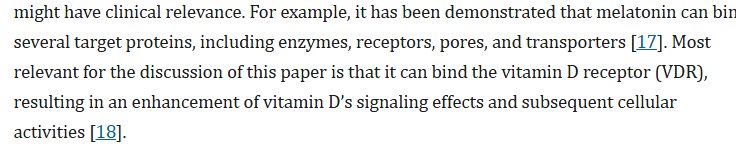
              For example, would the fact that melatonin is a VDR agonist have an impact?

              69962871-07c9-4027-9ace-42730893e9cc-image.png

              05de5d68-04e8-4588-bec3-9874d82c3717-image.png

              1 Reply Last reply Reply Quote 1
              • ThinPickingT Offline
                ThinPicking @lobotomize
                last edited by

                @lobotomize said in the last piece of the peaty puzzle ? simplified with ai:

                the last piece of the peaty puzzle?

                As you're asking, I don't think it's most of that.

                CIRCADIAN RHYTHMS

                I think this and an infradian one are probably involved though.

                It's a good day on here.

                1 Reply Last reply Reply Quote 0
                • lobotomizeL Offline
                  lobotomize @engineer
                  last edited by

                  @engineer claude 4.6 1mil context gemini 3.1 got nerfed instantly post benchmarking and grok 4.20 is more hype tthan good

                  1 Reply Last reply Reply Quote 0
                  • U Offline
                    user1 @lobotomize
                    last edited by user1

                    @lobotomize said in the last piece of the peaty puzzle ? simplified with ai:

                    @user1 deplete what?

                    Everything or a lot of things

                    lobotomizeL 1 Reply Last reply Reply Quote 0
                    • lobotomizeL Offline
                      lobotomize @user1
                      last edited by

                      @user1 thanks for the quick fact

                      1 Reply Last reply Reply Quote 0
                      • lobotomizeL Offline
                        lobotomize
                        last edited by

                        https://bioenergetic.forum/topic/2433/vitamin-d-receptor-stops-mitochondria-respiration-why-vit-d-can-cause-problems-1-25-vitamin-d more evidencde against vit d supplementation

                        alfredoolivasA 1 Reply Last reply Reply Quote 0
                        • alfredoolivasA Offline
                          alfredoolivas @lobotomize
                          last edited by

                          @lobotomize There are countless studies showing the benefits of vitamin D3, IMO, you are focussing way to much on genetically modified knock-out animal models and in vitro studies, both of which do not replicate normal, in vivo circumstances. BTW, vitamin d3 can DECREASE conversion to 1-25 hydroxyvitamin D and realistically, the ratio between the two matters probably as well.

                          https://dannyroddy.substack.com/p/vitamin-d-bioenergetic-wunderkind

                          1 Reply Last reply Reply Quote 0
                          • 1 / 1
                          • First post
                            Last post