Is anyone still doing protein restriction?
-
Oh and by moderate I suggest the 70ish range
 BCAAs below 8!
 -
Protein restriction is also proposed to increase life span. A very interesting watch: https://www.youtube.com/watch?v=j-Ur2QAILjc
I think there's something to be said about the fact that most people gravitate towards lower protein diets naturally.
Also, as a recreational lifter, the one time that I tried a low protein diet (40-60g for a few months), I didn't notice a decrease in strength or recovery, and I was still able to progressively overload.
Obviously, this is anecdotal, and there are thousands of posts claiming that increasing protein doubled their gains or whatnot. Perhaps there's an individual component on how efficient you are at using the AAs for MPS or something.
-
@autistas123 I probably hit somewhere just above 10% BF, say 12ish. I could feel a vein in my lower abdomen, but it didn’t jump off my body, (if that makes sense). Usually at 12ish and below I have significant vascularity in my lower abdomen.
And yes, I restricted overt proteins. So essentially fruits and candies, juices, and then I ate a very large bowl of rice for dinner. Protein restriction, but not complete protein annihilation.
-
@evan.hinkle Seems like you were probably sub ~40g of protein. From your previous comment I'm assuming you lift. If so, did you notice a detriment to your performance?
-
Protein restriction is also proposed to increase life span. A very interesting watch: https://www.youtube.com/watch?v=j-Ur2QAILjc
I think there's something to be said about the fact that most people gravitate towards lower protein diets naturally.
Also, as a recreational lifter, the one time that I tried a low protein diet (40-60g for a few months), I didn't notice a decrease in strength or recovery, and I was still able to progressively overload.
Obviously, this is anecdotal, and there are thousands of posts claiming that increasing protein doubled their gains or whatnot. Perhaps there's an individual component on how efficient you are at using the AAs for MPS or something.
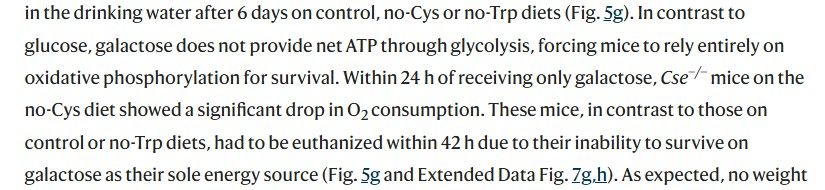
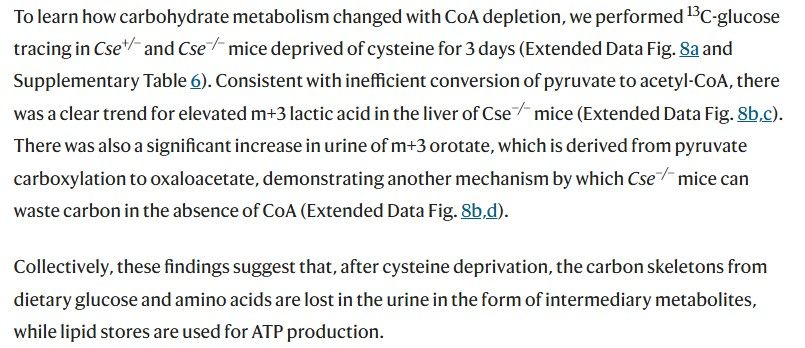
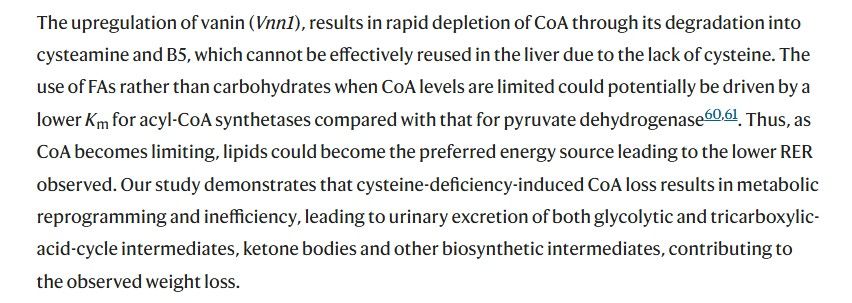
A few years ago, I was wondering why methionine restriction (which, in animals, implies zero cysteine intake as well) improved lifespan and metabolism; restricting cysteine essentially means restricting coenzyme A (CoA), and a period of zero cysteine intake lasting just a few days was enough to negatively impact carbs utilization via OXPHOS, forcing the animal to rely heavily on fatty acids to compensate.
I believe that maintaining a steady flux of glucose and lipids ranks higher in terms of importance than efficiency; therefore, the positive impact of these approaches will be proportional to one's metabolic state. Ironically, a healthy individual utilizes protein efficiently and does not require such high amounts
-
therefore, the positive impact of these approaches will be proportional to one's metabolic state. Ironically, a healthy individual utilizes protein efficiently and does not require such high amounts
To be clear, what you're saying is that PR benefits metabolically impaired people most and that healthy people don't need to do it?
-
Kinda of.
Benefits in proportion to the degree of metabolic impairement, so you need "to restrict" in proportion to your unhealthiness if that's the only variable you could change.
If it were possible to have perfect health, restriction would not be necessary at any point, but this fallen world...
-
If it were possible to have perfect health, restriction would not be necessary at any point, but this fallen world...
This could be said about every single intervention, no?
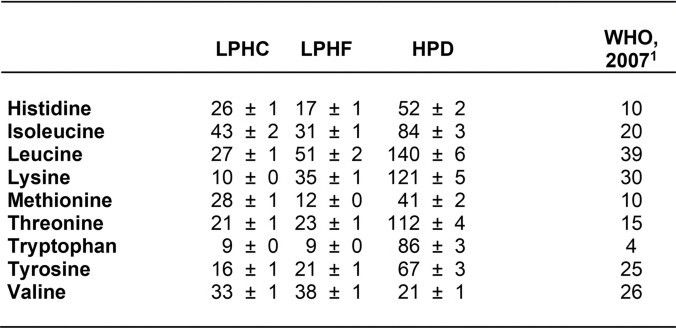
I skimmed trough the text you posted on the rats. My understanding is that humans don't require a no cysteine/tryptophan diet to reap the benefits of PR.
https://www.nature.com/articles/s42255-025-01236-7 studied leanish healthy young males who still had pretty high amounts of sulfur AAs in their diets and got impressive results.
-
If it were possible to have perfect health, restriction would not be necessary at any point, but this fallen world...
This could be said about every single intervention, no?
I skimmed trough the text you posted on the rats. My understanding is that humans don't require a no cysteine/tryptophan diet to reap the benefits of PR.
https://www.nature.com/articles/s42255-025-01236-7 studied leanish healthy young males who still had pretty high amounts of sulfur AAs in their diets and got impressive results.
Yeah, could be said about every intervention for that purpose haha
That was just an example; restrictions on different amino acids converge on the FGF21 effect. That is why, for instance, you can achieve most the effects of total protein restriction simply by restricting BCAAs.
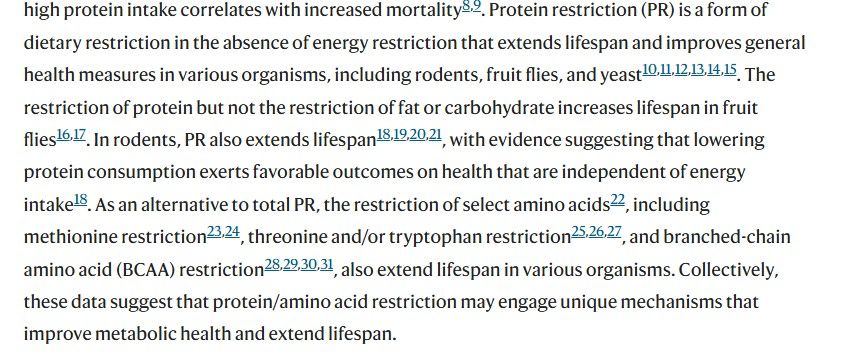
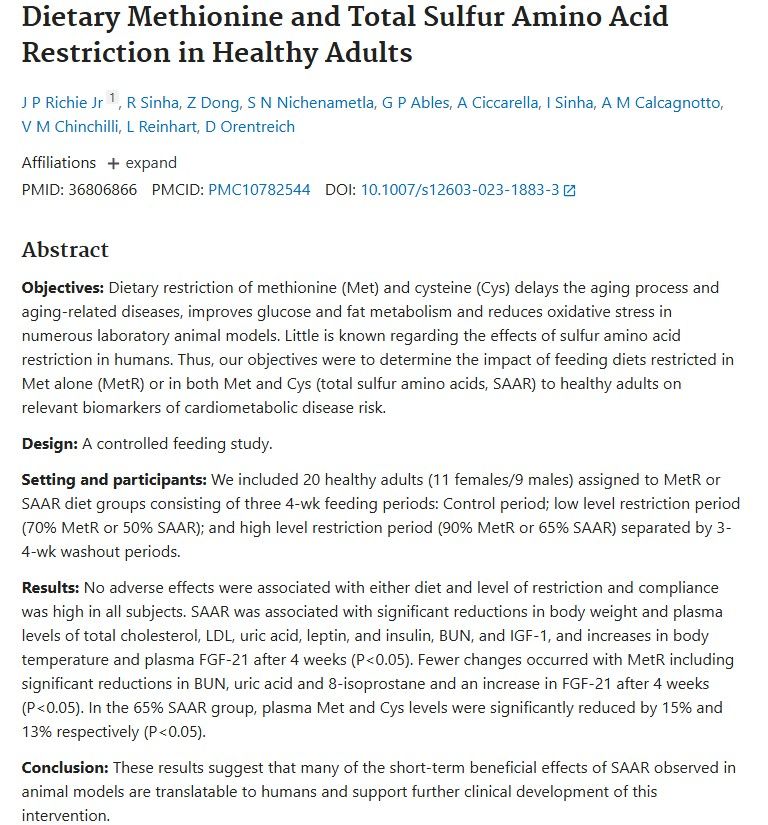
And you can achieve all the effects of protein (or BCAA) restriction just by restricting methionine and cysteine, which are the ones that have the greatest impact.

-
And you can achieve all the effects of protein (or BCAA) restriction just by restricting methionine and cysteine, which are the ones that have the greatest impact.
How would one even achieve this? A legume and fruit based diet?
-
@TexugoDoMel not in my experience. They alll gotta go for maximal results.
Edit: they seriously do lol. I was eating a combined 0.8g of the sulfur based amino acids a day in August. I’ve done this before! Usually it was 1.2g I believe. Not the greatest difference. I usually did 0.8g but with much higher protein. A reason I wasted away, was because this time I cut back on all other amino acids. And then the weight just fell off. In a really sick way by the way - not healthy at all - as you can see by the refeeding syndrome.
@texugodomel Do you think using mega doses of pregnenolone to steal sulfur groups, depleting these amino acids when they are already depleted, is a valid strategy.
-
A vegetarian/vegan/fruitarian diet is probably the easiest to restrict chronically(can't say is the best diet in general) and still has the benefit of selenomethionine, which does not behave the same way as methionine.
But there is no need for binary thinking; you can restrict in various ways--sometimes yielding more positive effects depending on the context--without it having to be a everyday thing.
You can even restrict total protein intake and supplement with BCAAs to restore some mTOR activity.
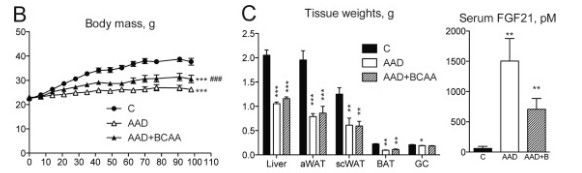
mTOR:
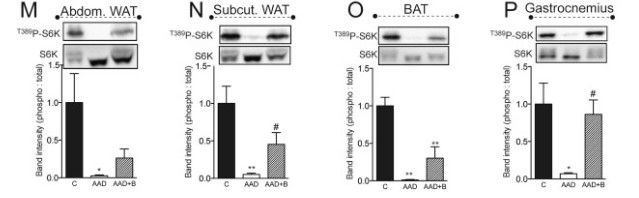
What I’m trying to say is that it doesn’t have to be done the same way, nor does it have to be done every day. You have a degree of freedom to adjust these variables to suit your goals as your focus shifts along the way.
Perhaps someday we will have an even more bioenergetic casein readily available...
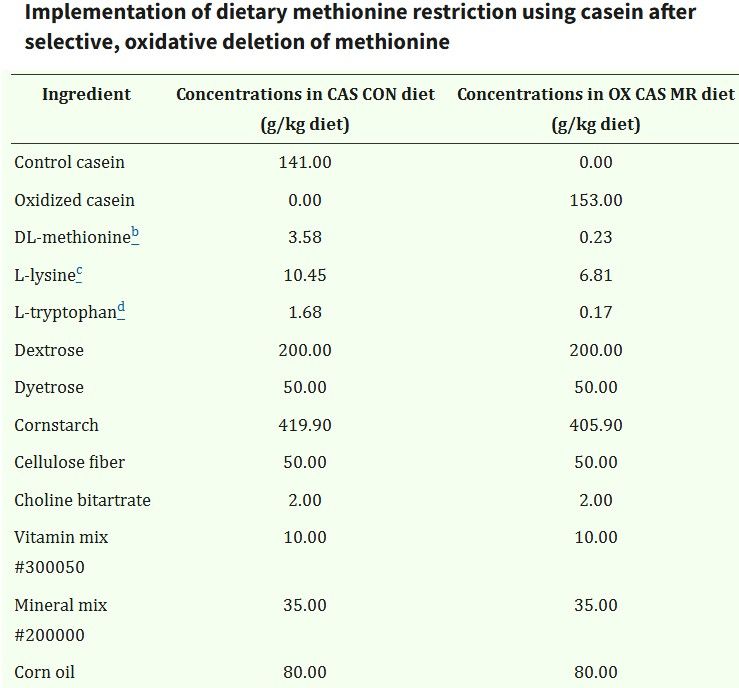
" And within the margin of error, the Ox Cas MR diet produced a decrease in body weight, a decrease in lean mass, a decrease in fat mass, an increase in food intake, an increase in water intake, an increase in EE, an increase in serum FGF21, a decrease in fasting insulin, an improvement in insulin-dependent glucose clearance, and a decrease in serum triglycerides relative to the Cas Con group"@TexugoDoMel not in my experience. They alll gotta go for maximal results.
Edit: they seriously do lol. I was eating a combined 0.8g of the sulfur based amino acids a day in August. I’ve done this before! Usually it was 1.2g I believe. Not the greatest difference. I usually did 0.8g but with much higher protein. A reason I wasted away, was because this time I cut back on all other amino acids. And then the weight just fell off. In a really sick way by the way - not healthy at all - as you can see by the refeeding syndrome.
@texugodomel Do you think using mega doses of pregnenolone to steal sulfur groups, depleting these amino acids when they are already depleted, is a valid strategy.
Yeah, I have no doubt that cutting out all amino acids has a much more intense effect, but like you said, it wasn't healthy at all.
One day, I still want to try a protein-restricted regimen--but supplemented with BCAAs (and tyrosine?)--as part of a training routine, to see if it's possible to maintain the positive effects on body fat alongside the muscle benefits of BCAAs(for muscle mTOR).
I don't like the idea of significantly accelerating the depletion of the sulfur groups when already depleted no.
-
One day, I still want to try a protein-restricted regimen--but supplemented with BCAAs (and tyrosine?)--as part of a training routine, to see if it's possible to maintain the positive effects on body fat alongside the muscle benefits of BCAAs(for muscle mTOR).
Have you tried a PR diet? I think you'd be surprised on how little difference there is in terms of progression.
-
Yeah. Both PR as well as the restriction of individual amino acids (which has its own limitations due to processing I know).
It makes a big difference for me, though that’s likely just a personal trait. Even during calorie restriction, my brain suffers significantly before I experience any drop in physical performance or anabolism in response to training so the problem is my muscle stealing resources
-
I'm pretty sure that several years of low protein (30-50g ish) caused the intense mental health problems I have now. I obsessively over-analyze and feel intense guilt and turmoil over countless things including incredibly minor things like thinking that a Twitter user is dumb or remembering social media arguments from years ago. Your brain uses dopamine to move on from negative thought cycles, and you need properly functioning methylation for dopamine to work properly. Something like 40-50% of methylation goes towards creatine synthesis and your body keeps large creatine stores. So my hypothesis is that once you deplete creatine your body prioritizes methylating it and other things like dopamine methylation suffer. If you aren't eating vertebrate muscle meat (so the Peaty favorites dairy and shellfish don't count) you aren't getting exogenous creatine and need to make it yourself via methylation which requires a long list of nutrients including methionine, B vitamins, folate, choline, betaine etc. Notably the amino acid methionine is the basis of all methylation which makes me seriously question the methionine restriction meme.
-
@VehmicJuryman said in Is anyone still doing protein restriction?:
Something like 40-50% of methylation goes towards creatine synthesis and your body keeps large creatine stores.
I supplement creatine so I guess that's covered.
I'm pretty sure that several years of low protein (30-50g ish) caused the intense mental health problems I have now.
Were you fruitarian or something? I have a hard time grasping how someone ends up eating 30g of protein a day if not purposely restricting it.
Wouldn't returning to a higher protein diet fix your issues if it was truly because of the lack of methylation?
-
@autistas123 cassava. tapioca. With a combination of lower protein starches. It’s very possible, whilst reaching an adequate amount of calories.
-
autistas123 said:
I have a hard time grasping how someone ends up eating 30g of protein a day if not purposely restricting it.
->
cassava. tapioca. With a combination of lower protein starches. It’s very possible, whilst reaching an adequate amount of calories.
No one intuitively eats topioca lol.
I guess it's on me for not being clear, but the original idea behind the post was not about intentional protein restriction. It was more so to do with intuitively following your own dietary preferences, which in my case tend to be heavily carbohydrate forward. Basically, I end up "restricting" both fat and protein just by eating to my desires.
There is an individual aspect to this macro preference, since some people instinctively prefer to eat higher protein diets. This is partly mediated by the different SNP rs838133 alleles.
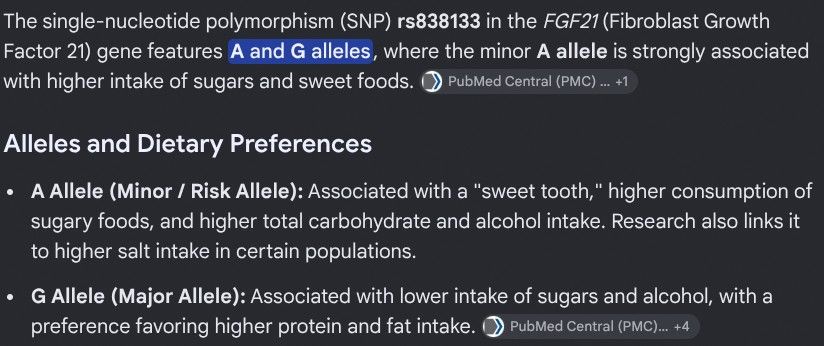
I don't believe that people should purposely be restricting protein and feeling miserable if that's the way their body is wired. But if the lower protein comes naturally, why force it? Especially since it comes with some benefits.
-
@autistas123 brother cassava provides roughly 1–2% of the world’s dietary calories.
- Africa: about 10% of calories on average.
- Democratic Republic of Congo: historically over 50%.
- Angola, Republic of Congo, Mozambique: roughly 30–35%.
- Paraguay: around 14%.
(AI)
TBH most use this way of eating to binge on sugar and then, overload on salty protein at night, and then wonder why they don’t get results. That’s why no one does this anymore. Apart from frutarians, which has a spiritual aspect to it I feel.
But I get your point. Though my cravings for food have never led me to good health.
-
@alfredoolivas
Just because they eat a lot of cassava does not necessarily mean that they eat low protein diets. I did, however, underestimate it's consumption. The part of Europe that i live in, it's not common at all, don't think I've ever even seen one.But I get your point. Though my cravings for food have never led me to good health.
The happiest and calmest I've ever been was before knowing anything about nutrition and eating whatever I wanted (happened to be slop).



Hello! It looks like you're interested in this conversation, but you don't have an account yet.
Getting fed up of having to scroll through the same posts each visit? When you register for an account, you'll always come back to exactly where you were before, and choose to be notified of new replies (either via email, or push notification). You'll also be able to save bookmarks and upvote posts to show your appreciation to other community members.
With your input, this post could be even better 💗
Register Login