Random, interesting studies
-
Vitamin K2 Protects Against Glucocorticoid-Induced Osteoporosis by Activating the NRF2/FSP1 Pathway to Inhibit Osteoblast Ferroptosis
-
Possible plan serotonin antagonists on 5HT3:
'Many constituents, such as gingerol, galanolactone, citronellol, geraniol, CBD, THC, eugenol, and vanillin, are reported to inhibit nausea and vomiting due to their 5-HT3R antagonism."
Dare to think.
My X:
x.com/Metabolicmonstr -
Cysteine Sulfoxides(from onions) ehance progesterone production in vitro.
-
@Mauritio Thank you. As someone who is hyper sensitive to most things, that's good to know.
"To desire action is to desire limitation" — G. K. Chesterton
"The true step of health and improvement is slow." — Novalis -
@dapose Interesting. Good to know. Thank you.
-
@Mauritio shogaol is easily made from ginger powder you just put it in the oven with some acid dry it out for 60 minutes and it is usually a lot more beneficial than gingerol in 99% of cases
-
@lobotomize thanks. i use ginger candy or chocolate and IIIRC the ginger in there should be heated is probably already converted to shoal.
-
@Mossy another Peater said the same thing. So I don't seem to be the only one.
It's exceptional for colds/ flue, but somehow messes with sleep. Maybe GABA rebound effect ? -
List of (peaty) AMPK activators:
Biotin
Aspirin
Emodin
Methylene blue
Thyroid hromone
Far infrared light
Fisetin
Trehalose
Tetrahydrocurcumin
Lactoferrin
Thyme extract
papain
Frankincense
ecdysterone
phytol
vitamin D
apple polyphenols
D2 activation
Bile acid receptor (Tgr5/FXR) activators
Studies on AMPK:
1. AMPK activation—protean potential for boosting healthspan
2. Campari is a dual bile acid receptor agonist that activates AMPK -
Propolis extract (ethanolic)
Appears to have significant effects on healing of upper gastrointestinal tract mucosa (gastric & duodenal ulcers),
especially as treatment enhancement of antibiotics against H. pylori,
as well as for promoted healing thereafter (gastritis only slowly subsides over the course of at least 6 months up to a couple of years even after successful H. pylori eradication)Using human equivalent conversion from rat trials, generous daily propolis doses seem to be required: Ideally 3600mg. Certainly not below 1800mg.
Synergistic combinations with olive leaf extract (OLE) and/or L. rhamnosus and/or L. reuteri.
However, propolis monotherapy fails for H. pylori eradication. There's initial inhibition, but then the infection and bacterial evasion catches up.Propolis and Its Potential to Treat Gastrointestinal Disorders, 2018, review
-
- Propolis in the Treatment of Oral Mucositis
** Propolis shown effective.
- Propolis in the Treatment of Oral Mucositis
-
- Propolis in the Therapeutic Management of Ulcerative Colitis
** "the studies developed with kaempferol, luteolin, and naringenin stood out"
** yet "these studies do not translate to human application, remaining to be explored its efficacy and safety in clinical trials."
- Propolis in the Therapeutic Management of Ulcerative Colitis
-
- Propolis and Its Potential to Treat Gastrointestinal Cancers
** Various effects in vitro
- Propolis and Its Potential to Treat Gastrointestinal Cancers
-
- Antiulcer Activity of Propolis
** "propolis has been used in folk medicine to treat gastric ulcer"
** Dose-dependent protective effects (preventative), but also healing effects
** Effects of propolis mirrored in part by oral caffeic, ferulic, and cinnamic acids
** "100% of the tested extracts inhibited the H. pylori growth"
- Antiulcer Activity of Propolis
-
"In vivo, the findings demonstrated that oral administrations of propolis and probiotics [L. rhamnosis, L. reuteri], either separately or in combination, led to significant increases in body weight and amelioration of histopathological changes in gastric tissue samples, particularly in terms of erosion depth, hemorrhagic inflammation, and apoptosis in the infected animals"
-
Effects were dose-dependent and highest at 300mg/KG per day (HED = 48mg/KG, ie 3600mg@75KG). The yellow positive control received antibiotic triple therapy:

-
"Propolis generally exhibits bacteriostatic properties against various bacterial genera; however, it may demonstrate bactericidal effects at elevated concentrations"
"Propolis contains caffeic acid phenethyl ester (CAPE), which inhibits the enzyme peptide deformylase, a critical factor for the survival of H. pylori." -
"The antibacterial activities of propolis are dependent on the concentration of biologically active compounds, including phenolic acid esters and flavonoids such as pinocembrin and galangin"
"During the study, a significant enhancement in the antibacterial activity was observed in the prepared propolis mixture (combination of all four propolis extracts). "
"In the gastric tissue samples of the animals treated with propolis and/or probiotics, reduced bacterial load comparable to the antibiotic-treated group animals was observed. "
"polyphenol compounds of propolis have significant enhancing effects on the eradication rate of H. pylori in rats with gastritis and peptic ulcers, suggesting that propolis supplementation may enhance the effectiveness of conventional H. pylori treatment"
- "These findings indicate that the use of Korean propolis, which has anti-inflammatory and anti-oxidative effects, can be promising for the prevention of H. pylori-induced gastric damage.
South African Propolis: Anti-Helicobacter pylori Activity, Chemistry, and Toxicity, 2025
Of 27 geographically distinct South African propolis sources tested, only 7 propolis compositions exhibited a MIC of >6.25 mg/mL against H. pylori. Many sources were as dose-effective as amoxicillin.
"Propolis from northern Spain was investigated against H. pylori with ethanolic and propylene glycol extracts which were found to have MIC values ranging between 6.00 and 14.00 mg/mL"- "The compounds pinocembrin, 3‐O‐acetylpinobanksin, and pinobanksin were found to be the most abundant."
"Antimicrobially active South African propolis was reported to be primarily comprised of pinocembrin, galangin, and chrysin"
-
"Propolis demonstrates dual functionality by inhibiting the release of inflammatory mediators and suppressing H. pylori growth"

-
"The combined use of propolis with other natural extracts demonstrates superior efficacy. Studies indicate that propolis complexes, when used in combination with olive leaf and licorice extracts, more effectively inhibit H. pylori-induced gastric mucosal ulcers, reduce bacterial colonization, and alleviate gastric mucosal inflammation"
-
"A trial involving 18 infected participants showed that after seven consecutive days of oral administration of Brazilian green propolis extract (3 times daily, 20 drops per dose), 50% of participants experienced a decrease of over 20% in their urea breath test values, indicating an initial inhibitory effect; However, after a 40-day treatment cycle, 83% of participants failed to achieve complete eradication of H. pylori, suggesting that while propolis monotherapy has some activity, it is insufficient for effective eradication and may require optimization of the dosing regimen, such as increasing the dose or frequency, to achieve sufficient antimicrobial concentrations."
-
-
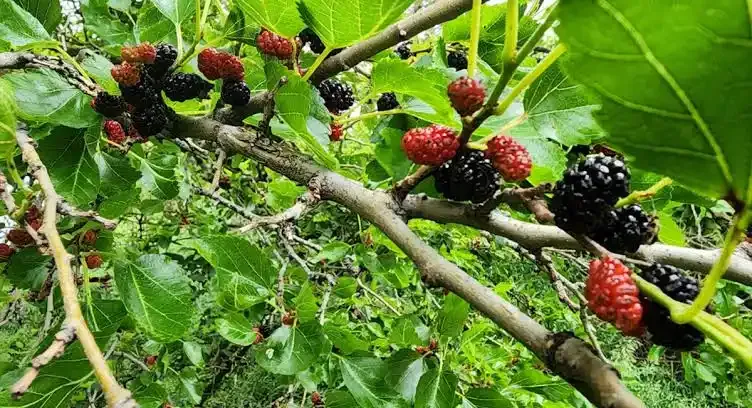
Mulberry
I recently got introduced to mulberries by the great saint Hildegard von Bingen.
She had an astounding knowledge on plants and medicine. Mulberry is one of the things she recommended for improving liver health.
And indeed, there is a bunch of studies showing benefits on the liver, corroborating what she said already 800 years ago.
On top of that mulberries taste really good, I could see them pair well with yogurt and honey.
Liver:
It ameliorates NAFLD, Increasing ATP, endogenous antioxidants, michondrial complex I + II.
While lowering triglycerides, liver weight, FFAs and SCD1.
https://pubmed.ncbi.nlm.nih.gov/30643537/Mulberry extract lowers liver damage induced by the fungal toxin AflatoxinB1. It increases antioxidants, phase 2 liver detox enzymes and SCFAs in the gut.
https://pubmed.ncbi.nlm.nih.gov/41046554/It inubits liver inflamamtion in diabetes model. Lowers TLR4. Seems therapeutic for diabetes too.
https://pubmed.ncbi.nlm.nih.gov/35845591/Mulberry leaves extract ameliorates alcohol-induced liver damages through reduction of acetaldehyde toxicity and inhibition of apoptosis caused by oxidative stress signals
https://pubmed.ncbi.nlm.nih.gov/33390773/Mulberry leave polysaccharides increase the enzyme that converts cholesterol into bile acids and cholic acid in particular.
https://pubmed.ncbi.nlm.nih.gov/39490871/
Hormonal:
It strongly increases StAR in diabetic mice, to values even above the control group.
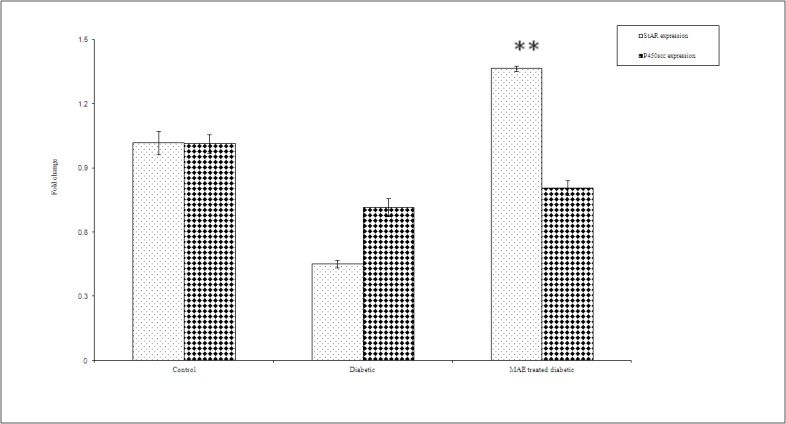
https://pubmed.ncbi.nlm.nih.gov/24644381/
Metabolism/Weight loss
It lowers weight on a HFD by over 5%. Decreases leaky gut and intestinal endotoxin.
https://pubmed.ncbi.nlm.nih.gov/41645603/Mulberry leave polysaccharides increase liver AMPK and bile acids.
https://pubmed.ncbi.nlm.nih.gov/33994909/Dare to think.
My X:
x.com/Metabolicmonstr -
@Mauritio mulberry trees are amazingly tough and birds spread their seeds extremely effectively in my city. White and black mulberry varieties grow wild along all parks and neglected areas. As a gardener I am always having to remove them and they put up the most incredible fight. You can cut them down completely over and over again and they just keep regrowing like “bring it on!” I’ve often joked that when humanity completely destroy this planet, mulberry trees along with a few others will be the life forms remaining to blanket and restore this earth. Long live the Mulberry tree!
I walk by them in the parks and gobble down the fruit in the summer! Love them!
-
@dapose nice!
-
Brown fat produced T3 and the enzyme that converts T4 to T3
"Brown adipocytes are known to produce biologically active molecules that modulate thermogenesis, such as thyroid hormone (triiodothyronine, T3), retinaldehyde, and retinoic acid. Thyroid hormone has been recognized as an important regulator of thermogenesis. The expression of type II thyroxine 5′-deiodinase (Dio2), which converts thyroxine to T3, is restricted to BAT and strongly induced during BAT activation [87]."
https://www.cell.com/trends/endocrinology-metabolism/fulltext/S1043-2760(15)00046-6
Most of the T3 in BAT is produced locally (55%), hence BAT seems to be a significant source of T3.
Comparable to the liver in terms of numbers of the receptor."Fifty-five percent of the nuclear T3 was generated locally, and 45% was derived from circulating T3. BAT is, hence, comparable to the liver in number of receptors (-5000/ cell) and to the pituitary with regard to saturation and relative contributions of locally generated T3 and plasma T3 to nuclear T3. These results suggest that BAT may be an important target for thyroid hormones and, along with other data, that alterations in the activity of the type II 5′-deiodinase of this tissue may influence the saturation of nuclear T3 receptors. (Endocrinology120: 55–62,1987)"
https://academic.oup.com/endo/article-abstract/120/1/55/2540567"These results indicate that BAT can be a major source of plasma T3 under suitable circumstances such as acute or chronic exposure to cold."
https://www.jci.org/articles/view/112239--> The fact that BAT can strongly increase overall plasma T3 levels for significant spans of time is remarkable.
And, it can also be increased/activated by certain supplements. It doesn't necessarily have to be cold exposure.
If one finds a benign supplement that does that, I could see that replacing a thyroid supplement for people that can't access it or can't make it work.
BAT activation also increases liver health and insulin sensitivity, which complements increased T3 and should make people more thyroid sensitive/less thyroid resistant.Dare to think.
My X:
x.com/Metabolicmonstr -
@dapose their*
-
@Mauritio wild study which makes an argument that those taking cold showers are actually using it as instinctual self medication
-
@lobotomize yes but i think you'd have to be in somewhat decent shape to reap the benefits of cold showers. There is such a thing is cold resistance when it comes to thermogenesis and uncoupling.
IIRC there was a study showing that grains of paradise were able to reverse that state in humans. -
I have posted about the hypermetabolic übermice before.
I'm trying to understand the mechanism. From what I can tell increasing PEPCK-C in the muscle, mainly inhibits anaerobic glycolisis (fermentation metabolism) and increases OxPhos. I think that is the fundamental mechanism. The fact that tjsr doubles life span and increases reproductive health so much, corroborates what Peat said for decades."...we identified a progressive decrease in cytosolic phosphoenolpyruvate carboxykinase (PEPCK-C), a longevity-associated metabolic enzyme, and a reciprocal increase in glycolytic pyruvate kinase (PK) that were necessary and sufficient to limit lifespan. Decline in PEPCK-C with age also led to loss of cellular function and integrity including muscle activity, and cellular senescence. Genetic and pharmacologic interventions of PEPCK-C, muscle activity, and AMPK signaling demonstrate that declines in PEPCK-C and muscle function with age interacted to limit reproductive life and lifespan via disrupted energy homeostasis. Quantifications of metabolic flux show that reciprocal changes in PEPCK-C and PK with age shunted energy metabolism toward glycolysis, reducing mitochondrial bioenergetics. Last, calorie restriction countered changes in PEPCK-C and PK with age to elicit anti-aging effects via TOR inhibition. Thus, a programmed metabolic event involving PEPCK-C and PK is a determinant of aging that can be modified to modulate aging."
https://pubmed.ncbi.nlm.nih.gov/26631730/
"...overexpression of the central gluconeogenic gene pck-2 (encoding PEPCK) increases health measures via a mechanism that requires DAF-16 to promote pck-2 expression in specific intestinal cells. Dietary restriction also features DAF-16-dependent pck-2 expression in the intestine, and the healthspan benefits conferred by dietary restriction require pck-2. Together, our results a new paradigm in which nutritional signals engage gluconeogenesis to influence aging quality via DAF-16."
https://journals.plos.org/plosgenetics/article?id=10.1371/journal.pgen.1008982"Finally, a synergistic induction of PEPCK gene transcription by T3 and cAMP is described. "
https://pubmed.ncbi.nlm.nih.gov/1657985/ -
It has been wondered how Helicobacter pylori actually spreads from human to human.
Beside the fecal-oral transmission in low hygienic standards, some few people have it in notable amounts even freely in their saliva, from where it can spread by aerosols, kissing or sharing drinks.Another transmission vector and reservoir, however, appears to be through oral, vaginal, food-borne and environmental spread of H.pylori-infected yeasts, which provide greatly enhanced protection to these bacteria, as shown by these Iranian researchers:
Vacuoles of Candida yeast as a specialized niche for Helicobacter pylori, 2014
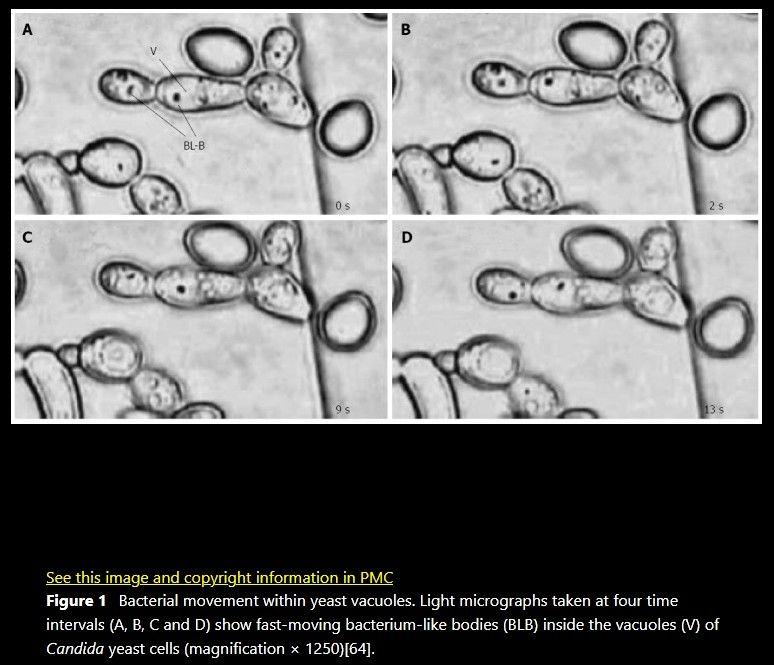
The internalized H.pylori also reproduces inside yeast vacuoles and when the yeast divide, H.pylori is imparted to the daughter generation.
Helicobacter pylori (H. pylori ) have been observed within yeast vacuoles by light and fluorescence microscopy, and their presence has been confirmed by the detection of H. pylori -specific genes and proteins in yeast extracts, such as VacA subunits, UreA, peroxiredoxin and thiol peroxidase.
Moreover, non-culturable H. pylori cells have been found in subsequent generations
of yeasts, indicating the generational transmission of the bacteria is part of the transfer of vacuolar content.
H. pylori are therefore well-equipped to establish in the vacuoles of yeast, which provide them with essential nutrients such as ergosterol for multiplication, as a pre-adaptation for invasion of human cells.Indeed, H. pylori-specific genes ureAB and babAB were detected in Candida yeasts from Iranian traditional breads (Sangak, Taftoon and Barbary), yogurt, banana skin, grape juice and quince jam, which carried vacuolar fast-moving and non-culturable BLBs (Figure 2)[87].
Thus, foodborne yeasts originating from the environment, which were once considered as harmless microorganisms when ingested through fermented foods such as dairy products[38,89], including kefir and kumis[94,95], could now be pinpointed as a public health problem source. In this regard, occurrence of yeast in food and environment can be considered as an important indicator of contamination with H. pylori and other pathogenic bacteria. Therefore, a key approach for the control of H. pylori infection may be to reduce the yeast content of foods through proper hygienic practice, especially by food handlers and during food processing[87]Would be interesting to know about the contamination in foods from "Western" sources and if H.pylori also infects saccharomyces boulardii/cerevisiae (baking yeast) and amoeba (water sources). And whether when we go buy goods which have not been baked like beer, (pasteurized) fermented foods or baking yeast (supplements?) they are free from intracellular bacteria?
There's a criticism of the study above which strongly questions the ability of bacteria to enter yeast cells. They do bring up amoeba and water supply, however:Interestingly, several articles in the literature have shown similarity in prevalence of Acanthamoeba in drinking water sampled from different geographical locations and the prevalence of H. pylori in patients[8-19]. While we cannot observe such overlap between yeast and H. pylori incidences, it is more logical to believe that yeast cannot be a reservoir of H. pylori but that Acanthamoeba can play such a role.
Indeed, in an earlier publication, the same Iranian researchers also showed commensalism in a co-culture of amoeba and H.pylori.
And they also found H.pylori in saccharomyces cerevisiae (baking + beer yeast) which was meant as a negative control - although in a less virulent, CagA-toxin free variation. Which could be coincidence or not. No testing for VacA-toxin was done in this context. -





Hello! It looks like you're interested in this conversation, but you don't have an account yet.
Getting fed up of having to scroll through the same posts each visit? When you register for an account, you'll always come back to exactly where you were before, and choose to be notified of new replies (either via email, or push notification). You'll also be able to save bookmarks and upvote posts to show your appreciation to other community members.
With your input, this post could be even better 💗
Register Login