Random, interesting studies
-
Decentralised pleb intel.
-
@ThinPicking said in Random, interesting studies:
Decentralised pleb intel.
that's the kind of intel I support.
-
To anyone that cares: ive just posted my first substack
It's more along the lines of religious symbolism, which I'm really interested as well.Dare to think.
My X:
x.com/Metabolicmonstr -
Do! Will check it out thank you.
-
@user2 i think i may believe this
-
@Mauritio you did this because i suggested it so can i have 1.3% of the revenue in perpetuity?
-
@sunsunsun above one million $, yes.
Dare to think.
My X:
x.com/Metabolicmonstr -
-
This subject of papain piqued my interest, as I purchased papaya powder for a homemade toothpaste recipe almost 2 years ago. I basically did a lot of research of various other toothpaste ingredients and I noticed papaya (papain) was in a couple of them. I had never gotten around to making the toothpaste, due to my negative reaction to the MCHA (calcium hydroxyapatite) within the recipe. I thought I might test the papaya powder as a supplement, since I wasn't using it for the toothpaste (for now); but one thing to note is that I see I bought papaya leaves, not papaya fruit. I do see one of the links mentions the leaves, but I wonder if the fruit is more potent or more preferred. I would much prefer to just eat the real fruit, not powder, but since I have the powder I may try it. I'm just thinking out loud here, with my comments. No need to reply unless you guys think there is something worth passing along. Thanks.
-
Another way to lower PUFAs effects is to supplement conjugated linoleic acids.
They compete with other PUFAs and do not produce eicosanoids, prostaglandins etc. They actually lower those and get incorporated into cell membranes."Rats treated with CLA isomers showed a reduction in BW, IR, and hypertension. Additionally, there was a significant incorporation of CLA into the plasma membranes of adipocytes and hepatocytes. In contrast, the control rats displayed higher levels of n-6 PUFA and AA in their membranes, which promote the synthesis of eicosanoids and hypertensive prostaglandins."
https://pmc.ncbi.nlm.nih.gov/articles/PMC12584349/An interesting candidate for CLA supplementation is Punicic acid from pomegranate seeds.
https://ift.onlinelibrary.wiley.com/doi/abs/10.1111/1541-4337.12171 -
Coca leaves
-
traditionally been used for altitude sickness (MoA= increase in CO2?),
Increasing stamina and reducing hunger and fatigue -
Cocaine is just one of the many bioactive molecules. It contains 14 alkaloids in total .
They probably have synergistic effects.
The biological activity of the following alkaloids has been reported in the literature: cocaine, cinnamoylcocaine, benzoylecgonine, methylecgonine, pseudotropine, benzoyltropine, tropacocaine, alpha- and beta-truxilline, hygrine, cuscohygrine and nicotine.
https://pubmed.ncbi.nlm.nih.gov/6379304/
- Ray said that the issue with cocaine is that increases your metabolism so much that you quickly develope vitamin deficiencies. This study found that chewing coca leaves increases the metabolisms of subjects by up 66%. There was one guy in the study for who it reduced it metabolism by about 20% and it was also the guy with the lowest body temp. Coca leaves actually decreased his temp from 36.3 to 36°C. So it seems like it made him hypoglycemic,maybe he didn't eat beforehand ?
For another guy it increased his temps to 37.6 .
Interesting read:
http://www.scielo.org.pe/scielo.php?pid=S1726-46341944000400003&script=sci_arttext&tlng=en
Man cured his arthritis and impotence with coca.
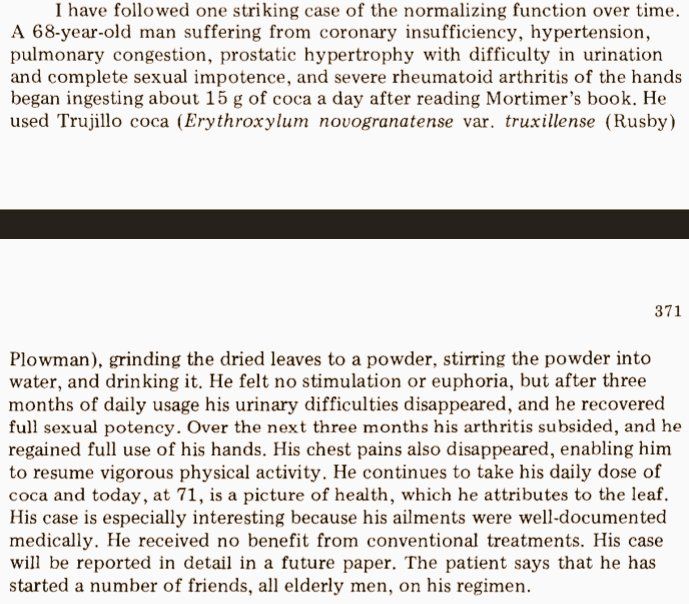
https://pubmed.ncbi.nlm.nih.gov/6113306/
I found this Peat quote linking cocaine with the Sigma receptor.
"A protein called the sigma receptor, known for its role in cocaine's action, binds progesterone, and can inhibit the
growth of cancer. Some anesthetics have similar effects on tumors, acting through this protein. The sigma receptor, in
association with progesterone or pregnenolone, is protective against the excitatory amino acids."Pregnenolone and DHEA activate the sigma receptor as well.
Interestingly the sigma receptor is responsible for the MAO-B inhibiting effects of cocaine:"Cocaine was found to suppress the gene expression of monoamine oxidase B (MAOB) in the brain of wild-type but not Sig-1R knockout mouse."
Now if you take large amounts of cocaine, you will get a strong rebound effect of MAO-B after stopping. Ive seen studies showing corresponding high prolactin. This could be alleviated with the anti-aging drug Selegiline. Not sure if this has been tried for cocaine addicts, but its probably more effective than whatever they're doing now.
"Withdrawal from cocaine in cocaine-sensitized rats induced an apparent time-dependent rebound of the MAOB protein level to about 200% over control on day 14 after withdrawal. Treatment of cocaine-withdrawn rats with the MAOB inhibitor deprenyl completely alleviated the behavioral sensitization to cocaine."
https://pubmed.ncbi.nlm.nih.gov/31539876/
Heres a very interesting source from the year 1869 (original in italian) on the coca leaf:
"What seems almost incomprehensible is that the Spaniards did not draw the attention of European scholars to this plant, which served as a nervous stimulant and sustenance for an entire nation; and even more astonishing is that travelers of all nations neglected coca for more than three centuries, merely mentioning it in passing or providing incomplete or false information. It is truly surprising that Pereira, in his great work on materia medica, omitted it entirely. The bibliographic information that I have been able to collect is extremely scant."
"The most temperate among coca chewers consume from half an ounce to one ounce per day, dividing it into two portions, with which they prepare themselves for the labor of the morning and the rest of the evening. Very few, however, content themselves with so small a quantity, and these are usually compelled by poverty rather than lack of desire. An Indian may chew two, three, or even four ounces of coca per day without being considered vicious; only when he reaches six to eight ounces daily is he universally regarded as a lost man."
"The Indian learns to know the favorite stimulant of his fathers shortly after leaving his mother’s breast; and even as a small child he is entrusted for an entire day with the herds of sheep or llamas, without any other provision than a little sack of coca leaves and a fragment of llipta."
"Five or ten minutes after beginning the use of the leaf, a beneficial eructation announces that the digestive process is proceeding with greater ease and speed than usual. This advantage is best perceived by those who by nature have slow and difficult digestions. A young physician of Milan, who for years awoke every morning with a coated mouth and white tongue, experienced such benefits from the use of coca after meals that he does not omit it a single day and has abandoned both cigars and coffee.
Coca acts in a very mysterious manner upon the stomach; it neither precipitates digestion nor stimulates it by irritation or excessive action. After almost daily use for two years, I never observed it to irritate the stomach, even when taken in large quantity. It seems rather to excite gently the nervous system of the sovereign organ of the epigastrium, removing the consciousness of its labor or rendering it easier. I myself cannot occupy my mind after meals without experiencing headache and difficult digestion; only when I chew coca or take its hot infusion can I engage in light reading after eating without fatiguing either stomach or brain."
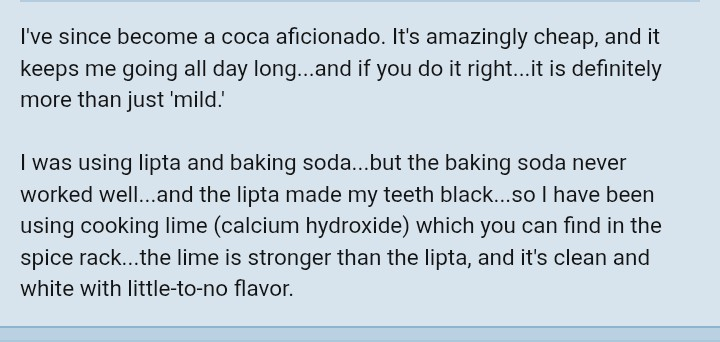
It's kind of hard to find some experiences of people experimenting with coca leaves online.
Here is a interesting thread I found on some forum.
https://www.bluelight.org/community/threads/coca-leaf-experienced-the-wonder-of-coca-leaf.399650/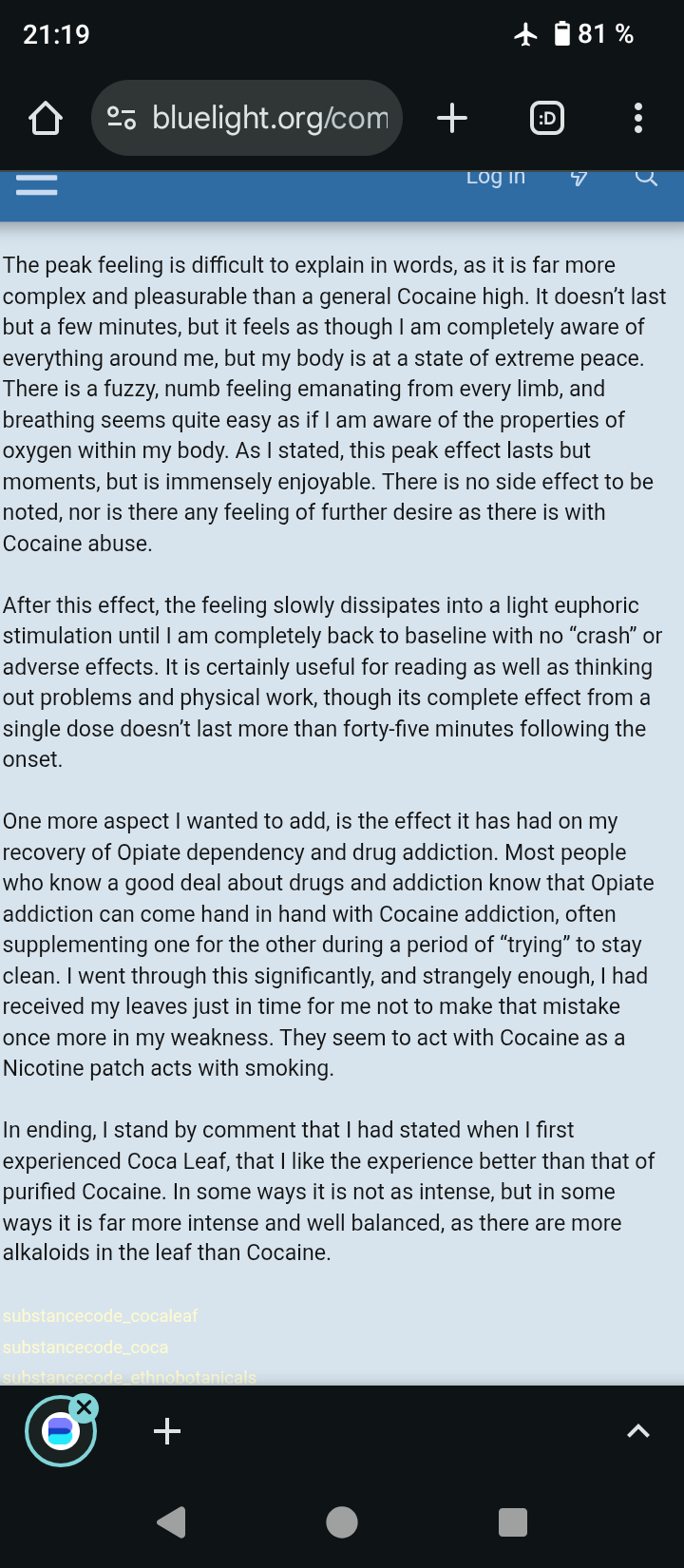
-
-
Aronia berry
A small amount of the extract increased the body temperature of women by over a degree.
https://pmc.ncbi.nlm.nih.gov/articles/PMC3843504/#Sec2Anthocyanins from Aronia (cyanidin
291 3-arabinoside, cyanidin 3-galactoside, cyanidin 3-xyloside and cyanidin 3-glucoside) increased the effects of the anti aging protein klotho.
It increased several health markers of the brain.
They also increased antioxidants and monoanines of which dopamine was increased the strongest in the brain.
They also drastically down regulated COX-2 and inflammatory cytokines.
https://pubmed.ncbi.nlm.nih.gov/28657734/Aronia polyphenols drastically increased PGC1a in Brown adipose tissue (new mitochondria) and slightly increased UCP1.
https://pmc.ncbi.nlm.nih.gov/articles/PMC7339576Here we got an anti-inflammatory effect of aronia. But what's more interesting is that they used histamine and serotonin to induce the inflammation, including the (paw) edema. Notably, the concentration needed to induce inflammation was 50 times lower for serotonin than for histmine. And histamine is a known inflammation induced, yet you rarely hear the same thing about serotonin, although it seems to be a lot more harmful in that regard.
"Inflammation of rat hind paw was induced either by 0.5% solution of histamine or by 0.01% solution of serotonin."
https://pubmed.ncbi.nlm.nih.gov/7892768/Dare to think.
My X:
x.com/Metabolicmonstr -
Dopamine and noradrenaline drastically reduced in part of the brain. Serotonin not.
In PD, the levels of dopamine and noradrenaline were greatly reduced by 93 and 81%, respectively.
https://pubmed.ncbi.nlm.nih.gov/27741357/ -
Cacao polyphenols have anti-viral effects
https://www.sciencedirect.com/science/article/pii/S2405844023030670
https://pmc.ncbi.nlm.nih.gov/articles/PMC8141698/ -
@Mauritio Aronia products are being pushed by marketers so much lol
-
2.0 g of meldonium daily for 90 days improved sperm health increased testosterone by about 70% in boars.
https://www.wellesu.com/10.1016/j.anireprosci.2012.11.007
"Meldonium treatment in both models restored mitochondrial bioenergetics. The results show that meldonium treatment prevents the development of RV and LV systolic dysfunction by enhancing mitochondrial function in experimental models of ventricular dysfunction that resembles cardiovascular complications in COVID-19 patients."
https://pmc.ncbi.nlm.nih.gov/articles/PMC8744985/Reducing FAO Enhances Antiviral Signals
https://pubmed.ncbi.nlm.nih.gov/39142373/ -
@Mauritio Wow nice, Ive been taking mildronate for close to 3 months now. Love it so far, great energy and a sort of calmness. Been loosing weight too.
these soviet medicines I sure do like
-
@Mauritio What bible do you consume? My suggestion is to read the original text and not some sorry ass translation.
The soul is the metabolism, the spirit is the mind.
-
@heyman how much are you taking?
-
@Mauritio 0,5g to 1g a day
really like it, I get this calm, nice energy from it.





Hello! It looks like you're interested in this conversation, but you don't have an account yet.
Getting fed up of having to scroll through the same posts each visit? When you register for an account, you'll always come back to exactly where you were before, and choose to be notified of new replies (either via email, or push notification). You'll also be able to save bookmarks and upvote posts to show your appreciation to other community members.
With your input, this post could be even better 💗
Register Login