Random, interesting studies
-
@Mauritio Menthol, Camphor, Menthone and Eucalyptus, all are terpenoids known for their "cooling" effect, and are completely saturated- Camphor and Eucalyptus are even saturated cages, similar to Adamantane. Very interesting to me.
I would love to see if their is some overlap in their origin, structure or effects -
@alfredoolivas yeah very interesting!
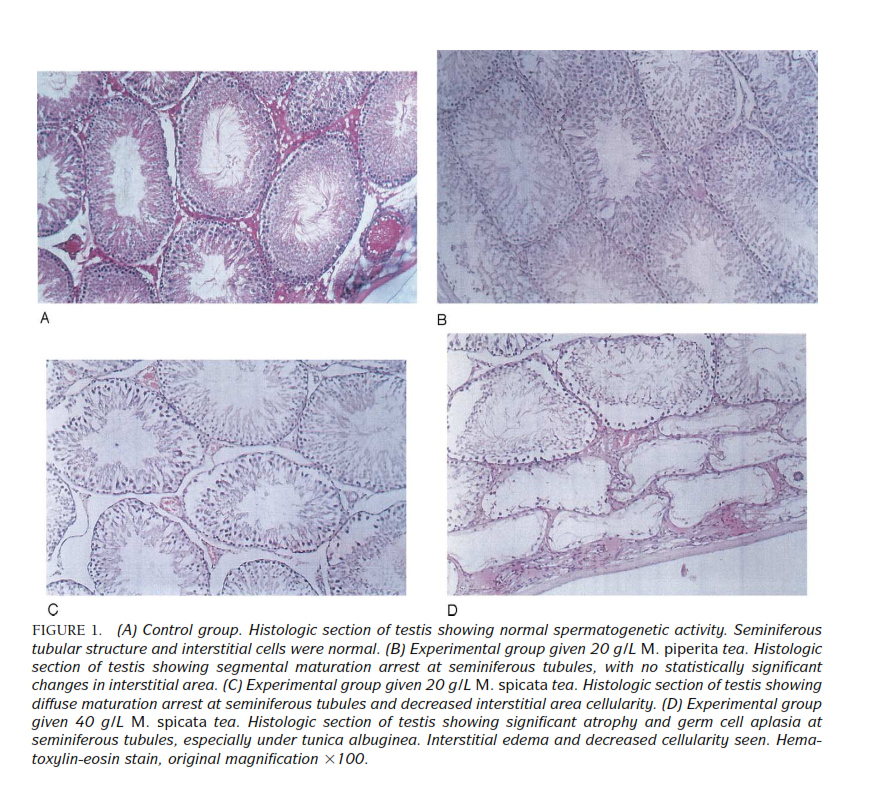
Look at the progesterone like effect of the studies I just edited in.
If they are indeed saturated molecules that makes an estrogenic effect even less likely .Btw trump just brought back menthol cigarettes , so that's good timing

Dare to think.
My X:
x.com/Metabolicmonstr -
@Mauritio Peppermint oil is 30-50% menthol, 15-30% menthone and 5-10% eucalyptol. So peppermint oil could be a vehicle to deliver these substances.
-
@alfredoolivas yes. I'm just not sure about potential estrogenic or anti DHT effects. But I haven't seen anything conving, that would stop me from consuming it infrequently .
-
I purposefully stay away from peppermint.
A mind is like a parachute. It doesn’t work if it is not open. 👀
☂️ -
@DavidPS yeah that is the most convincing study i've seen so far the dosage also wasn't excessively high
Dare to think.
My X:
x.com/Metabolicmonstr -
@Mauritio Well progesterone does the same; inhibits LH and FSH, and is therefore anti-androgenic. Unless peppermint oil is estrogenic, it may be a good proxy for progesterone.
-
A mind is like a parachute. It doesn’t work if it is not open. 👀
☂️ -
@alfredoolivas said in Random, interesting studies:
@Mauritio Well progesterone does the same; inhibits LH and FSH, and is therefore anti-androgenic. Unless peppermint oil is estrogenic, it may be a good proxy for progesterone.
Peppermint actually increased LH /FSH, unlike Progesterone.
I want to mention that the amount of menthol you get from tea is about ten times less than you get from the essential oil. and menthol seems to be the deciding metabolic factor here.
menthol actually has antiprolactin effects as i posted above so i'm not sure if anti - testosterone effects would be seen with the essential oil which is mostly Menthol.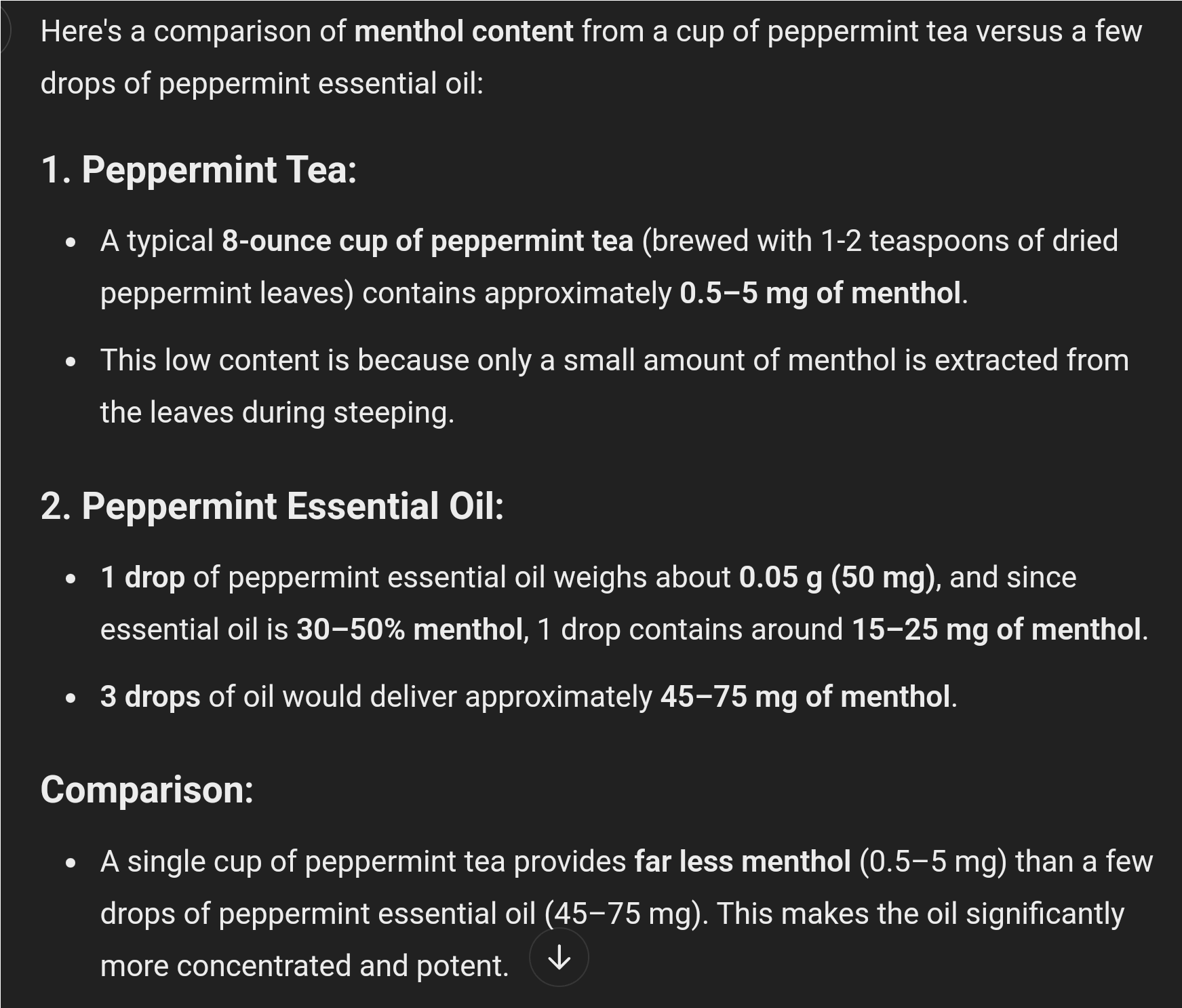
-
This post is deleted! -
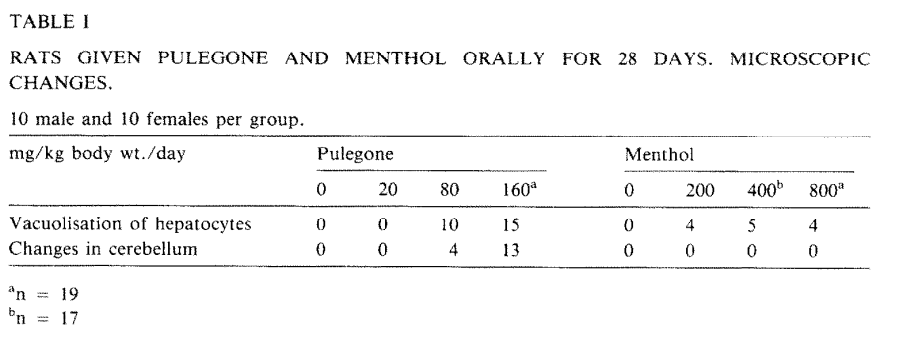
@DavidPS high amounts 40mg/kg peppermint caused white matter dmg vs 10mg/kg which didnt show it for this dmg , rats https://www.sciencedirect.com/science/article/abs/pii/0378427483901212
But the menthol has some liver toxicity at dopamine doses i think, shows liver protection caused by other things but can cause liver changes https://doi.org/10.1016/0378-4274(83)90120-0
when i tried menthol for the dopamine & temp effect i tried it through the skin , noticed some liver pain after a bit ~1g. which i never get otherwise
-
@cs3000 - thanks for the additional information.
-
@cs3000 thanks interesting . It seems save enough for a short duration or infrequent use.
I also noticed some dopaminergic benefits from nebulizing peppermint oil . I guess the dose there should be very low.The liver pain might also come from it decreasing peristalsis and thus bile not being excreted fast enough and reabsorbed...
Dare to think.
My X:
x.com/Metabolicmonstr -
@Mauritio
It also worth noticing that peppermint is a κ-opioid receptor agonist...https://en.wikipedia.org/wiki/Κ-opioid_receptor#Natural_agonists
-
@Kvirion said in Random, interesting studies:
@Mauritio
It also worth noticing that peppermint is a κ-opioid receptor agonist...https://en.wikipedia.org/wiki/Κ-opioid_receptor#Natural_agonists
Uh oh..." KOR activation causes a release in prolactin,[76]"
But then :
Menthol from Mentha piperita Suppresses the Milk Production of Lactating Mammary Epithelial Cells In Vivo and In Vitro
https://pubmed.ncbi.nlm.nih.gov/33188562/....
Doesn't add up . -
@Mauritio That might be how it inhibits LH and FSH, and is anti-androgenic, because the opioid receptor inhibits GnRH secretion when activated.
Steroids such as T and DHT, increase opioid receptor expression, which could be a mechanism of how they shut down the HPG axis.
-
@Mauritio said in Random, interesting studies:
Doesn't add up .
Welcome to the real world of Complex Adaptive Systems

This means that reaction/influence/outcome is context-dependent. I.e. may be different for different sexes or certain conditions/circumstances...
BTW Before Peatiing, I was hypothyroid with IBS-D and pretty low T...
When I was using p-mint it definitely was slowing down my digestive system - in opioid-like ways.
Secondly, at first, I was feeling the influence of rising dopamine (MAO-B inhibition), but after an hour or two it always turned into an increase in prolactin and a decrease in testosterone, which unfortunately was painfully noticeable for at least half of a day or night... -
@alfredoolivas said in Random, interesting studies:
That might be how it inhibits LH and FSH, and is anti-androgenic, because the opioid receptor inhibits GnRH secretion when activated
Like I said above : the study showed that peoermint increased LH and FSH
@Kvirion said in Random, interesting studies:
but after an hour or two it always turned into an increase in prolactin and a decrease in testosterone, which unfortunately was painfully noticeable for at least half of a day or night...
Yeah too many people reports similar experience to yours, so I think it's best to stay away from it.
-
@Mauritio said in Random, interesting studies:
Dates, olives and walnuts contain the highest amounts of the phytoprogestogen syringic acid.
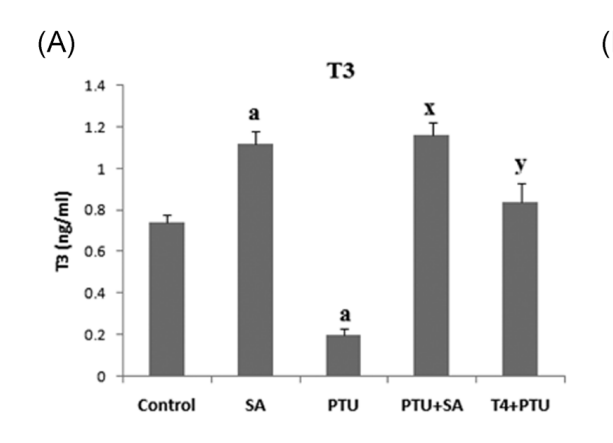
Not only is syringic acid a phytoprogestogens, but it also had very potent pro thyroid effects in this study.
They gave rats a known anti- thyroid drug (PTU) to induce hypothyroidism.
Then they gave them syringic acid or T4.Syringic acid completely restored the T3 and T4 levels of hypothyroid rats.
It even increased them above baseline.T4 levels were even higher with syringic acid compared to giving them actual T4.
It also lowered TSH quite drastically .
@cs3000 they also included a control + synstingic acid group, and even in normal animals it helped their thyroid and increased T3 by about 30% .
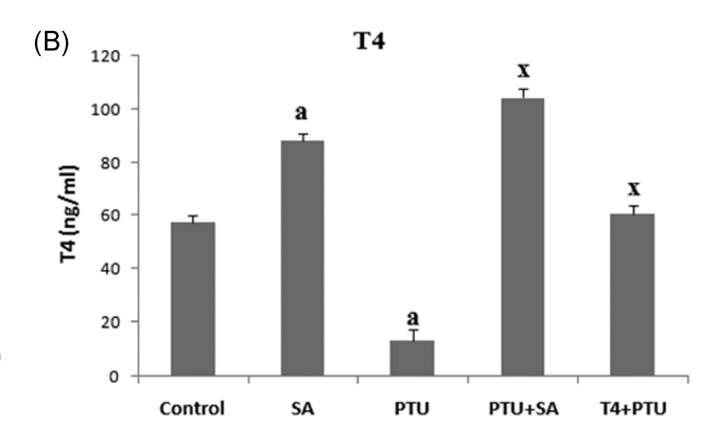
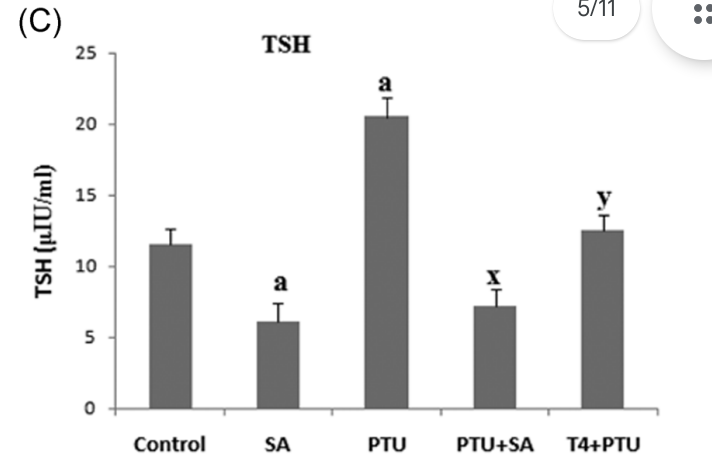
Syringic acid had an affinity for the thyroid receptor TRb that was twice as strong as that of T3!
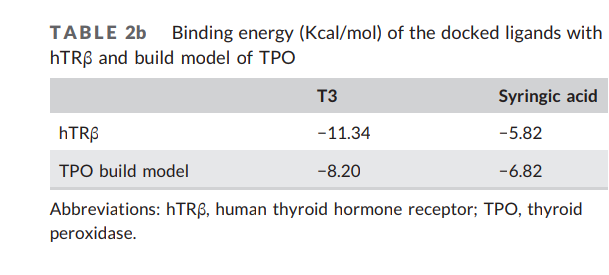
Syringic acid also increased antioxidants like SOD and catalase powerfully and lowered inflammatory cytokines.
These dosages they used are not achievable by diet alone though . Maybe there is a supplement. I also read something about pomegranate peels contain syringic acid.
https://pubmed.ncbi.nlm.nih.gov/34047416/
Althugh acai (oil) contains about 1g of syringic acid per kg. So if the fruit itself contains a similar amount, you should get significant amounts of SA.
https://pubs.acs.org/doi/abs/10.1021/jf800161uOn top of that syringic acid increases CO2 via carbonic anhydrase inhibition.
https://pubmed.ncbi.nlm.nih.gov/20185318/In this study syringic acid increased Testosterone by about 60% in rats.
https://link.springer.com/article/10.1007/s12011-025-04727-6It slightly increased SERT in this study, meaning it had an anti-serotonin effect.
https://pubmed.ncbi.nlm.nih.gov/31128148/Anti autism effect, lowers neuroinflammation, and resortes neurotransmitters.
https://pubmed.ncbi.nlm.nih.gov/37357844/Anti-osteoporosis effect in ovariectomized mice. Could SA be compensating for the lost progesterone?
https://pubmed.ncbi.nlm.nih.gov/28681119/Syringic acid strongly increased hippocampal dopamine by several fold. Facilitating learning and memory .
https://pubmed.ncbi.nlm.nih.gov/33175581/ -
Pomegranates
One of the main polyphenols of pomegranate peels, Punicalagin, seems to have anti-estrogen and pro- progesterone effects. The anti- estrogen effect should be achievable by taking a supplement the pro- progesterone effect would be difficult. But this was an in vitro study in rats , so the dosages are a bit of a gamble anyway.
"Punicalagin (at 100 microg.ml(-1)) significantly (P<0.05) increased progesterone secretion. On the other hand, the release of 17beta-estradiol was significantly (P<0.005) decreased by punicalagin addition (at 10 microg.ml(-1))."
https://pubmed.ncbi.nlm.nih.gov/26291726/
Several polyphenols of pomegranate are aromatase inhibitors.
"These studies suggest that pomegranate ET-derived compounds have potential for the prevention of estrogen-responsive breast cancers."
https://pmc.ncbi.nlm.nih.gov/articles/PMC2805471/"PME binds ER and down-regulated the transcription of estrogen-responsive reporter gene transfected into breast cancer cells. The expressions of selected estrogen-responsive genes were down-regulated by PME"
https://pubmed.ncbi.nlm.nih.gov/21839626/This study hints at pomegranate extract containing significant amounts of syringic acid.
"WPE indicated that syringic acid (SA), vanillic acid and caffeic acid were the predominant flavonoids..."
https://www.sciencedirect.com/science/article/abs/pii/S0377840121000973Pomegranates peel extract increases progesterone and offspring weight and survival .
"Fppee improved homeothermy, progesterone concentration, and pregnancy outcomes."
"Lambs born to Fppee ewes had the highest birth weights and survivability. "
https://www.sciencedirect.com/science/article/abs/pii/S030645652400261Pomegranate extract increased Energy expenditure, V02, VCO2 and increases body temp after cold exposure.
Which probably means that it restores shivering cold thermogenesis, which is lost in unhealty people, meaning they can't mount an adaptive response to a stressor (cold). This is corroborated by the fact that Ucp, is increased in the Pomegranate group by 3- told, but only after cold exposure. It also increased SIRTI a lot and a protein called BMPB8, which stops preadipocytes from maturing into fully functional adipocytes.
https://pmc.ncbi.nlm.nih.gov/articles/PMC9499678/#ijms-23-10460-f006Pomegranate contains 7 (!) Carbonic anhydrase inhibitors, leading to increased CO2.
https://www.jstage.jst.go.jp/article/bpb1993/16/8/16_8_787/_articlePomegranate polyphenols inhbit mTOR (similar to protein restriction) . Mango too.
https://pubmed.ncbi.nlm.nih.gov/27028006/Pomegranate peel polyphenols lower adrenaline and cortisol induced by chronic, mild stress. It also inhibits MAO, strongly favoring MAO-B, leading to an increase in the dopamine/serotonin ratio.
https://onlinelibrary.wiley.com/doi/10.1111/pcn.12100It reduces brain lead concentrations by about 90% in animals consuming high lead amounts.
https://scholar.google.com/scholar_lookup?journal=Pol. J. Nat. Sci.&title=Algerian pomegranate peel decreases lead concentration in brain and improves neurological disorders&author=L. Gadouche&author=N. Djebli&author=Z. Khayra&volume=35&publication_year=2020&pages=97-107&#d=gs_qabs&t=1738438268566&u=%23p%3DvYGsC48cmZEJEllagic acid (one of the major active molecules in pomegranate). Decreases brain NO and NMDA receptors.
https://www.sciencedirect.com/science/article/abs/pii/S0143417919300204In this study pomegranate juice increased plasma catalase by 2x, vitamin C by 3X and and vitamin E by 5x, also increased testosterone by about 30% .
https://pubmed.ncbi.nlm.nih.gov/18222572/Pomegranate extract increases the growth of the beneficial bacterium Akkermansia muciniphila.
https://pubmed.ncbi.nlm.nih.gov/27940244/






Hello! It looks like you're interested in this conversation, but you don't have an account yet.
Getting fed up of having to scroll through the same posts each visit? When you register for an account, you'll always come back to exactly where you were before, and choose to be notified of new replies (either via email, or push notification). You'll also be able to save bookmarks and upvote posts to show your appreciation to other community members.
With your input, this post could be even better 💗
Register Login