Dandruff or scalp irritation? Try BLOO.

  • 0 Votes
    5 Posts
    725 Views
    yerragY
    @DavidPS I've suspected for a long time that poor kidney function does not really require absurdly low levels of protein intake. I think a lot of the medical myth has a lot to do with the perception that a higher protein intake increases creatinine levels, and because the eGFR formula used by rote and without question following the pied piper training of lemmingian doctor NPCs and transmitted to an uncritical base of miseducated people leads to the wrong think that eating less protein correlates to lower creatinine levels and a formulaic increase in the eGFR. An increase in calculated eGFR is assumed to indicate better kidney health. But the e in eGFR means the eGFR is just an estimate, no better than a guess or a rule of thumb, and eGFR can be way off the mark when compared to actual GFR. And creatinine levels do not necessarily have a negative correlation to glomerular filtration rates (GFR). This myth is a disservice to our health as it leads us to unnecessarily low levels of protein intake, which would severely rob us of key nutrients needed for our health upkeep. Another association with protein intake has to do with protein being acidic, and because of this fact, protein avoidance or minimization is needed to keep the body ecf (extracellular fluid) from being acidic. While it is true that we rely on our kidneys to maintain pH balance, and to keep us from being chronically acidic and to keep our organs from degenerating by calcification and fibrosis, it isn't by the fearful reduction of meat and protein intake that we keep ourselves from becoming chronically acidic and diseased, it starts with us knowing how to maintain a healthy lifestyle centered a lot on having the nutrients that keep our organs from degenerating and aging. The kidneys that stay young and working well benefit greatly from keeping our ecf pH optimal such as calcification and fibrosis are avoided. Lessening protein intake may be needed when kidneys are already advanced in their degeneration, but with healthy kidneys that benefit from good acid balance protein restriction is not something to be of concern as healthy kidneys and a sound mitochondrial sugar-dominant metabolism provides us with a surplus of a pH buffer in the form of CO2 to keep us in a continual state of acid base balance.

  • Pu erh /Theabrownin: weight loss miracle?

    puerh theabrownin
    6
    0 Votes
    6 Posts
    2k Views
    MauritioM
    @herayclitus said in Pu erh /Theabrownin: weight loss miracle?: @Mauritio Peat never mentioned SEA afaik, I was referring to the succinate. He mentions it as a relatively safe iron chelator in Nutrition for Women iirc, but I think he stopped recommending it at some point. SEA works like a mild uncoupler for me, especially after a high-carb meal. Yeah he stopped recommending succinate although I don't quite understand why. Shouldn't similar acids like malic acid have the same effect..? And they'reir contained in some foods in large amounts. lnteresting, might give it a try! You might wanna look into niclosamide, which posesses similar qualities.
  • Milk consumption and acne in teenaged boys

    1
    0 Votes
    1 Posts
    352 Views
    No one has replied
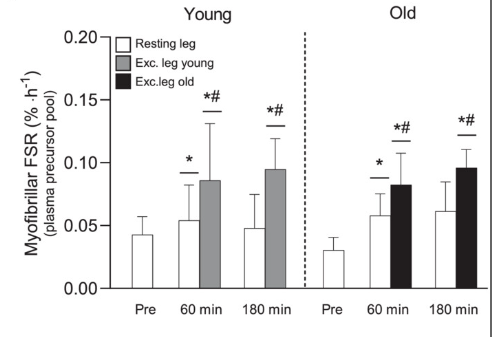
  • Anabolic Sensitivity in Healthy, Lean, Older Men

    3
    1
    0 Votes
    3 Posts
    479 Views
    DavidPSD
    @LucH - Thanks for the information on potassium. I purposefully have high amount of potassium in my diet for other reasons. Effect of experimental potassium deficiency on glucose and insulin metabolism (1980) Disturbances in glucose and insulin metabolism frequently accompany a variety of clinical states associated with potassium deficiency. The exact role of the potassium deficit and the mechanism of its effect are in doubt. The glucose-clamp technique was therefore employed to study glucose and insulin metabolism in 7 normal young male subjects before and after induction of potassium depletion. The clamp technique places the blood glucose concentration under the investigator's control. Under the conditions of steady state hyperglycemia (125 mg/dl above basal for 2 hr) it provides quantification of (1) pancreatic beta cell sensitivity to glucose (plasma insulin response), (2) glucose tolerance (glucose metabolized), and (3) tissue sensitivity to insulin (glucose metabolized/insulin response). Potassium deficiency was induced during a 7–8 day period of a weight-maintaining diet containing 40 meq potassium and at least 150 g carbohydrate, along with the administration of 60 g Na polystyrene sulfonate daily. Paired analysis showed a significant decline in the amount of glucose metabolized from pre- to postdepletion (−27.4 ± 4.5%, p < 0.01). This decline in carbohydrate tolerance was associated with a significant decrease in plasma insulin response to sustained hyperglycemia (−26% ± 6.9%, p < 0.02). Potassium depletion had no effect on tissue sensitivity to insulin (+1.7 ± 7.8%). The degree of potassium depletion as estimated by change in total body 40K ranged from 1.0% to 8.4% and correlated with the decrease in insulin response (r = 0.78, p < 0.05). This study demonstrates that potassium depletion causes glucose intolerance, which is associated with impaired insulin secretion. [image: 1734877380356-42dd2bc7-8d7e-4160-a467-36c2ac26b25a-image.png]
  • 0 Votes
    3 Posts
    472 Views
    MauritioM
    Olive polyphenols are pretty underrated IMO. https://bioenergetic.forum/topic/3624/olive-leaf-extract-increases-t3-t4-lowers-tsh
  • 0 Votes
    1 Posts
    233 Views
    No one has replied
  • 1 Votes
    1 Posts
    644 Views
    No one has replied
  • 0 Votes
    2 Posts
    485 Views
    MauritioM
    Interesting.About 350 000 children become blind each year because of Vitamin A deficiency, and about half of them die within the next Year. I wonder if the immun deficiency associtated with Vit.-A-deficiency has something to do with it. Even just a mild Vit.-A deficiency increases mortality in children. "Mild vitamin A deficiency was directly associated with at least 16% of all deaths in children aged from 1 to 6 years" https://www.sciencedirect.com/science/article/abs/pii/S0140673683906773
  • 0 Votes
    2 Posts
    405 Views
    daposeD
    @haidut have you read Merlin Sheldrakes book Entangled Life? He’s Rupert’s son. The book is, about how fungi make our worlds, change our MINDS, (my emphases) and shape our future. I think mycelium might have a lot more power in shaping what we call thoughts than most people know. Peace
  • 0 Votes
    5 Posts
    1k Views
    Vasi1311V
    @Verdad Not only after my experience with both at any age can happen
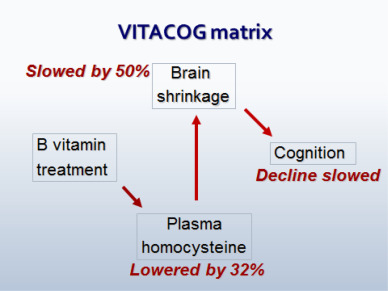
  • Does brain shrinkage lead to dementia?

    11
    1
    0 Votes
    11 Posts
    970 Views
    DavidPSD
    Visceral and Subcutaneous Abdominal Fat Predict Brain Volume Loss at Midlife in 10,001 Individuals (2024)
  • 0 Votes
    4 Posts
    753 Views
    AlphaZanceA
    CO2 levels over the past 500 million years. Foster et al – Descent into the icehouse. [image: Co2-levels-historic.jpg]
  • Vitamin B6 has anabolic effects on muscle

    2
    0 Votes
    2 Posts
    478 Views
    jamezb46J
    @haidut Gotcha. Will report back after a few months of 10,000 IU vitamin d and 5-10 mg P5P
  • Mitochondrial dysfunction prevents apoptosis and drives inflammation

    1
    0 Votes
    1 Posts
    302 Views
    No one has replied
  • 0 Votes
    1 Posts
    376 Views
    No one has replied
  • 0 Votes
    1 Posts
    308 Views
    No one has replied
  • 0 Votes
    12 Posts
    2k Views
    T
    @war4512 "Low X/A ratio for the European doesn’t mean more genetic distance from Africans or bonobos." there's articles about this and a response from the paper authors after it was posted on stormfront.
  • Orange Juice and Its Impact on Cancer Development - A Brief Analysis

    1
    0 Votes
    1 Posts
    375 Views
    No one has replied
  • Nobiletin

    nobiletin mtor flavonoid
    9
    0 Votes
    9 Posts
    1k Views
    MauritioM
    Nobiletin for fatty liver: Helps with fatty liver and fibrosis via increasing adiponectin and SOD while lowering MDA https://pubmed.ncbi.nlm.nih.gov/38073108/ Helps via modulating Nrf2 https://pubmed.ncbi.nlm.nih.gov/38073108/ Helps via altering the gut microbiome https://pubmed.ncbi.nlm.nih.gov/37139957/ Helps via lowering oxidative stress and lipid peroxidation and increasing ATP. https://pubmed.ncbi.nlm.nih.gov/34695558/ Helps via increasing cholesterol to bile acids conversion ( increasing CYP7A1, and CYP27A1), increasing SCD1 and LXRa and lowering FAS. So should be good for people with high cholesterol ,low bile production/flow. https://pubmed.ncbi.nlm.nih.gov/36985541/
  • This topic is deleted!

    1
    0 Votes
    1 Posts
    67 Views
    No one has replied